
.svg)
.svg)
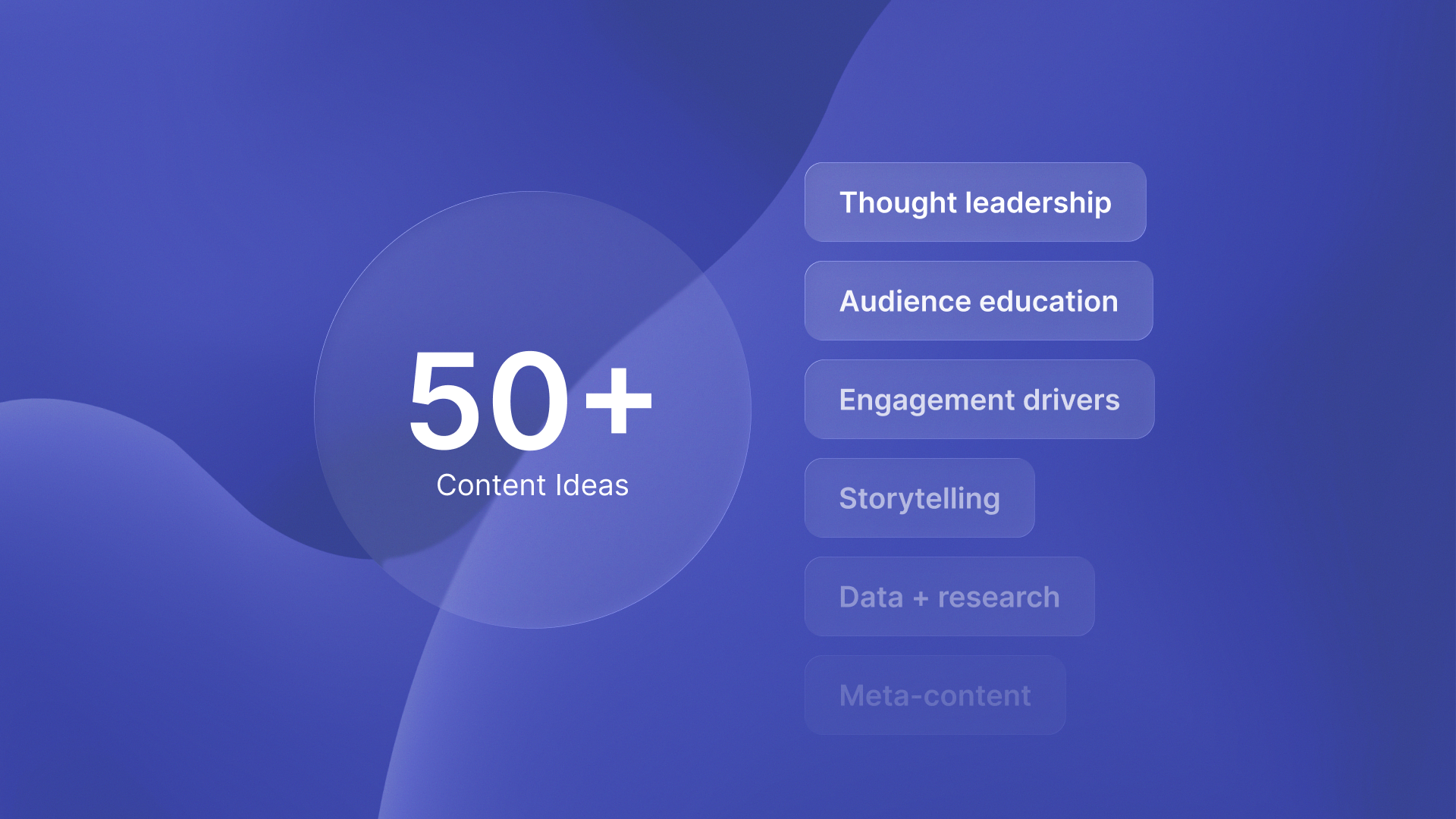
50+ linkedin content ideas for founders who hate staring at blank screens

You know you should post on LinkedIn. You've blocked the time. You're staring at the compose box. And 23 minutes later, you've written nothing.
The problem isn't motivation. It's not writer's block. It's activation energy. Every post starts with the same mental challenge: What angle? What format? What hook? By the time you've answered those questions, your calendar alert fires and you're late for the next meeting.
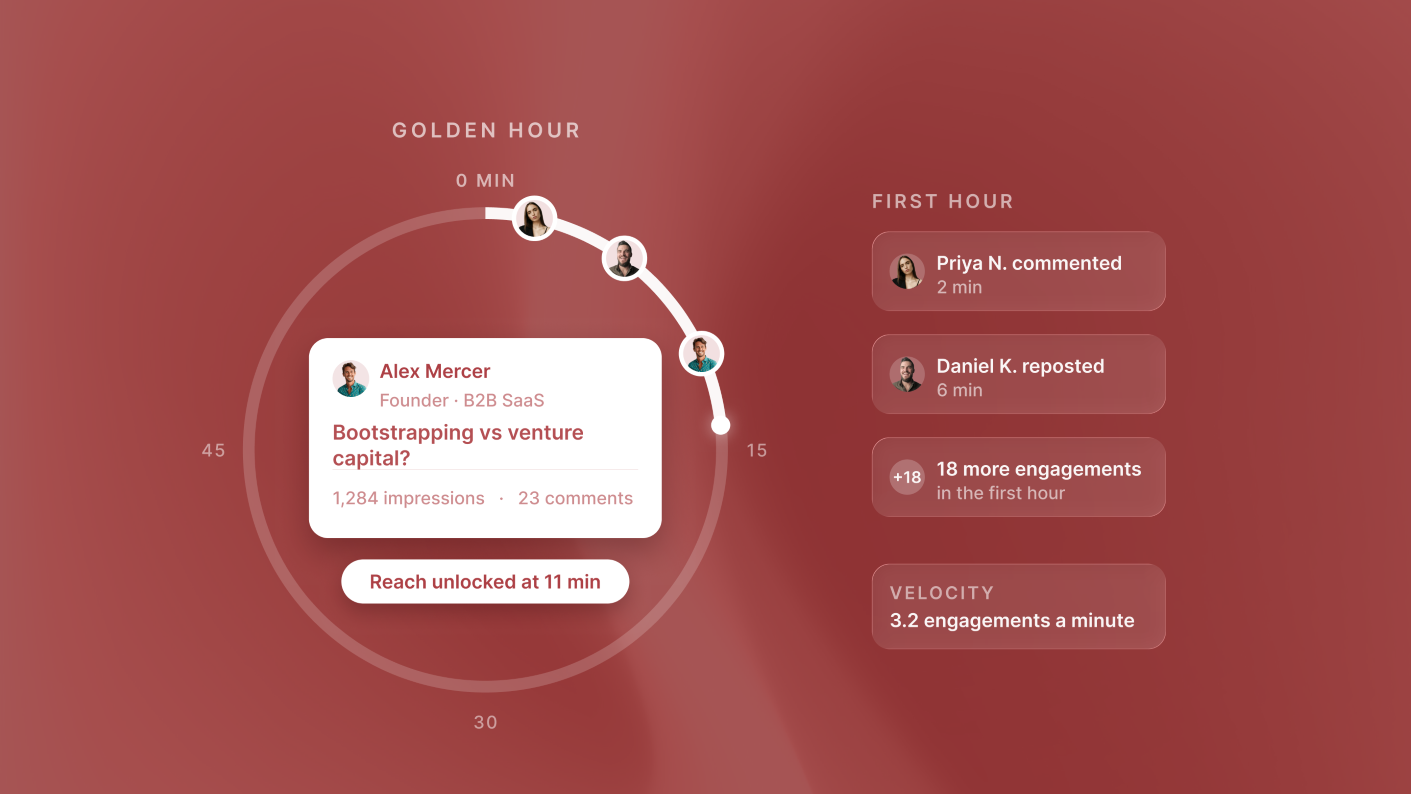
Here's what changed in 2026: LinkedIn engagement rates jumped from 6.00% to 8.01%, a 33.5% year-over-year increase (Buffer). That makes this the highest-opportunity period for executive content in the platform's history. But only if you post consistently enough to capture algorithmic momentum. Sporadic posting doesn't compound. Systematic posting does.
This isn't a creativity problem. It's a systems problem. What follows is a reusable content bank: 50+ LinkedIn content ideas for founders organized by strategic intent. The goal isn't inspiration. It's infrastructure. Turn ideation from creative problem-solving into template selection.
Thought leadership posts that establish expertise
These formats position you as the expert who sees patterns others miss. They work because they teach something specific rather than making vague claims about industry trends.
- Contrarian take on industry consensus: Everyone says X. Here's why they're wrong. Pick a widely accepted belief in your space and present data that challenges it. Works best when you can cite specific examples.
- Framework post: Share a decision-making framework you actually use. Three-part models, four-quadrant matrices, five-step processes. Make it visual if possible, but the text version still performs.
- Prediction with logic chain: Make a specific forecast about your industry, then show the reasoning. Not "AI will change everything" but "Here's why 60% of Series B SaaS companies will pivot to usage-based pricing by Q3 2027."
- Data synthesis post: Combine three separate data points into a single insight. Stat A + Stat B + Stat C = this implication nobody's talking about. According to Voketa, posts with personal stories get 38% more engagement than promotional content. So frame the data around a lesson you learned.
- Here's what I got wrong analysis: Admit a past mistake, explain what you learned, show how you think about it now. Vulnerability with operational takeaways.
These LinkedIn post ideas for CEOs work because they demonstrate pattern recognition and analytical depth. You're not reporting news. You're interpreting signals.
Audience education posts that solve specific problems
These posts answer real questions your target reader searches for. They help founders know what to post on LinkedIn. They're less about you, more about giving away genuinely useful information.
- Step-by-step how-to: How to achieve specific outcome in timeframe. Five steps maximum. Each step should be concrete and actionable, not conceptual.
- Comparison post: Tool A vs. Tool B. Approach X vs. Approach Y.Use a simple comparison format. Explain when to use each option. List the main pros and cons. Say who each option is best for. Works especially well for technical decisions.
- Mistake diagnostic: If you're experiencing problem, here are the five places to look. Frame it as troubleshooting, not generic advice. Tools like platforms that reduce workflow friction have shown that execution problems kill consistency. So diagnose execution gaps, not strategy gaps.
- Template share: Give away a framework, template, or checklist you actually use. Screenshot it. Let people steal it. If you're worried about giving too much away, you don't understand content strategy.
- Glossary post: Ten terms everyone in your industry should know. Define them clearly in 2-3 sentences each. Works for technical fields where jargon creates confusion.
Educational content builds trust without asking for anything in return. It positions you as the source that solves problems, not the person who talks about solving problems.
Engagement driver posts that start conversations
These formats trade direct instruction for participation. They work when you already have some audience momentum and want to deepen relationships.
- Polarizing question: Ask something with no obvious right answer. Should founders write their own content or delegate it? The replies are the content.
- Fill-in-the-blank: The biggest mistake I see your audience make is _. Simple, low-friction engagement. People love completing patterns.
- Hot take with escape hatch: Make a strong claim, then add "Unless you're in specific situation." Gives people room to agree AND disagree.
- Crowdsourced wisdom: What's one thing you wish you'd known before milestone? Let your network build the content for you.
- This or that poll: Two clear options. No wrong answer. Ask about process, not preference.
These LinkedIn thought leadership topics create relationship depth. Engagement posts convert passive readers into active participants. Once someone comments, they're more likely to see your next post.
Storytelling posts that humanize expertise
96% of B2B content marketers use LinkedIn for organic social marketing (Voketa), which means the platform is saturated. Stories cut through because they're harder to replicate than frameworks.
- Inflection point story: The moment you realized something had to change. Before state, trigger event, after state. Keep it under 300 words.
- Customer transformation: Client had problem X, tried solution Y (didn't work), then did Z (worked). Include specific metrics. Always get permission first.
- Behind-the-scenes decision: Walk through a real business decision you made recently. What factors mattered? What trade-offs did you consider? What would you do differently?
- Founder journey milestone: Hit a revenue target, launched a product, learned something expensive. Make it specific to your business, not generic startup advice.
- Here's what nobody tells you about X: Pick a milestone everyone talks about (first hire, first funding round, first churn crisis). Share the parts people usually skip.
Linked content examples for executives work best when they balance authority with accessibility. You want readers to think "This person has done the work" and "This person understands my situation."
LinkedIn content ideas for founders building technical credibility
Founders in technical sectors need content that demonstrates depth without alienating non-technical decision-makers.
- Architecture decision breakdown: Why we chose Technology A over Technology B. Include the constraints that shaped the decision. CMOs evaluating visual AI architectures face similar trade-offs between productivity tools and workflow-replacing systems.
- Scaling challenge post-mortem: We hit this bottleneck at this revenue/user threshold. Here's what broke and how we fixed it. Series B companies can't hire their way out of QA scaling problems. This makes operational problem-solving content especially valuable.
- Tool stack evolution: What we used at 10 customers vs. 100 vs. 1,000. Explain why each transition happened and what didn't survive the growth stage.
- Technical myth-busting: Everyone assumes X about our industry. Here's why that's wrong, with data. Challenge conventional wisdom using evidence, not opinion.
- Integration lessons: We tried to connect System A with System B. Here's what the documentation didn't tell us. Saves your audience from repeating your mistakes.
Technical content works when it solves real problems readers are facing right now. Abstract thought leadership gets scrolled past. Concrete solutions get saved.
Executive LinkedIn strategy posts that demonstrate business acumen
These posts position you as someone who understands business mechanics, not just your functional specialty.
- Unit economics breakdown: Here's how we think about LTV:CAC, payback periods, or margin structure. Transparency builds credibility. Agencies tracking real-time profitability catch margin erosion before it compounds.
- Pricing strategy evolution: How we priced Version 1.0 vs. how we price now. What changed and why. Include the thinking behind tiering decisions.
- Hiring philosophy: What we look for in Role X and why most companies optimize for the wrong signals. U.S. startups often overlook 40-50% cost advantages in Canadian talent markets by defaulting to local hiring.
- Market positioning shift: We used to compete on Feature X. Now we compete on Outcome Y. Explain what customer feedback revealed.
- Go-to-market lessons: What worked in our first 100 customers won't work for the next 1,000. Here's what we're changing. Surface the operational reality behind growth.
Business acumen content separates founders who understand their market from founders who just built a product. It signals strategic thinking.
Content formats that reduce execution friction
Knowing what to post on LinkedIn as a founder doesn't solve the execution problem. You still need to write, edit, schedule, and promote.
- Screenshot commentary: Take a screenshot of a relevant tweet, article headline, or data visualization. Add 3-4 sentences of analysis. Total time: 8 minutes.
- Bullet list insights: Pick a topic. Write 5-7 bullet points. Each bullet is one specific, tactical observation. No introduction necessary.
- Quote + reaction: Pull a compelling quote from an article, book, or podcast. Add 2-3 paragraphs explaining why it matters or where it's wrong.
- Before/after comparison: Show two approaches side by side. Old way vs. new way. What most people do vs. what works. Visual structure makes it scannable.
- Single-stat analysis: Find one surprising data point. Explain what it means, why it matters, and what action it suggests. Three paragraphs maximum.
Beauty brands use 30-day content calendar templates organized by weekly themes to maintain consistency. The same batch planning approach works for executive content. Reduce decision fatigue by planning formats in advance.
How systematic content planning eliminates the blank page problem
Having LinkedIn content ideas for founders doesn't solve the consistency problem. You need infrastructure that removes ideation friction entirely.
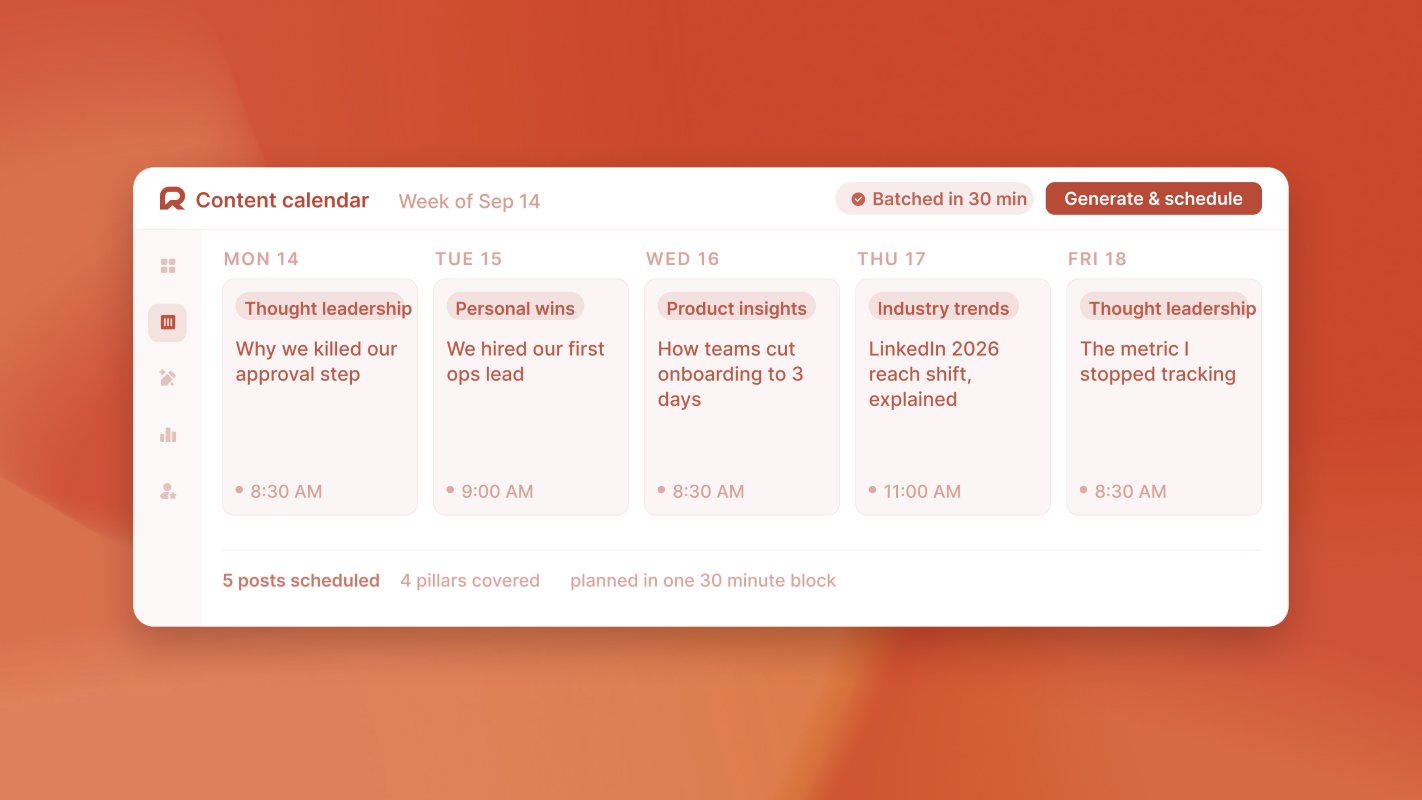
The 30-day content calendar approach eliminates weekly scramble by batching ideation, drafting, and scheduling into focused planning sessions. Define rotating themes. Build a topic backlog. Map topics to calendar slots. Draft headlines in advance.
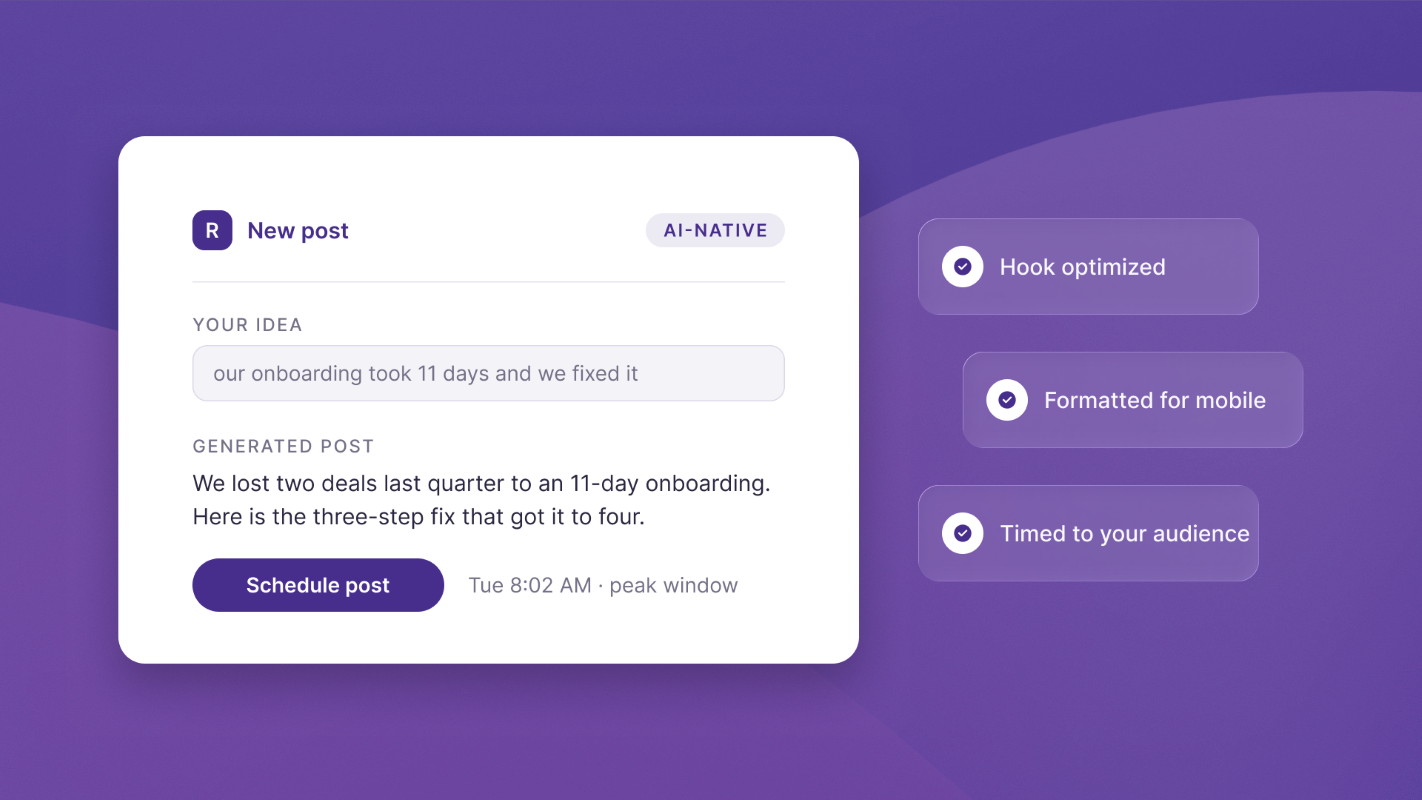
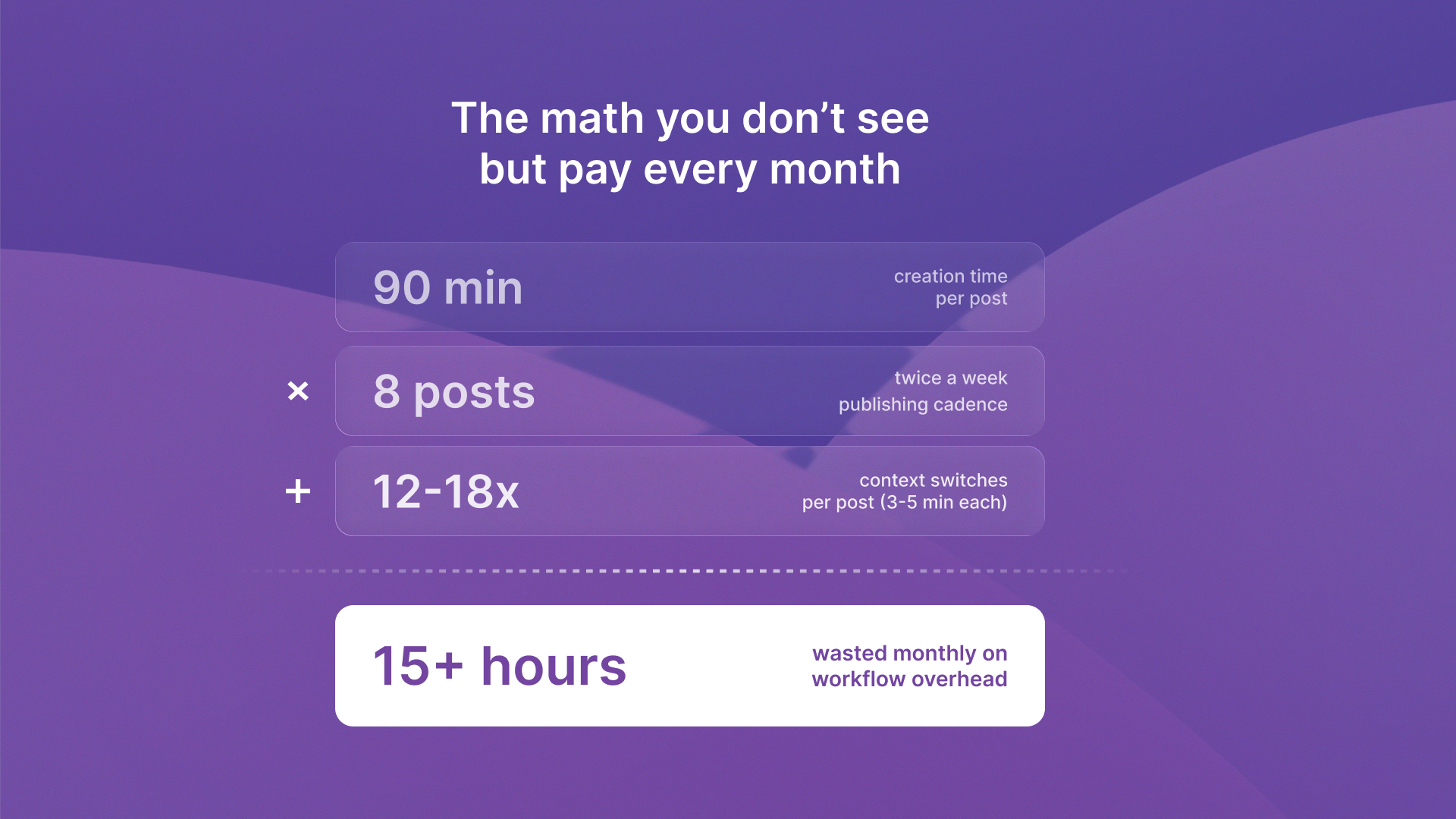
When you sit down to write, you're not staring at a blank screen wondering what to post. You're executing against a pre-planned slot with a working headline and assigned theme. Activation energy drops from 23 minutes to 3 minutes.
If you're still struggling with execution despite having ideas, the problem is workflow friction. Teams that need specialized content strategy support often discover their bottleneck isn't creativity but operational infrastructure.

What to do next
Here's your action plan:
- Pick five formats from this list that match your expertise and audience intent
- Block 90 minutes to draft one example of each format
- Schedule them across the next three weeks using a content calendar or scheduling tool
- Track which formats generate the most engagement, then double down on those patterns
Consistency beats creativity. Systems beat willpower. The best executive LinkedIn strategy is the one you'll actually execute.
Ready to turn these ideas into consistent content without the execution friction? Start building your LinkedIn system and eliminate the blank screen problem for good.


.png)



%2520(14).png)
.png)
%2520(13).png)