
.svg)
.svg)
ChatGPT, Buffer, or AI-Native Platforms: Which LinkedIn Content Tool You'll Actually Use

You use ChatGPT to draft LinkedIn posts. You copy them into Buffer to schedule them. You still wonder why you can’t post consistently. The problem isn't your discipline. It's the operational overhead of your workflow.
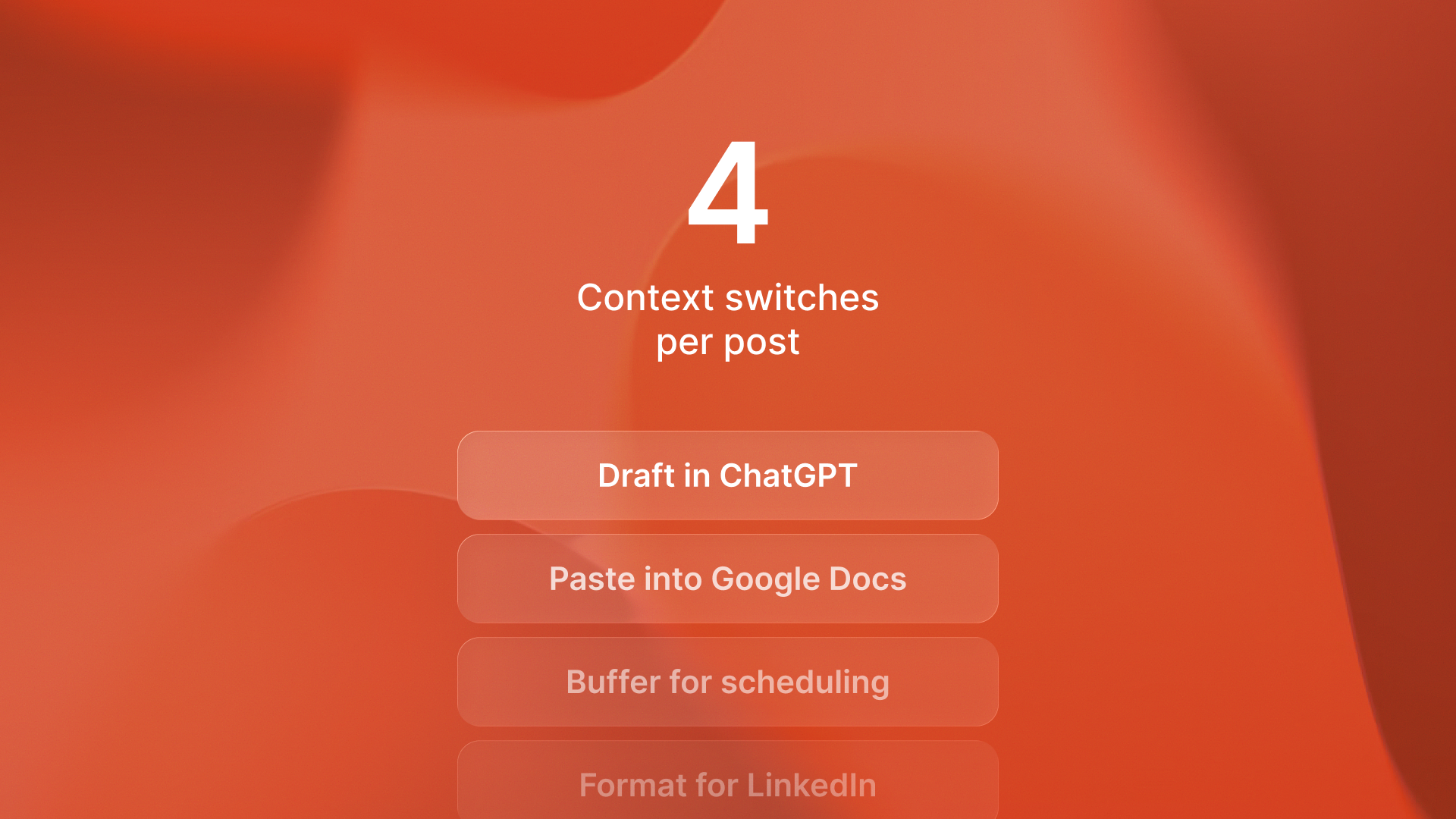
Here's what the typical workflow looks like:
- Draft in ChatGPT
- Paste into Google Docs for editing
- Copy again into Buffer for scheduling
- Manually format for LinkedIn's character limits
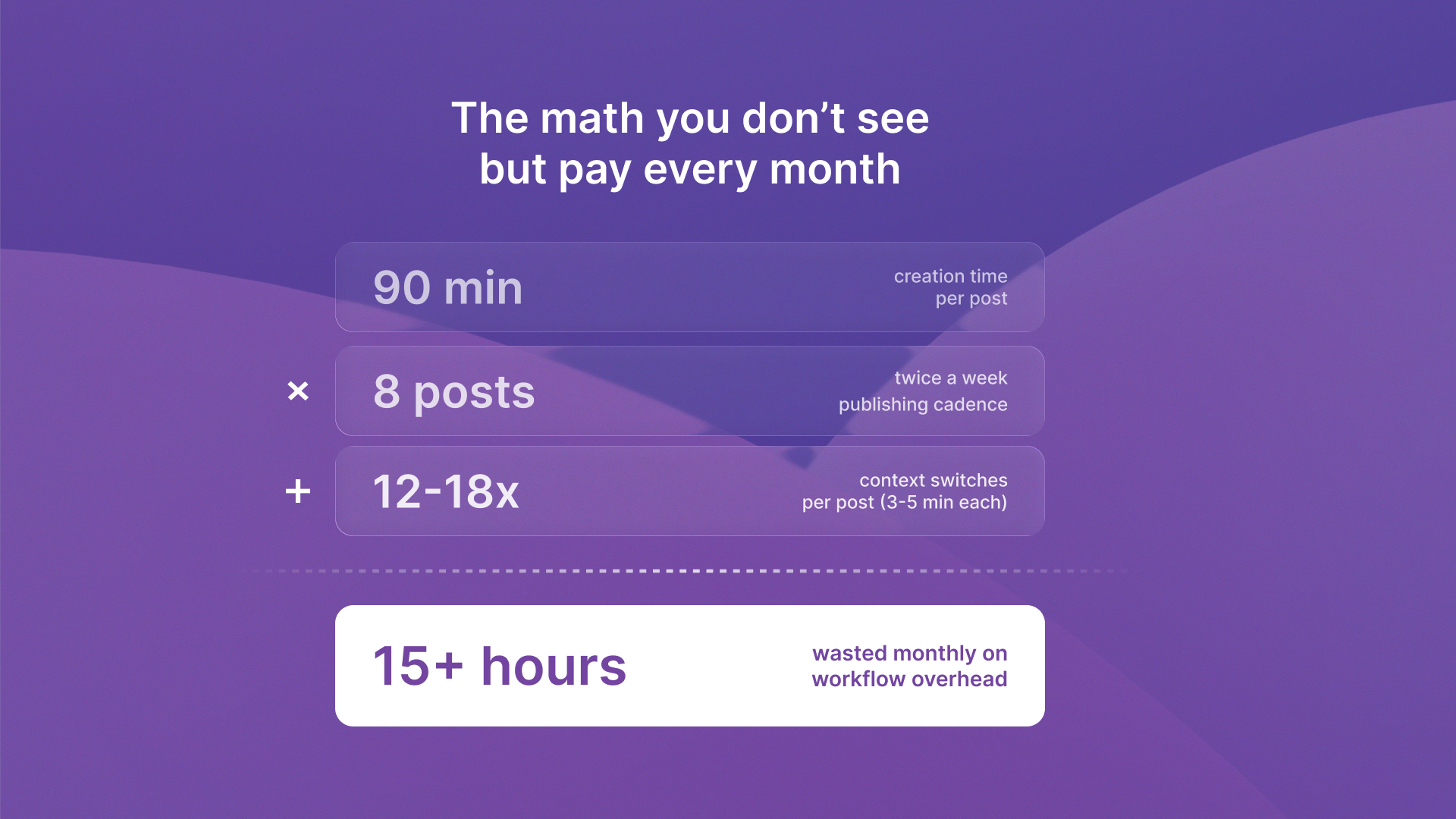
That's four context switches per post. Multiply by 12 posts monthly and you're burning 15+ hours on administrative work that adds zero strategic value.
The fragmented workflow problem affects 41% of LinkedIn users now using AI tools like ChatGPT for content creation (Martal). But these AI tools for LinkedIn content creation lack integration with business context. Every post requires manually feeding insights from analytics, CRM, and product data into ChatGPT. The AI can't see your recent demo requests, best-performing posts, or current campaigns. You become the integration layer between systems.
ChatGPT workflows: powerful but manual for AI tools for LinkedIn content creation
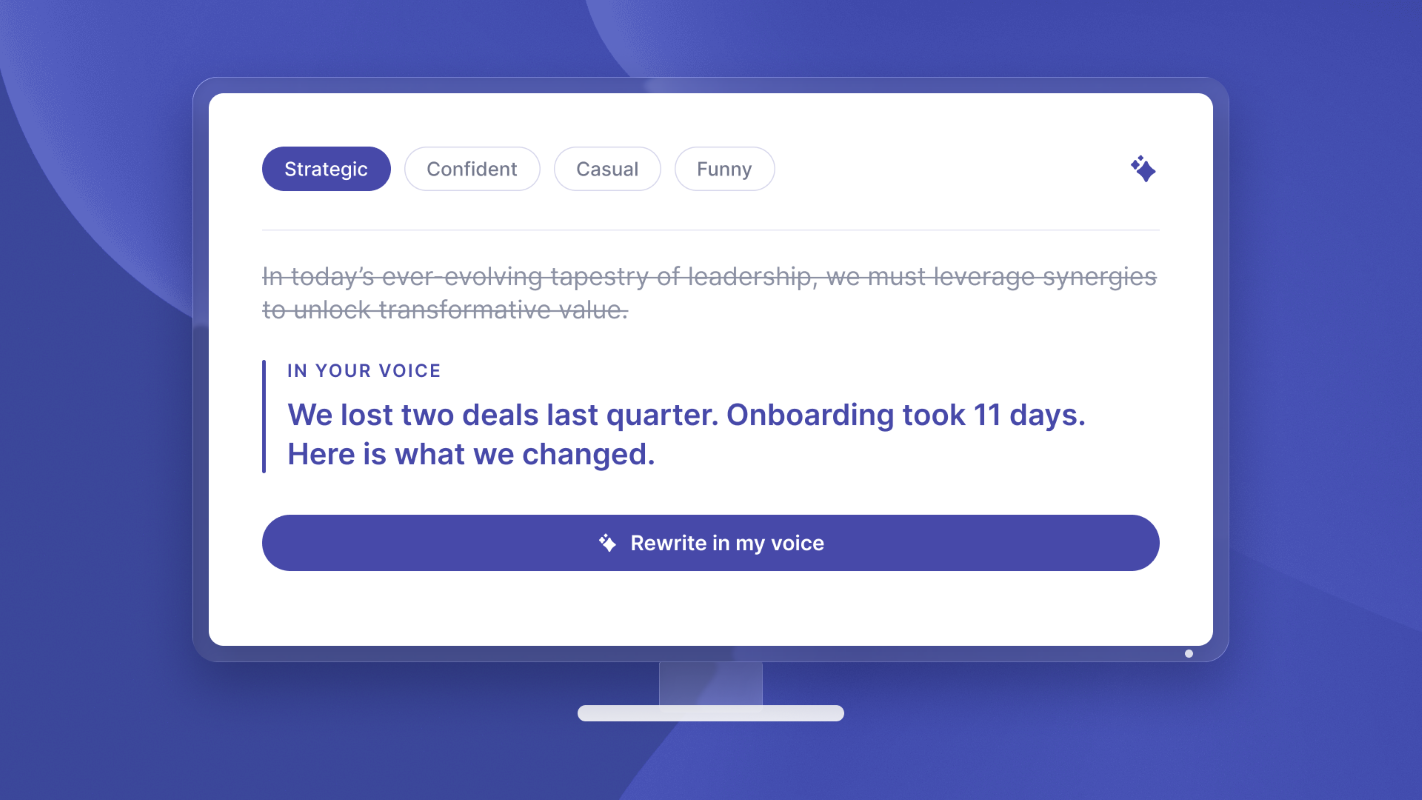
ChatGPT for LinkedIn posts produces strong first drafts when given detailed prompts. The issue is repeatability. Each session starts from zero. You feed the same context repeatedly: brand voice guidelines, target audience details, recent company milestones. The mental effort of remembering what to include grows with each post.
The workflow scales poorly. One post weekly is manageable. Three posts weekly means triple the manual work. No shortcuts emerge because ChatGPT doesn't remember previous conversations or access your business systems. Workflow automation eliminates this friction by embedding context directly into the generation process.
When ChatGPT works
Occasional posters benefit from ChatGPT's flexibility. If you publish monthly and enjoy crafting each post manually, the $20/month cost beats alternatives. You control every word, iterate freely, and maintain complete creative control. The trade-off is time investment that doesn't scale.
Generic schedulers: multi-platform but LinkedIn-blind
Buffer, Hootsuite, and similar tools excel at cross-platform scheduling. Post once, distribute everywhere. LinkedIn-focused professionals face a problem. These top LinkedIn automation tools treat LinkedIn like Twitter, Facebook, and Instagram. They miss LinkedIn-specific engagement mechanics.
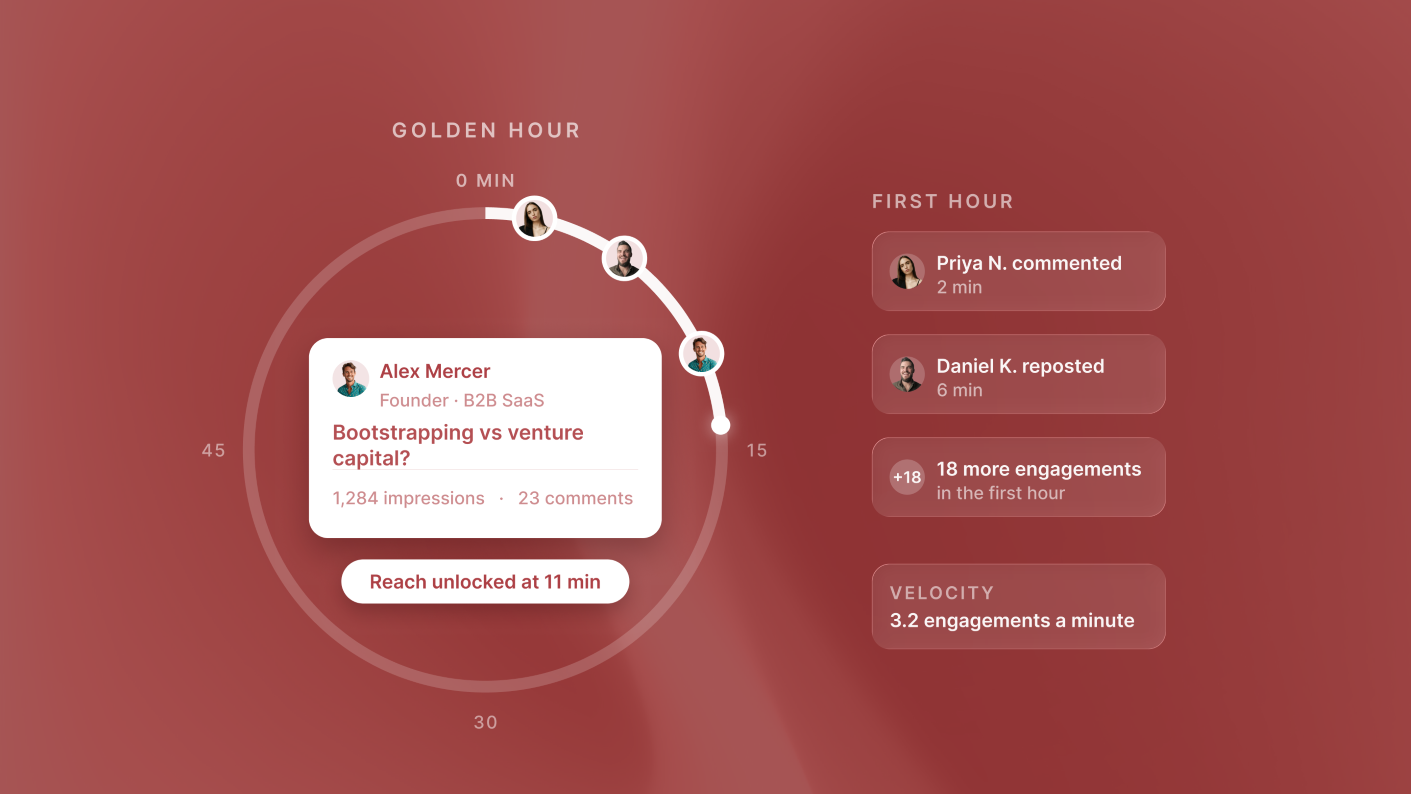
LinkedIn's algorithm prioritizes the first 90 minutes after posting. Early engagement velocity determines reach. Generic schedulers can't optimize for this window because they lack pre-posting engagement features. They publish your content but don't help engineer the early comments and reactions that trigger algorithmic amplification.
Personalization suffers too. LinkedIn content creation software that operates across platforms can't pull data from your CRM to reference recent conversations. They can't pull from analytics to highlight trending topics in your network. AI-assisted outreach doubles response rates when personalized: 10.3% versus 5.1% cold email (Martal). But generic schedulers lack access to business tool data for automatic personalization.
When generic schedulers work
Teams managing multiple platforms need unified dashboards. If LinkedIn is one channel among five, Buffer's $15/month Essentials plan makes sense. You sacrifice LinkedIn-specific optimization for operational simplicity across channels. The trade-off works when LinkedIn isn't your primary growth channel.
AI-native LinkedIn platforms: integrated context and engagement mechanics
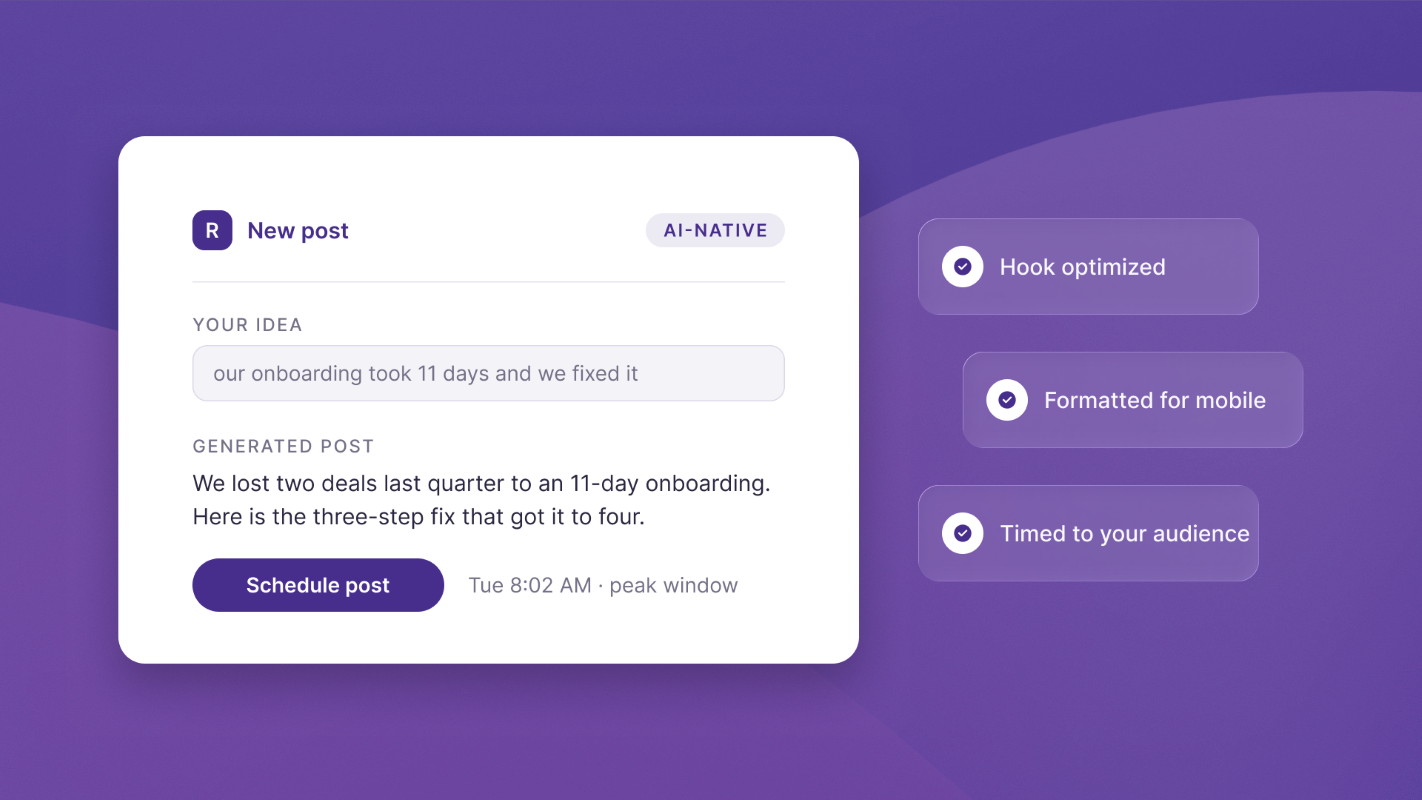
AI-native LinkedIn platforms integrate with business tools to eliminate copy-paste friction. They pull real data from analytics, CRM, and product systems to generate personalized content automatically. No manual context-feeding required.
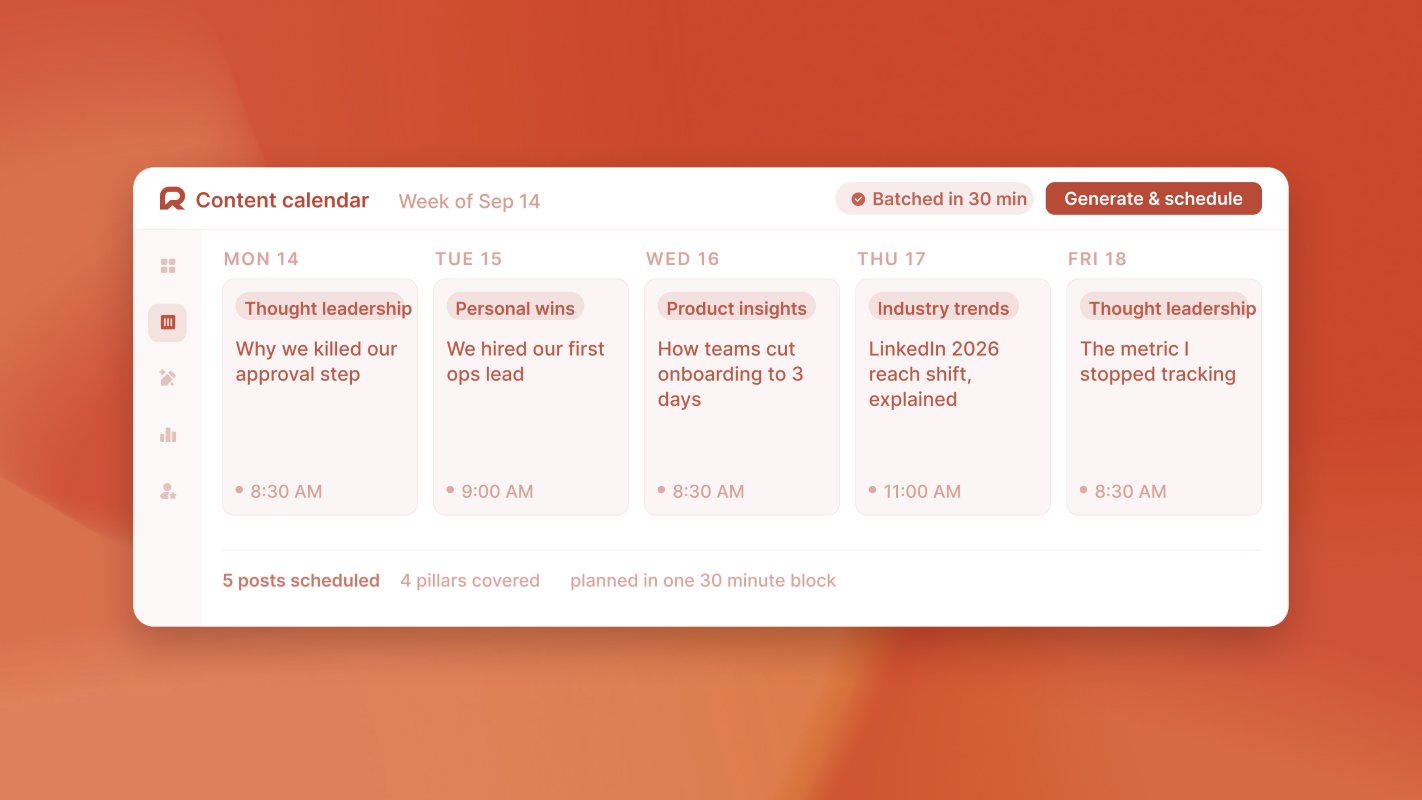
ReachSocial exemplifies this approach. The platform connects to your business systems and generates posts that reference actual metrics, recent conversations, and current campaigns. It understands LinkedIn's 90-minute velocity window and coordinates pre-posting engagement to maximize algorithmic reach.
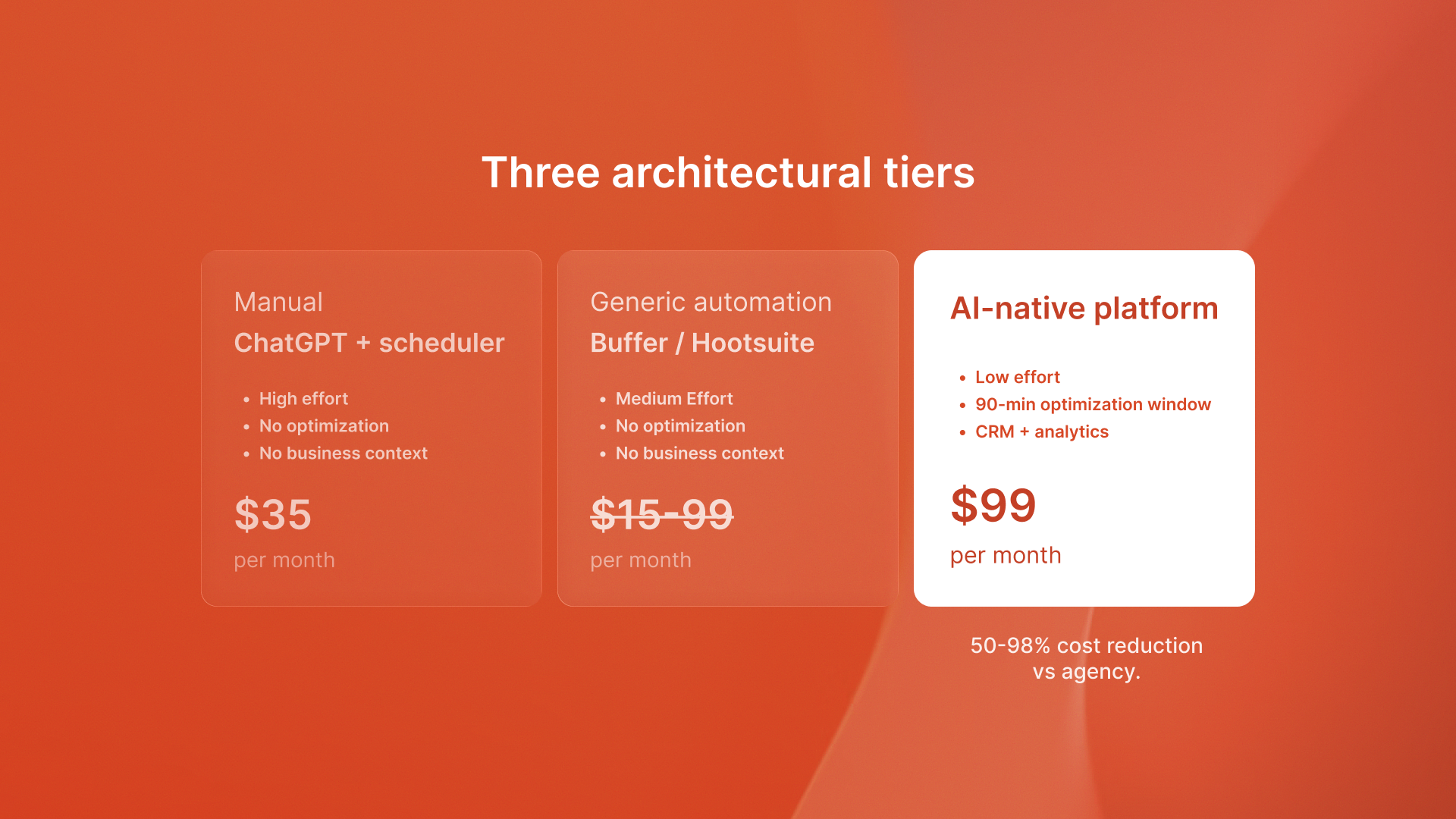
The ROI calculation is straightforward. Agency-level content costs $5,000 to $10,000 monthly. AI-native platforms cost $99 per month. They cut costs by 50% to 98%.They keep strong personalization quality. Generic tools can't match this quality. Newsletter subscriber growth is 150% year-over-year on LinkedIn (Digital Applied). Consistent publishing becomes essential for building thought leadership at scale.
Building sustainable AI workflows requires integrated platforms that eliminate the tool-switching friction preventing consistent posting. When drafting, editing, and scheduling happen in one environment, you remove the abandonment points where execution fails.
When AI-native platforms work
Professionals building thought leadership as a primary growth channel benefit most. If LinkedIn drives qualified leads and you need consistent publishing without manual overhead, integrated platforms justify the investment. The platform handles operational work while you focus on strategic decisions about positioning and messaging.
LinkedIn AI content tools 2026: the operational reality
The question isn't which tool has the most features. It's which workflow you'll actually sustain. Personalization quality compounds over time. Generic posts don't build authority. Context-rich posts that reflect real business insights do.
Consistency beats virality. Publishing weekly with authentic insights outperforms sporadic viral posts. The right tool removes enough friction that you actually post. Marketing agencies choosing agents over assistants see 64% productivity gains because automation architecture determines whether tools enhance workflows or replace operational overhead entirely.
LinkedIn AI content tools 2026 divide into three categories based on integration depth:
- Manual workflows (ChatGPT + separate scheduler): Low cost, high manual effort, no business context integration
- Generic automation (Buffer, Hootsuite): Multi-platform efficiency, LinkedIn-specific mechanics ignored
- AI-native integration (ReachSocial): Business data integration, LinkedIn velocity optimization, highest automation depth
The architectural choice matters. AI tools for small business that integrate with existing systems deliver compounding returns. Tools that require manual data transfer create friction that prevents long-term adoption.
The pattern appears across software categories. Autonomous testing versus automated testing shows the same architectural divide: tools that enhance human workflows versus tools that replace operational overhead entirely. The latter scales. The former plateaus.
Even AI time tracking tools face this challenge. When accuracy falls below 95%, manual correction overhead exceeds automation value:
- The same rule applies to LinkedIn content.
- If your AI tool needs many manual edits and lots of extra context, you have not automated the workflow.
You've just shifted where the work happens.
Canadian tech talent costs 40-46% less than US equivalents due to currency dynamics and market saturation. The same nearshore advantage applies to workflow efficiency: when you eliminate timezone friction, coordination overhead drops. LinkedIn content workflows follow the same principle. Integration eliminates friction. Fragmentation creates it.
What to do next
- Calculate current time spent on LinkedIn content creation including drafting, editing, formatting, and scheduling
- Determine your posting frequency goal: occasional (monthly), regular (weekly), or systematic (3+ weekly)
- Match the tool to your goal. Use ChatGPT for occasional, general scheduling for multi-platform teams. Use an AI-native tool for thought leadership at scale
- Test your chosen approach for 30 days and measure actual posting consistency versus time invested
The workflow you choose today determines whether you're still posting six months from now. Choose the one you'll actually use.
As GEO strategies replace traditional SEO, LinkedIn content becomes even more critical for B2B visibility. AI-generated search answers cite thought leadership content. Consistent publishing on LinkedIn positions you as that citable source. The question isn't whether to use AI for LinkedIn content creation. It's which architecture you build: fragmented tools requiring manual integration, or unified platforms that eliminate operational friction entirely.
Ready to eliminate the copy-paste friction from your LinkedIn workflow? Start with an AI-native platform that connects your business context directly to content creation.


.png)



%2520(14).png)
.png)
%2520(13).png)