
.svg)
.svg)
How to Build a Personal Brand on LinkedIn in 2026: The Operational Framework for Founders Who Understand Value but Struggle with Execution


You know LinkedIn drives B2B leads. You know founder content outperforms company pages by 8x. So why are you still staring at a blank screen every Monday morning, treating content like a second job you can't afford to start?
The problem isn't motivation. It's infrastructure. Most founders know LinkedIn has real value. About 80% of B2B social media leads come from the platform (Voketa 2026). Personal profiles get 8x more engagement than company pages (Digital Applied 2026). But understanding value doesn't solve the execution problem. The activation energy required to post consistently kills momentum within 90 days for most founders. Daily decision fatigue and workflow friction are the real killers.
Here's what works: treating how to build a personal brand on LinkedIn as operational infrastructure rather than creative inspiration. This guide gives you a complete framework. It shows you how to optimize your LinkedIn profile. Your profile gets better with every post. It teaches you how to batch content. This removes daily friction. It also shares engagement tactics to boost your reach. You can grow without becoming a full-time creator.
Profile optimization is infrastructure, not decoration
Most founders treat LinkedIn profiles as static resumes. The data shows profiles optimized for search and clarity generate 3-5x more profile views per post. Every post you publish distributes your profile optimization work to new audiences. This makes it the highest-return work you can do before posting a single update.
Your headline should solve a specific problem, not list credentials:
- “Helping Series B SaaS companies cut QA cycles from two weeks to three days” is better than “CEO at a QA company.”
- It clearly shows prospects what problem you solve.
The difference matters when Series B companies face QA scaling problems they can't hire their way out of. Your about section should follow the same pattern: problem you solve, proof you solve it, how to work with you. Three paragraphs maximum.
Featured content creates distribution compounding. Pin your best-performing posts, case studies, or lead magnets at the top of your profile. When someone lands on your profile from a post, they see your strongest work immediately. They don't see your oldest content buried in the feed.
Why daily posting kills consistency
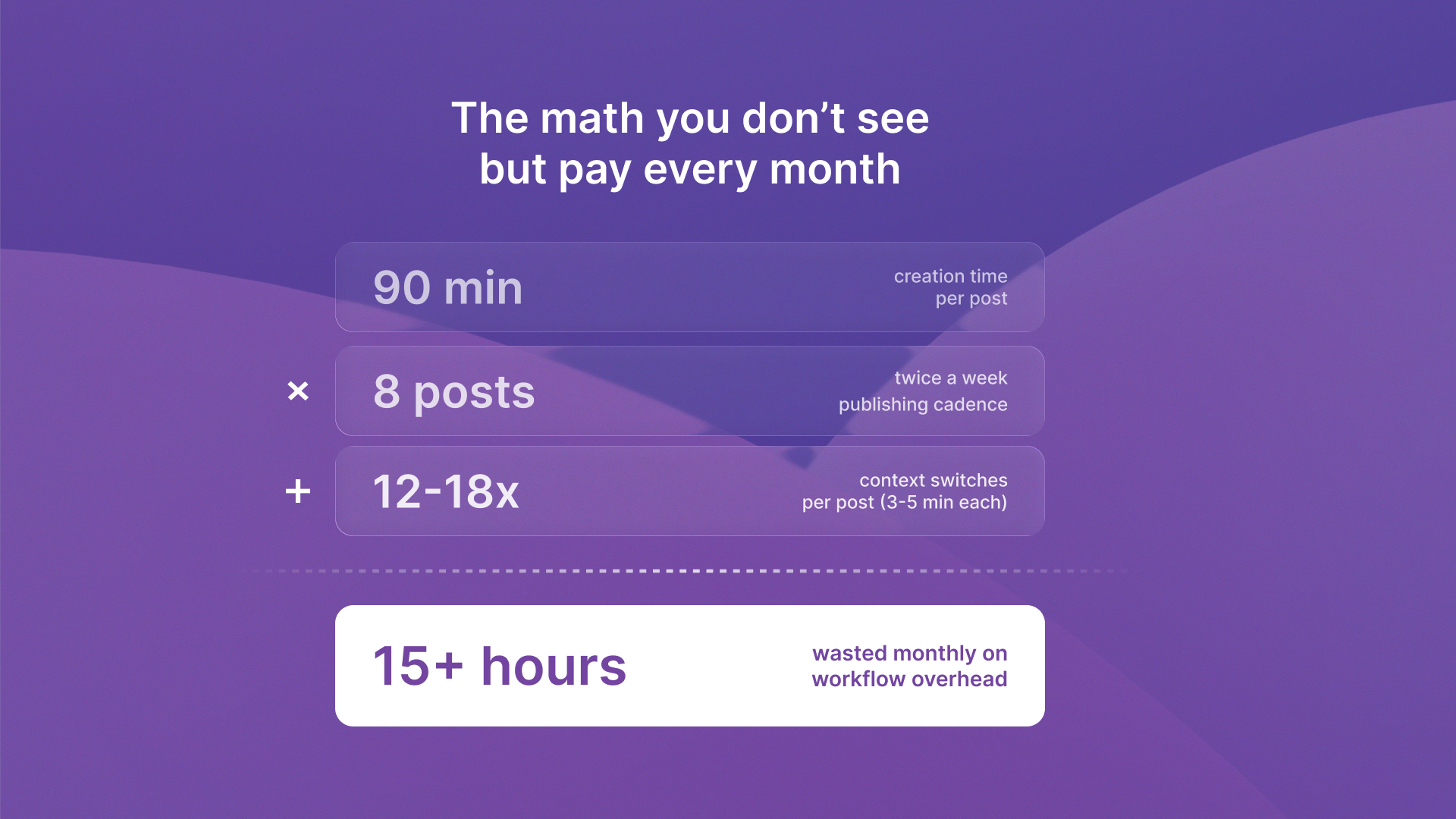
The typical founder approach: attempt daily inspiration-driven posting, burn out within 90 days, abandon LinkedIn entirely. The failure rate exceeds 90% because daily posting creates unsustainable workflow friction. Daily posting degrades content quality through decision fatigue and time pressure. This makes consistency impossible for founders managing actual businesses.
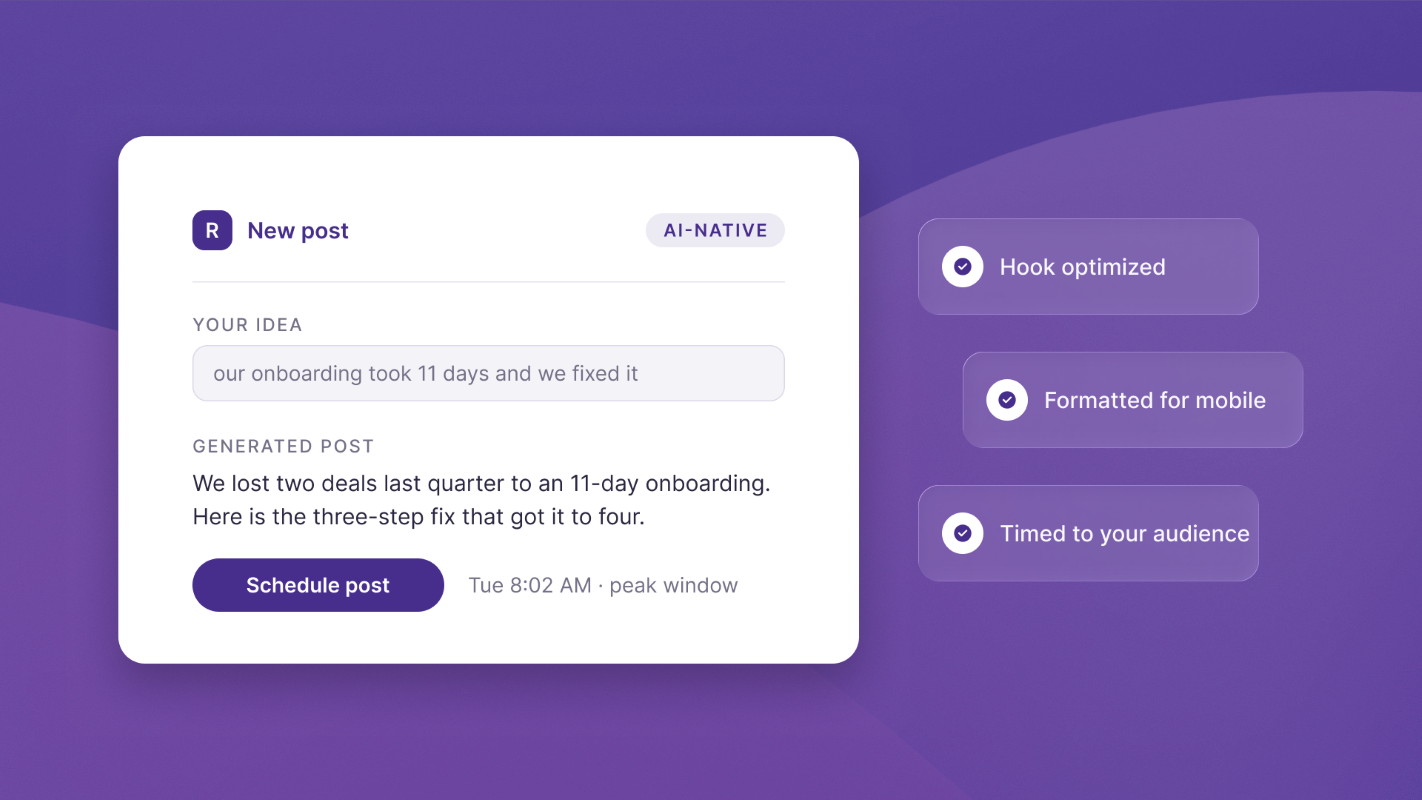
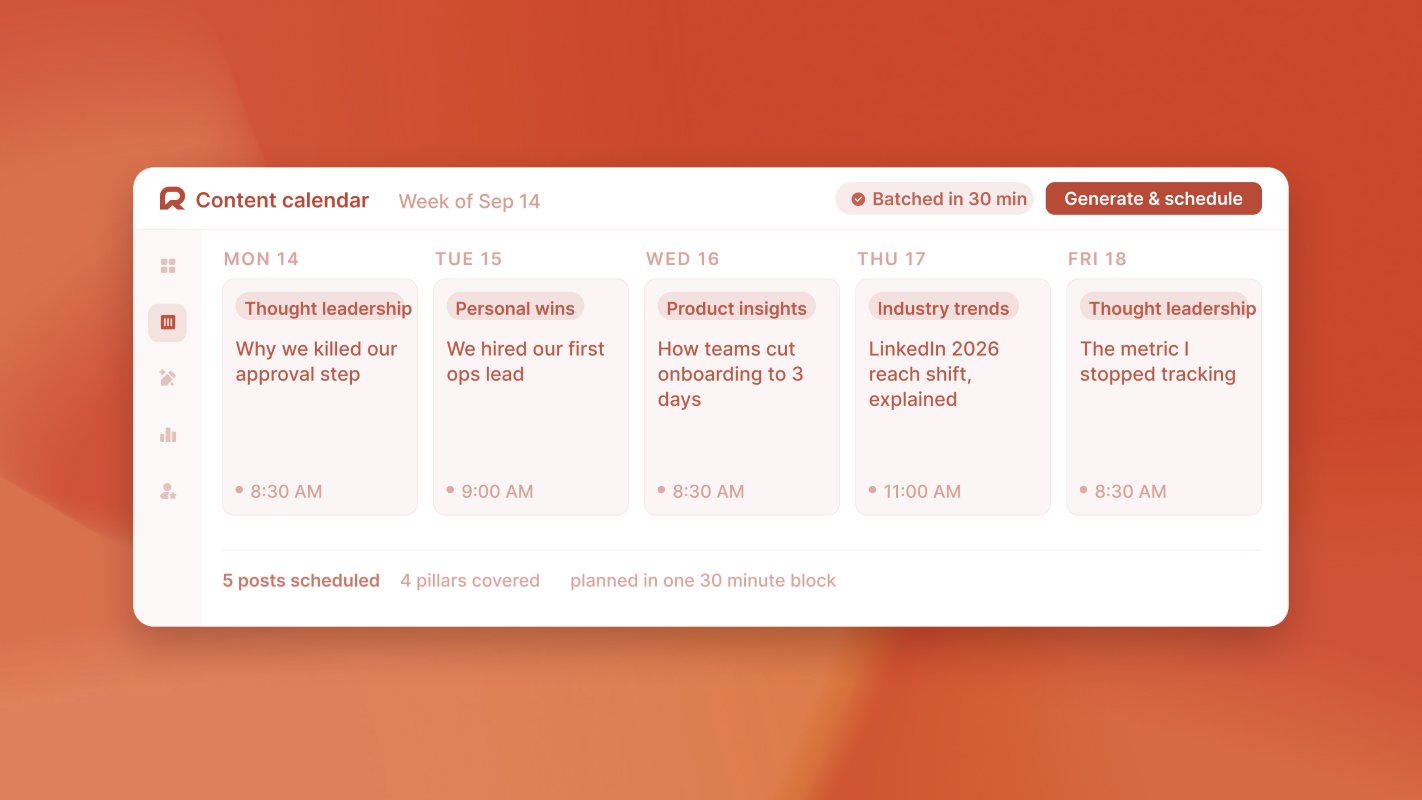
The systematic alternative: batch 12-16 posts in a single 2-4 hour session monthly. Schedule them 2-3x weekly. Eliminate daily activation energy entirely. Your LinkedIn posting schedule isn't about working less. It's about removing the friction that kills execution. When content creation happens in dedicated batches rather than stolen minutes between meetings, quality improves and consistency becomes sustainable.
The batching workflow
Block 2-4 hours monthly for content creation. During that session:
- Outline 12-16 posts using a repeatable framework (problem-solution, case study, contrarian insight)
- Write them all in one sitting
- Load them into a scheduler
The cognitive overhead of "what should I post today" disappears entirely. It gets replaced by a systematic publishing cadence that runs without daily input.
This LinkedIn content strategy mirrors how successful beauty brands build cult followings. It relies on steady execution across all touchpoints, not sporadic, inspiration-led effort.istribution window
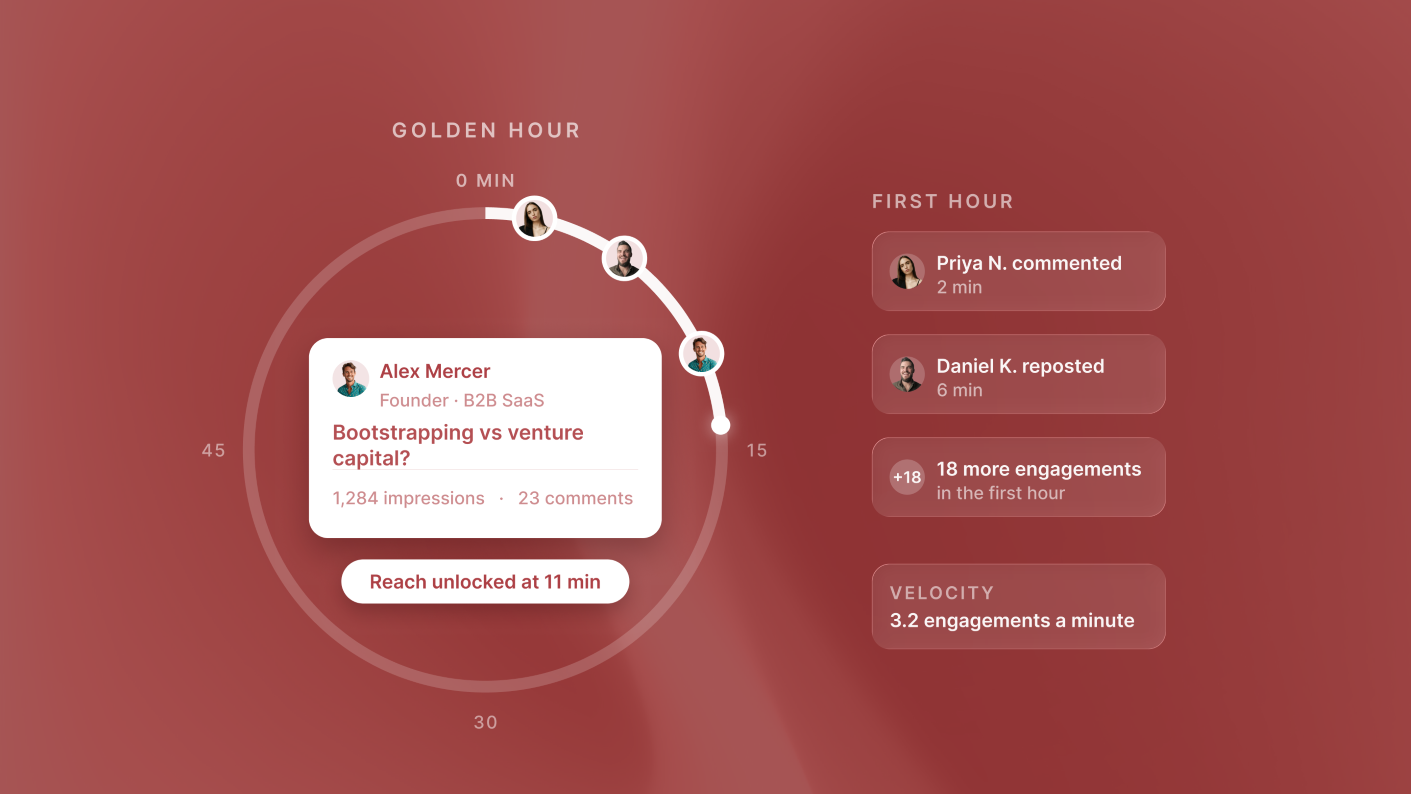
LinkedIn's algorithm prioritizes posts that generate engagement velocity in the first 90 minutes. Founders who systematically engineer early engagement see 4-6x higher reach than identical posts without this operational discipline. These aren't tricks. These are LinkedIn engagement tactics based on how distribution mechanics actually work.
Here's the engagement acceleration framework:
- Tag 3-5 relevant connections in your post (people whose expertise or experience relates to the content)
- Seed 2-3 substantive comments from your network before publishing (ask specific questions that prompt thoughtful responses)
- Respond to every comment within the first hour
Each action signals engagement velocity to the algorithm. The algorithm then triggers broader distribution.
ReachSocial automates pre-posting engagement workflow. It sends 12K messages monthly and generates 47 qualified demo requests through systematic relationship-building that compounds over time. The mechanism: consistent engagement creates network effects that amplify every subsequent post.
Why executive visibility converts
Campaigns featuring senior executives lead to 82% of people trusting a company much more (DSMN8 via Founder Branding ROI 2025). The mechanism: personal brands reduce buyer risk perception. When founders show up consistently, they create compounding trust. This shortens sales cycles and increases close rates in ways company pages never can.
LinkedIn personal branding for founders works because it aligns with how modern B2B buyers research solutions. 89% of B2B buyers use AI for research. This means visibility needs executive presence in both traditional search and answer engines. Founder content appears in both contexts when optimized correctly.
Quality beats quantity in network building. A 500-follower profile with 5% engagement reaches more people than a 10,000-follower profile with 0.3% engagement. The algorithm prioritizes engagement velocity over vanity metrics. Focus on building engaged networks through consistent value delivery, not chasing follower counts.
Where foundations matter before tactics
Before optimizing LinkedIn engagement tactics, establish your strategic foundations. Startups need messaging clarity and analytics infrastructure before specialist execution yields returns. The same principle applies to personal branding: profile clarity precedes posting optimization.
Many founders treat LinkedIn like agencies treat billable work: they misclassify strategic relationship-building as non-essential work. Your LinkedIn presence is billable work. It generates qualified leads. Track it accordingly.
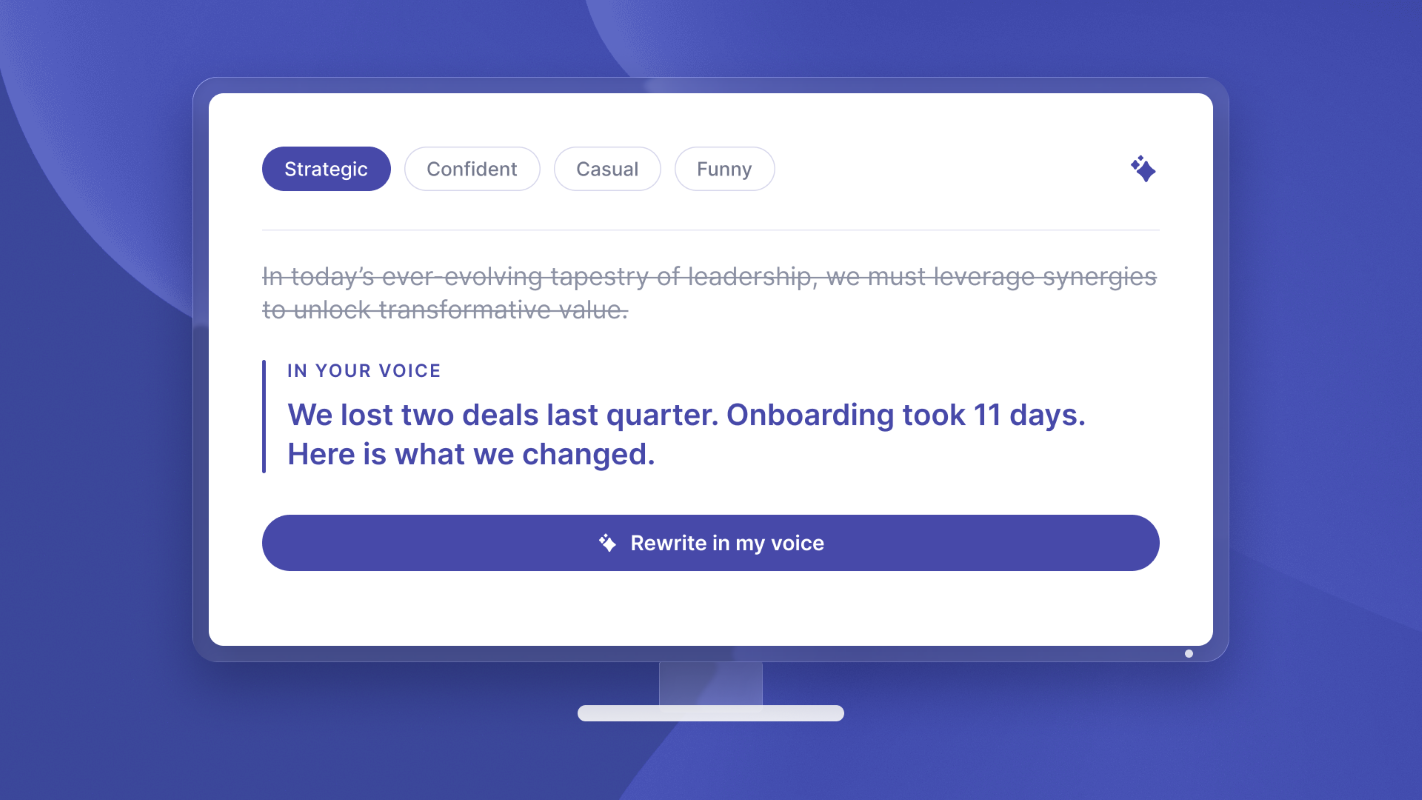
Some founders consider offshore hiring for content creation to reduce execution burden. But personal brand content requires founder voice. You can systematize the workflow without outsourcing the perspective.

What to do next
- Optimize your profile infrastructure today. Rewrite your headline to solve a specific problem. Restructure your About section with the Problem-Proof-Process framework. Pin your three best content pieces in the Featured section
- Batch 12-16 posts this week using repeatable content frameworks: problem-solution insights, case study breakdowns, contrarian data analysis. Schedule them 2-3x weekly to eliminate daily decision fatigue
- Engineer engagement speed for every post: tag 3 to 5 relevant connections. Add 2 to 3 strong comments before publishing. Reply to all comments within 90 minutes
- Track qualified leads generated per post, not vanity metrics. Double down on content formats that convert browsers into conversations
How to build a personal brand on LinkedIn isn't motivational advice. It's operational reality. Founders who treat LinkedIn as infrastructure rather than inspiration build compounding lead generation systems. Ready to automate the engagement work that makes this strategy sustainable? Start building your LinkedIn presence with ReachSocial.


.png)



%2520(14).png)
.png)
%2520(13).png)