
.svg)
.svg)
How agencies can use linkedin to get clients in 2026

You know LinkedIn works for client acquisition. You've seen the case studies. You understand thought leadership. Yet here you are again: Monday morning, staring at a blank screen, trying to draft a post before your 10am client call.
The problem isn't motivation. It's not lack of content ideas. The problem is that content creation competes directly with billable work, and billable work always wins. So you post sporadically, maybe twice a month when capacity allows, and wonder why the lead pipeline stays empty.
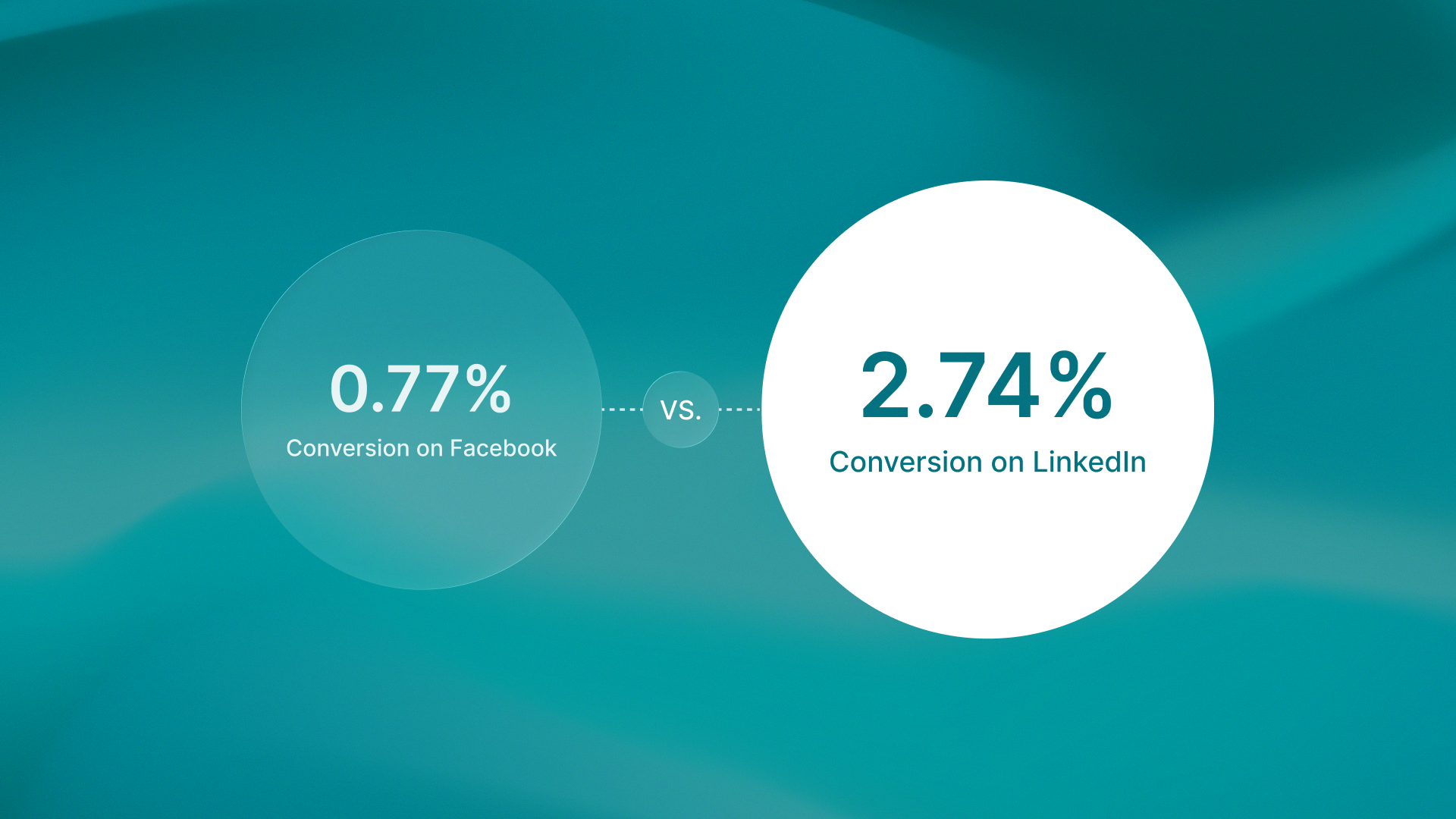
Here's what the data shows: LinkedIn generates leads at a rate 277% higher than Facebook and Twitter combined (Brenton Way). The visitor-to-lead conversion rate sits at 2.74% versus Facebook's 0.77%. LinkedIn members have 2x the buying power of average online audiences (Buffer). For agencies targeting mid-market and enterprise clients, there is no second-best platform.
But here's the operational reality: that 277% advantage only materializes with consistent posting. Understanding how agencies can use LinkedIn to get clients starts with one key idea. Sporadic content wastes the compounding effect.
Why LinkedIn dominates B2B lead generation for marketing agencies
The numbers aren't subtle. 79% of B2B marketers rate LinkedIn as delivering the best results among all paid social channels (Brenton Way). Decision-makers concentrate here because their peers are here. CFOs, VPs of Marketing, and founders scroll LinkedIn during lunch, not Instagram or TikTok.
LinkedIn client acquisition for agencies works because buyer intent aligns with platform behavior. When someone follows your agency's content on LinkedIn, they're researching solutions. When they follow you on Twitter, they're killing time. The platform filters for professional context automatically.
According to ReachSocial's analysis, LinkedIn generates 80% of all B2B social media leads. Not 80% of professional network leads. Eighty percent of all B2B social media leads combined. Facebook, X, Instagram, and every other platform split the remaining 20%.
Agencies that master this see measurable pipeline impact. Consistent expertise demonstration through regular posting builds inbound inquiry volume that compounds monthly. But most agencies fail at execution despite understanding the strategy perfectly.
Where agency LinkedIn strategy 2026 execution breaks down
The typical workflow looks like this:
- Open ChatGPT to draft a post
- Spend 15 minutes deciding what to write about
- Draft something, realize it needs research
- Switch to Google to find supporting data
- Return to ChatGPT to refine the draft
- Copy into Buffer or LinkedIn directly
- Schedule for later
- Forget about it until next week
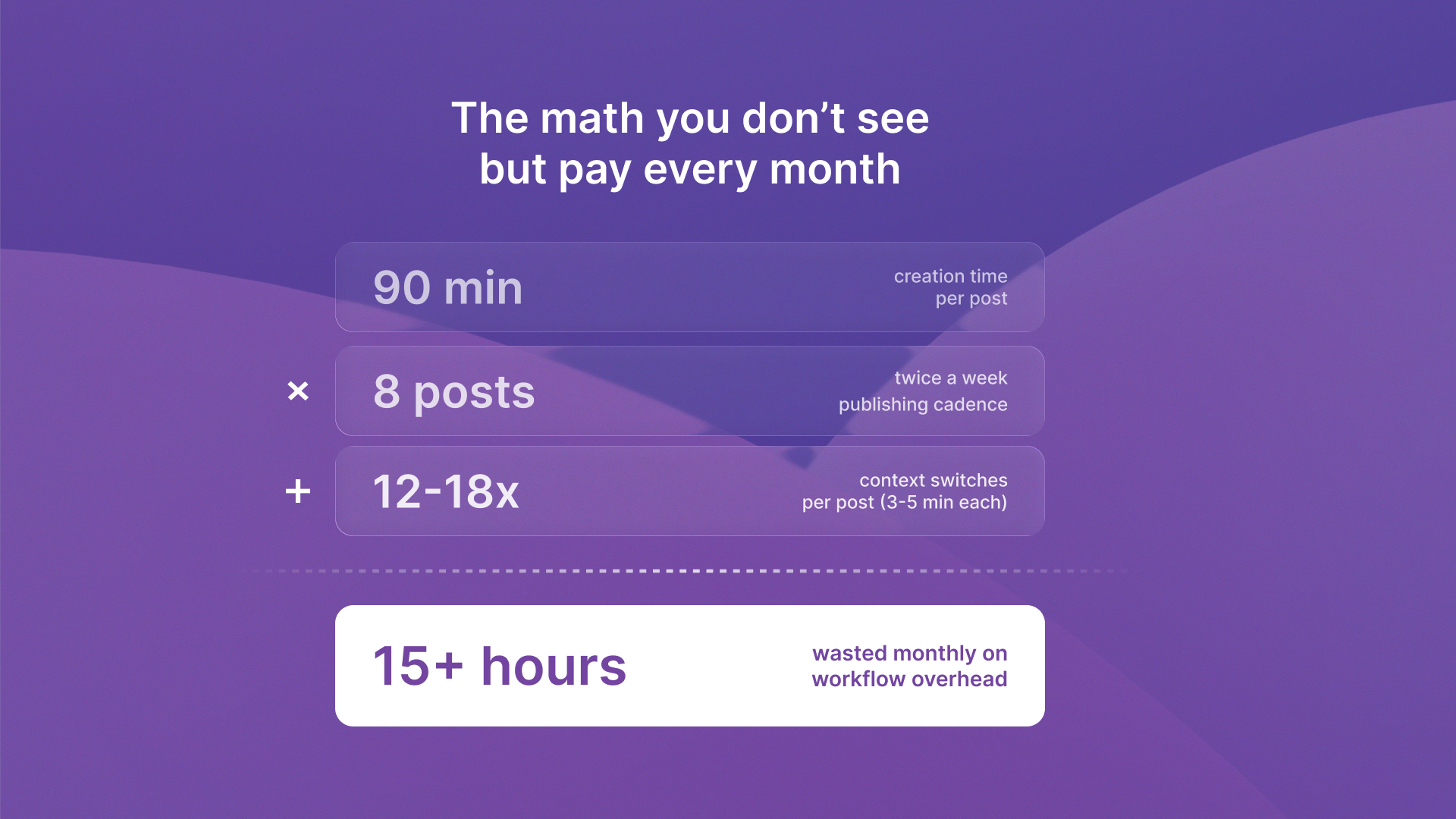
That's 40 minutes of context-switching and tool-hopping for a single post. Multiply that by daily posting requirements, and you're looking at 4-5 hours weekly. When a client project hits a critical phase, content creation stops entirely. The compounding advantage resets to zero.
Consistent posting frequency beats content perfection every time. Agencies posting daily with decent content outperform agencies posting weekly with brilliant content. The algorithm rewards frequency. Audience growth compounds with regular touchpoints. But manual workflows make daily execution unsustainable when revenue work intensifies.
The operational bottleneck agencies face
This isn't a content problem. It's an infrastructure problem. Agencies already know what expertise to demonstrate. They understand their ideal client's pain points. They have case studies and frameworks worth sharing. The bottleneck is operational: manual workflows create friction that kills consistency exactly when client work demands focus.
Traditional content creation competes for the same cognitive capacity needed for client strategy work. An agency owner writing a LinkedIn post at 9 a.m. uses the same strategic thinking needed for a client presentation at 11 a.m. The trade-off isn't time, it's mental bandwidth. How agencies navigate this tension determines whether they build inbound pipeline or stay dependent on outbound outreach.
Many agencies delegate LinkedIn lead generation for marketing agencies to specialists. Hiring a lead gen specialist can solve execution capacity, but the workflow friction remains. Tool-switching overhead exists whether the founder or a fractional contractor handles posting. The system itself needs fixing.
How to build sustainable B2B lead generation LinkedIn presence
The shift from outbound to inbound requires treating content as infrastructure, not marketing. That means removing manual steps that create activation energy for posting.
Posting frequency drives results
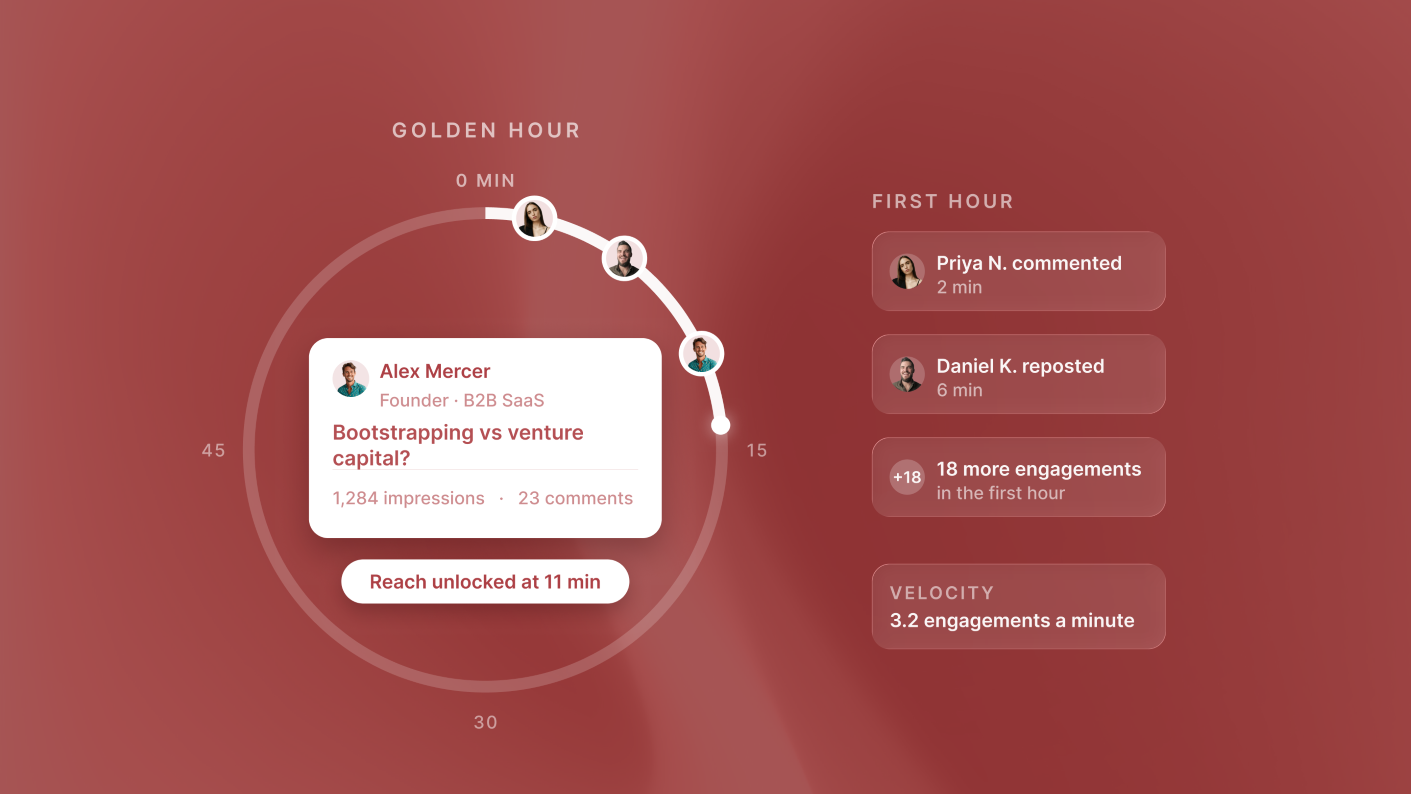
Daily posting builds algorithmic momentum that weekly posting never achieves. The LinkedIn algorithm favors accounts with consistent activity patterns. A post from an account that publishes daily gets more early reach than the same content from a weekly account. Engagement compounds across posts when followers see your name repeatedly.
But daily execution requires eliminating workflow friction. Each tool transition is an exit ramp where execution fails.
Content types that work for agency positioning
Agency buyers want operational insights, not inspiration. Content types that convert include:
- Framework breakdowns (how you approach client problems)
- Case study insights (specific results without full case studies)
- Industry pattern observations (what you're seeing across clients)
- Process explanations (how you execute key services)
- Contrarian takes on common advice (backed by experience)
Notice what's missing: motivational quotes, AI-generated generic advice, and reposted memes. For agencies learning how to build cult brand positioning, the same rule applies to thought leadership. Define a clear niche. Position yourself with a distinct point of view. Execute consistently.
Some agencies hire content strategists to build thought leadership programs. The specialist has expertise. However, if the publishing workflow is still split across drafting, editing, and scheduling tools, consistency will still suffer.
Converting connections to discovery calls
When prospects see your expertise daily, they reach out when need arises. The pipeline builds gradually, then suddenly. An agency posting daily for 90 days typically sees inquiry volume double compared to their previous sporadic approach.
Conversion happens through consistent value demonstration, not aggressive outreach. This is how agencies can use LinkedIn to get clients without burning relationships through cold DMs.
The infrastructure that makes consistency sustainable
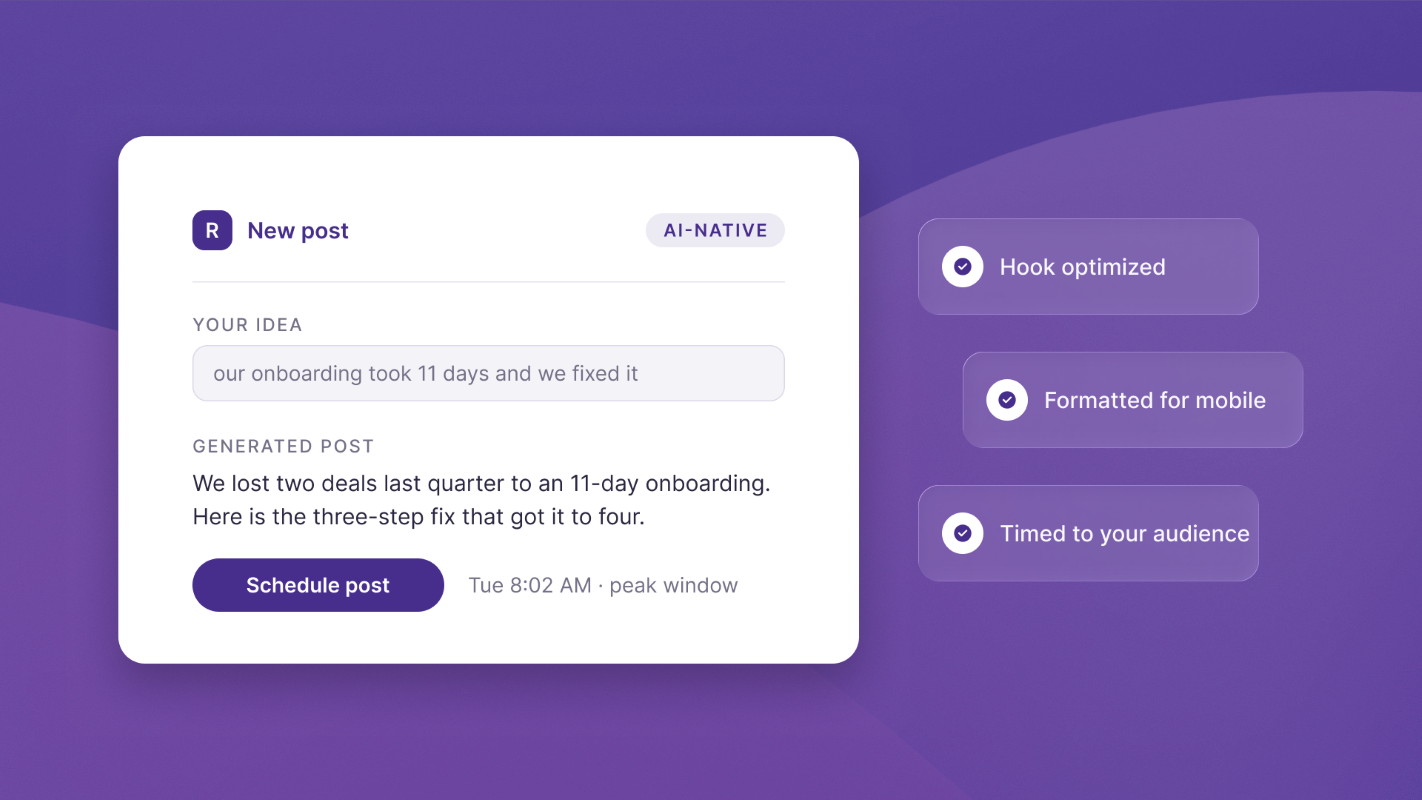
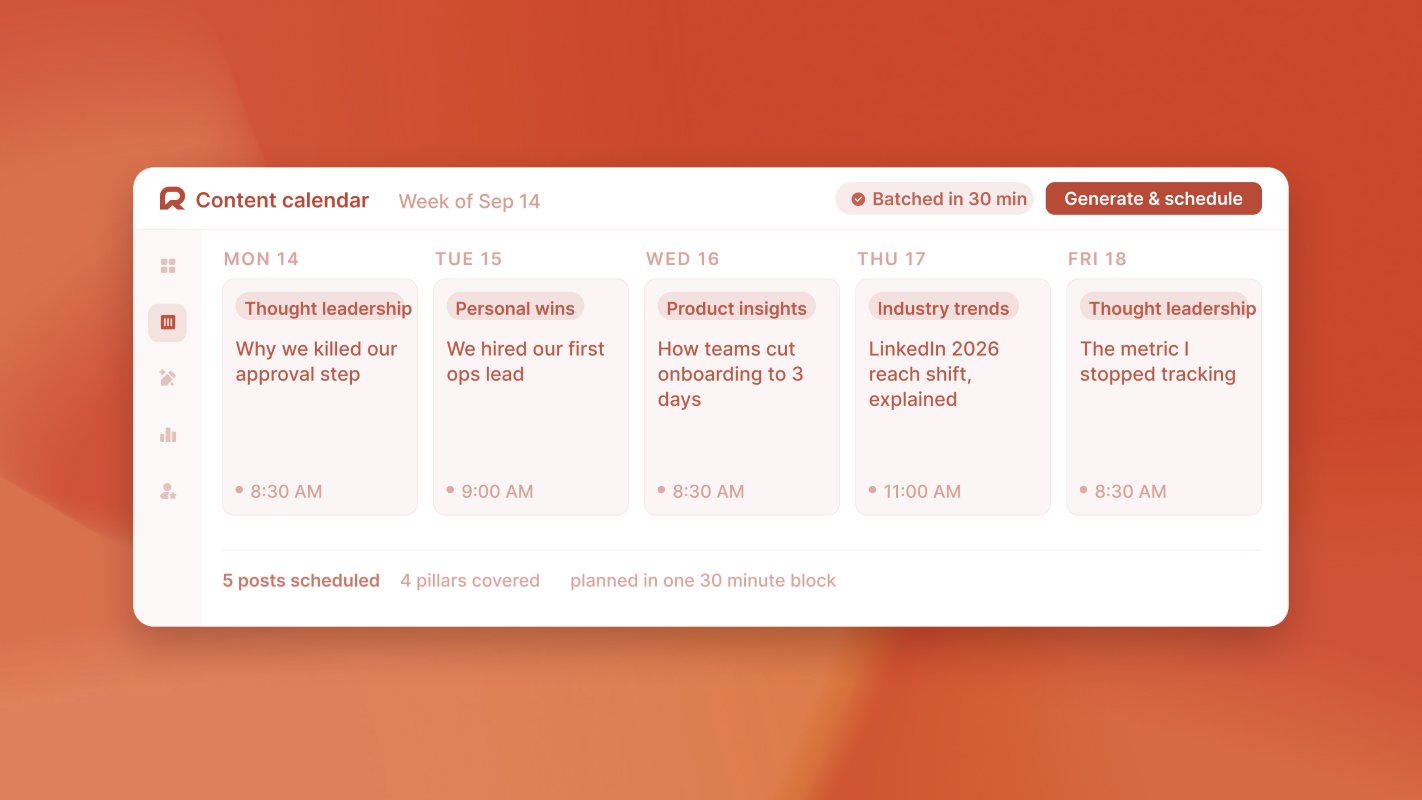
Integrated platforms that eliminate tool-switching friction change the operational math. When topic research, drafting, and scheduling happen in one workflow, not three tools, time drops from 40 minutes to 10 per post. That reduction makes daily posting sustainable even during intensive client delivery phases.
The choice between assistants that improve current workflows and agents that replace them decides how LinkedIn execution scales. It may scale with headcount or grow independently. Agencies treating this as a tactical tool decision rather than an infrastructure choice miss the compounding advantage.
Companies that consolidated workflows saw patterns like this automation coverage plateau: manual processes hit scaling ceilings that autonomous systems eliminate. The same principle applies to content operations. Linear execution models can't sustain daily publishing alongside billable work. Autonomous workflows can.
For agencies operating on tight margins, even small efficiency gains compound significantly. A 30-minute daily reduction in content operations returns 10 billable hours weekly. That's $2,000-5,000 in recovered capacity monthly for most agencies.

What to do next
1. Audit current posting frequency. Count LinkedIn posts published in the past 90 days. Calculate your average weekly frequency. Multiply the gap between your current frequency and daily posting by 277% to estimate your lead generation opportunity cost. If you're posting twice weekly instead of daily, you're leaving roughly 140% of potential leads on the table.
2. Map your content workflow friction points. Track time spent on your next five LinkedIn posts. Break down time by activity: topic selection, research, drafting, editing, scheduling, and tool-switching. Identify which step creates the most resistance. That's your infrastructure target.
3. Test an integrated approach for 30 days. Consolidate your workflow into a single platform that handles research, drafting, and publishing without context-switching. Measure posting consistency and time investment. Compare inquiry volume to your previous 30-day period.
This is a system problem, not a motivation problem. Agencies that treat LinkedIn as core infrastructure, not a marketing tactic, build lead generation that grows over time. It scales without a matching increase in time spent. The 277% advantage exists. The question is whether your workflow lets you capture it.
Ready to eliminate the workflow friction holding back your LinkedIn consistency? Start building your automated content infrastructure and turn daily posting from impossible to inevitable.


.png)



%2520(14).png)
.png)
%2520(13).png)