
.svg)
.svg)
Why your best linkedin posts get buried (and how linkedin engagement velocity fixes it)


You spent 90 minutes writing a LinkedIn post. It got 12 likes. Meanwhile, someone's half-baked hot take from this morning has 847 comments. The difference isn't content quality. It's what happened in the first 90 minutes after publish.
How LinkedIn engagement velocity determines distribution
LinkedIn's distribution algorithm doesn't care how good your content is during the first 60-90 minutes. It cares about one thing: how fast people interact with it. Posts getting quick interactions in the first 60-90 minutes get pushed to wider audiences (Voketa LinkedIn Engagement Guide 2026).
LinkedIn engagement velocity creates a compounding effect:
- Early engagement signals quality to the algorithm
- The algorithm then shows your post to more people
- More people generate more engagement
- That triggers even wider distribution
The inverse is also true. A slow start means limited reach, regardless of how valuable your content actually is. Most posts never recover from a weak first hour.
The 90-minute distribution window
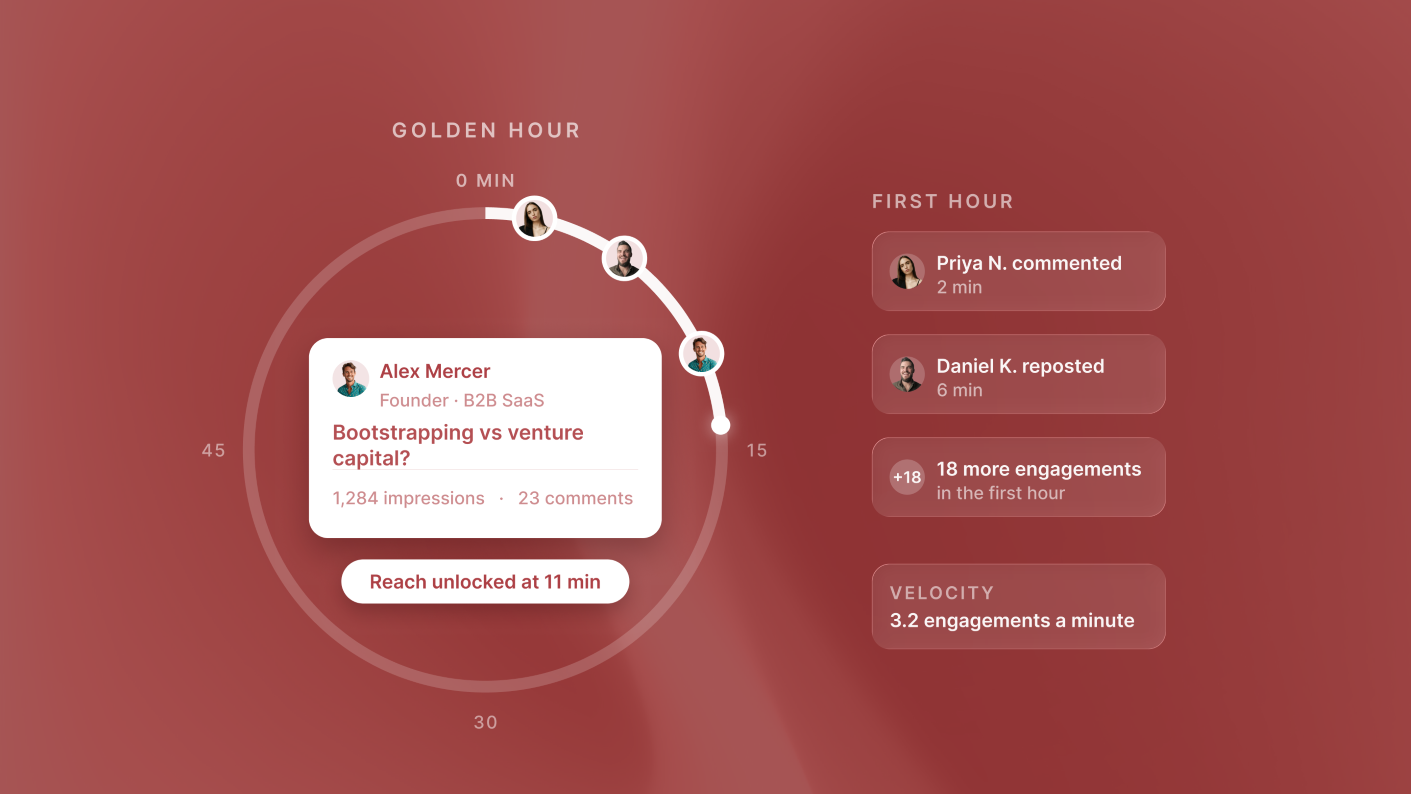
The LinkedIn algorithm 2026 samples your post's performance in the first hour to 90 minutes. If engagement velocity is high during this window, your post enters a broader distribution tier. If it's slow, the algorithm assumes low interest and stops showing it to new audiences.
Understanding this timing is part of any effective content strategy for professional platforms. The mechanism is purely algorithmic. The platform rewards recency and velocity, not just quality.
Why most LinkedIn creators miss this entirely
The competitive gap exists because most LinkedIn users publish without warming up their network first. They leave the critical first 90 minutes LinkedIn window to chance. They treat posting as a standalone action: write, hit publish, move on. Then they check back two hours later and wonder why reach is inconsistent.
The LinkedIn distribution algorithm rewards recency and velocity, not just quality. A mediocre post with quick engagement will always beat a great post that sits idle for 30 minutes.
Growth marketing platforms understand this principle when helping companies build systematic audience engagement rather than sporadic content drops. The pattern is consistent across platforms: velocity beats quality in the first hour.
The pre-launch engagement strategy that changes everything
Commenting on others' posts increases your own post visibility by up to 40% (Voketa LinkedIn Statistics 2026). The mechanism is algorithmic visibility, not networking tactics.
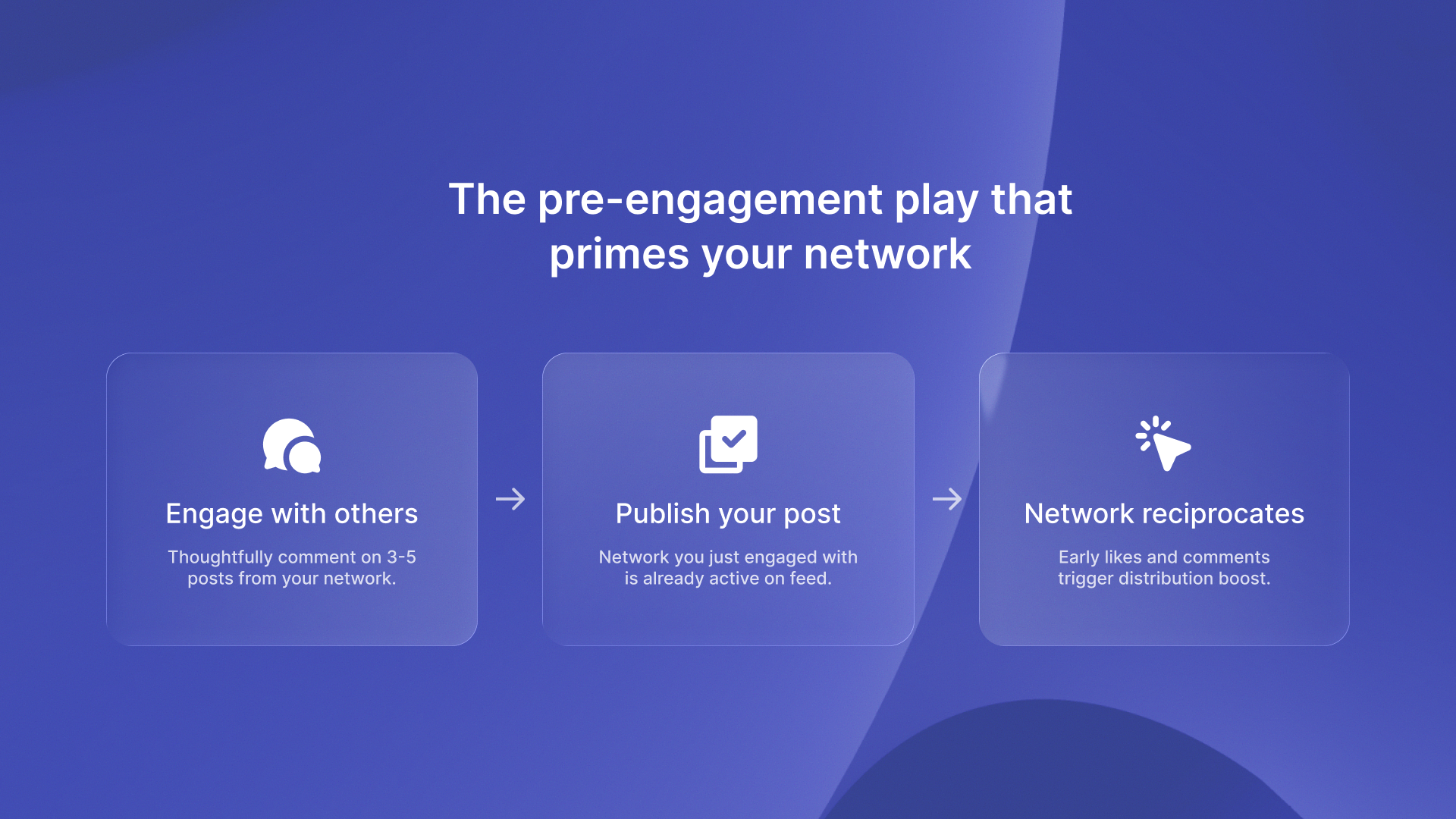
When you engage with others' content 20 to 30 minutes before you post, you prime your network. They are more likely to see your post right when it goes live. The people you just engaged with are already active on the platform. They see your post in their feed moments after you publish. They're more likely to reciprocate engagement. The cumulative effect stacks the deck for a strong first hour.
How to engineer early engagement velocity
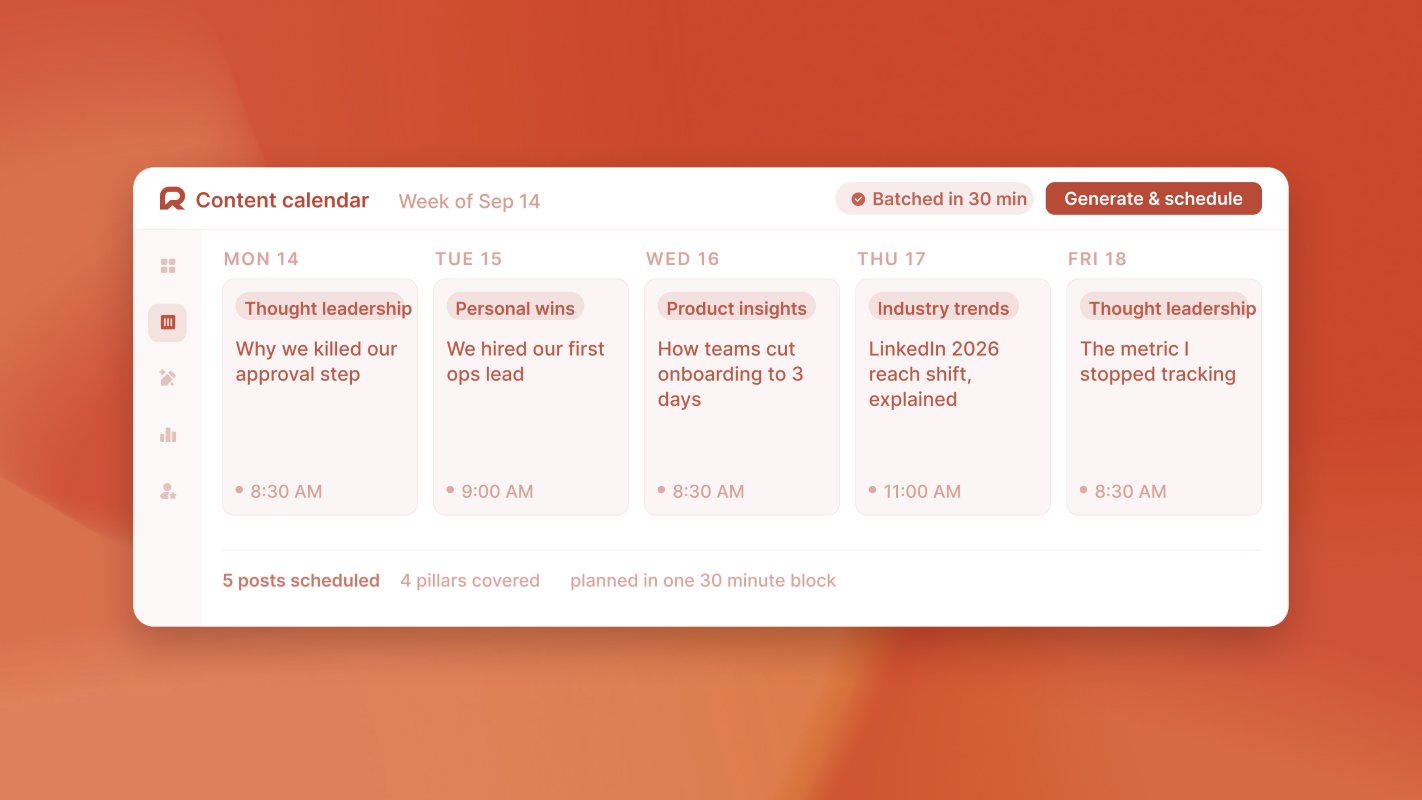
Set a posting schedule and work backward 30 minutes for pre-engagement. If you're publishing at 9:00 AM, start engaging at 8:30 AM. Comment thoughtfully on 3-5 posts from people in your network or target audience. Don't leave generic reactions. Write actual responses that add value.
When you hit publish at 9:00 AM, those same people are already active and primed to see your content. The first 10-15 minutes determine whether the algorithm grants you broader reach. A few quick interactions from recently engaged connections can trigger that initial distribution boost.
ReachSocial automates this workflow by organizing daily LinkedIn campaigns and tracking engagement performance. The platform helps professionals build authority through systematic pre-posting engagement rather than relying on sporadic activity.
For teams managing many priorities, time tracking tools like Timecapsule help you plan LinkedIn time well. You can stay engaged on LinkedIn without losing time for revenue-generating work. The key is building a repeatable system, not adding more hours to your day.
The 90-minute window is your entire LinkedIn posting strategy
Treat the first 90 minutes as the most important part of your LinkedIn posting strategy, not just the writing. Content quality still matters, but distribution mechanics matter more. The best post that nobody sees loses to the average post that hits velocity targets.
Track your first-hour engagement metrics to validate the system. Compare posts where you engaged beforehand versus posts where you didn't. The pattern will be obvious.
Early engagement creates momentum. Momentum triggers algorithmic distribution. Distribution compounds reach. Knowing how to get more engagement on LinkedIn means mastering the 90-minute window, not just content creation.
What to do next
The system isn't about gaming the algorithm. It's about understanding how LinkedIn distribution algorithm mechanics work and building a repeatable system around them. Here's your action plan:
- Set a posting schedule and work backward 30 minutes for pre-engagement
- Build a habit of commenting on 3-5 posts before you publish
- Track your first-hour engagement metrics to validate the system
Ready to stop leaving your LinkedIn reach to chance? Start with your next post. Set aside 30 minutes for pre-engagement. Publish at your scheduled time. Then watch what happens in that critical first hour.


.png)



%2520(14).png)
.png)
%2520(13).png)