
.svg)
.svg)
Linkedin algorithm 2026: what actually drives reach (and what kills it)


You post on LinkedIn. Some posts get 500 views. Others get 8,000. Same quality content. Same follower count. Different outcomes.
Not a coincidence. Not luck.
Most founders treat LinkedIn like a black box: post consistently, hope for the best, wonder why results swing wildly. But understanding the LinkedIn algorithm 2026 changes reveals a system with observable patterns. Those patterns changed significantly in 2026. If you still follow advice from 2023, you may be using outdated tactics. If you treat the platform like a megaphone, you are fighting the system. The platform now rewards very different behaviors.
Here’s what the 2026 data shows. Engagement speed matters more than follower count. Link placement hurts reach. The first 90 minutes after publishing decide if your post reaches hundreds or thousands. These aren't opinions. They're measurable patterns you can engineer around once you understand how the LinkedIn algorithm works.
The 48-hour distribution window
50% of total impressions on LinkedIn happen within the first 48 hours of posting (Metricool). That stat changes everything about how you should approach publishing.
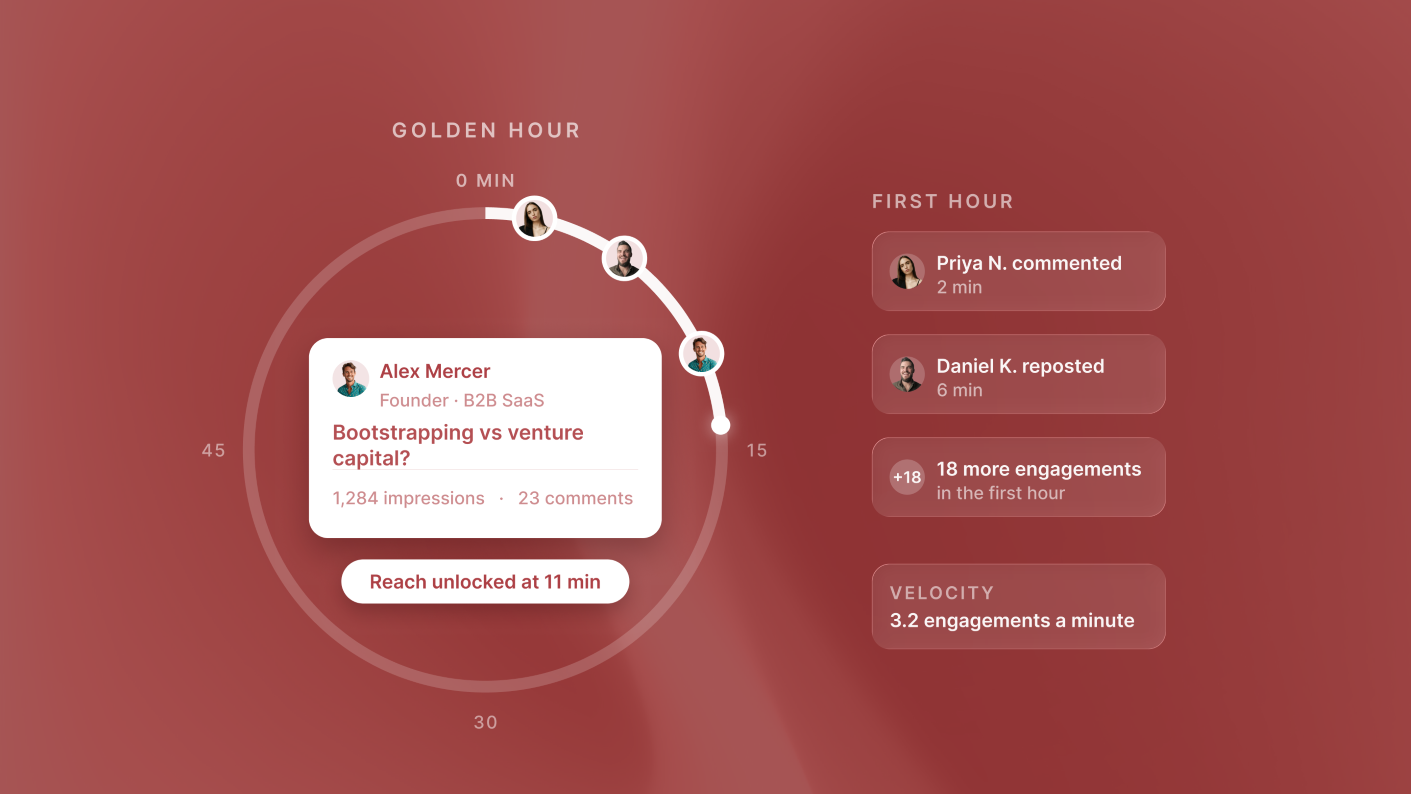
The algorithm doesn't evaluate your post once. It evaluates it continuously during a narrow window. It uses early engagement as a sign of quality. If your post gets comments and shares in the first 90 minutes, LinkedIn amplifies it to second-degree connections. If it sits quiet, the algorithm assumes low relevance and stops distribution.
This is the engagement velocity problem most founders miss. ReachSocial tracked this pattern across 200+ posts. They found that posts with 5+ comments in the first hour reached 3.2x more people. This was compared to posts that got the same 5 comments over 6 hours.
The actions you take immediately after publishing determine your total reach. Pre-engagement setup, notification timing, and initial responder coordination aren't optional tactics. They're the difference between 500 impressions and 5,000.
Why a 500-follower profile with high engagement rate beats 10,000 followers
LinkedIn engagement rates increased 13.90% in 2026, even as average posts per week dropped by nearly 10% (Metricool). The algorithm now rewards well-timed, engagement-optimized posts over high-frequency publishing.
But here is the surprising reality. A profile with 500 followers and 5% LinkedIn engagement reaches more people. It can beat a profile with 10,000 followers and 0.3% engagement. The algorithm prioritizes engagement velocity in the first hour after posting, making network quality more valuable than follower count.
Consistency still matters, but strategic execution within each post matters more. Posting daily without understanding distribution mechanics produces worse results than posting three times per week with deliberate velocity engineering. This is part of building an effective LinkedIn posting strategy that compounds rather than dilutes impact.
The shift reflects LinkedIn algorithm changes toward semantic ranking that rewards consistent expertise over one-off viral content. The platform's machine learning models now detect artificial engagement patterns. They suppress posts that trigger pod behavior or coordinated liking.
Authentic back-and-forth conversation, especially with commenters who have engaged with your content before, signals quality. The algorithm looks for genuine interaction, not reaction count.

The link penalty problem
On personal profiles, posts with links see impressions and interactions drop by 27% and 20% respectively (Metricool). The algorithm deprioritizes content that sends users off-platform.
This creates a structural tension: founders need to drive traffic, but the platform punishes explicit linking. The workaround is simple but counterintuitive: put external links in the first comment instead of the post body.
Test it yourself. Publish the same post twice: once with a link in the body, once with the link in your first comment 30 seconds after publishing. Track impressions over 48 hours. The difference is measurable and consistent.
The penalty doesn't apply equally to all links. Native LinkedIn features (document uploads, polls, LinkedIn articles) receive preferential treatment. External URLs trigger the suppression.
Content format and algorithmic preference
Document carousels, single-image posts with substantive captions (1,200+ characters), and text-only posts perform best. They receive more distribution than video or multi-image posts.
The algorithm favors content that keeps users on the feed, instead of clicking away or scrolling past fast. This doesn't mean video never works. It means the bar for video performance is higher. The platform prioritizes dwell time on native content.
Format choice matters independently of topic quality. A mediocre carousel often outperforms excellent video because the algorithm weights format before evaluating substance. This pattern appears across other distribution systems where platform incentives shape content performance more than creator intent.
Best time to post on LinkedIn (and why timing compounds velocity)
Posting when your audience is actively online creates a multiplier effect. Early engagement triggers algorithmic amplification, which drives more engagement, which triggers broader distribution.
Check your analytics for when your connections are online. Most B2B audiences show peak activity between 7-9 AM and 12-2 PM in their timezone. But your audience may differ.
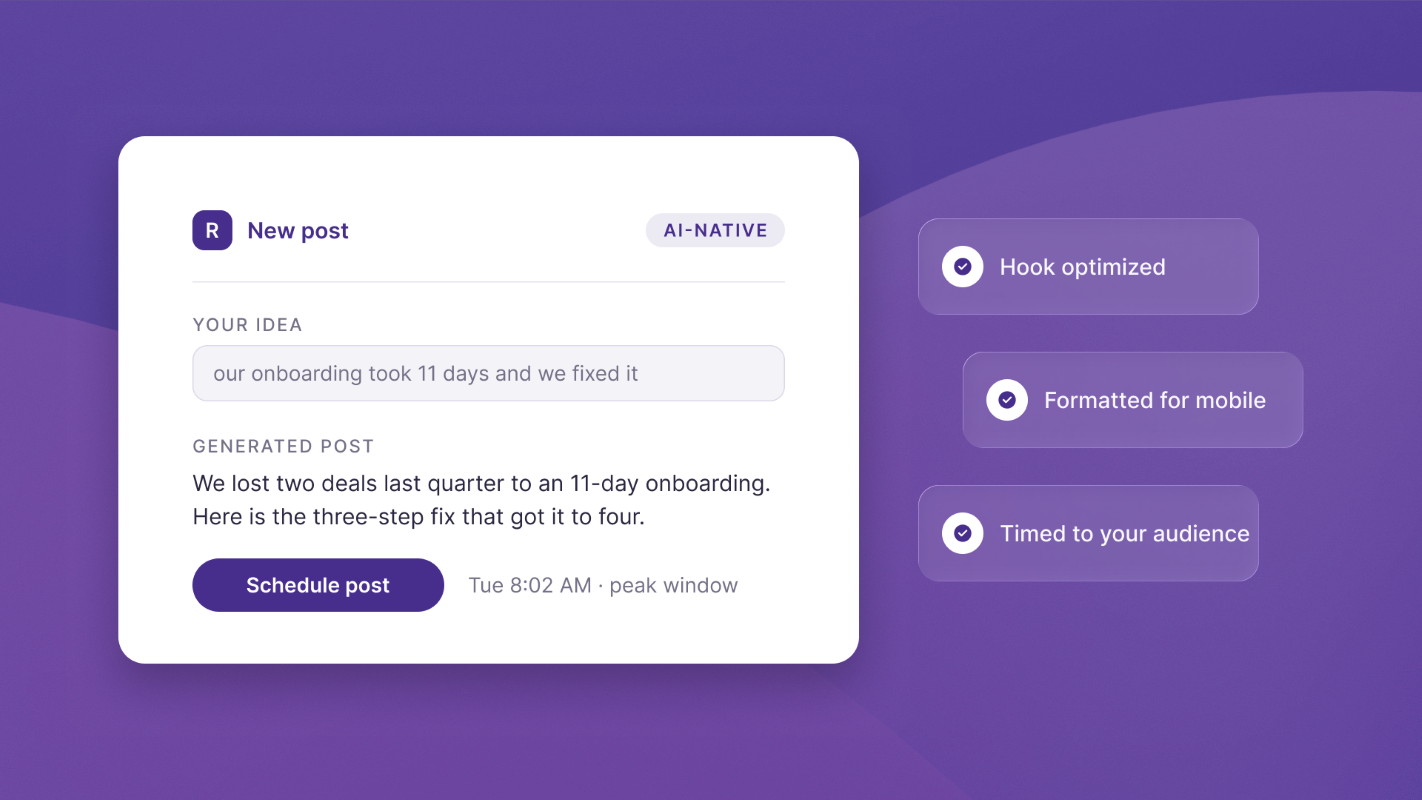
The best time to post on LinkedIn isn't a universal number. It's the moment when your specific network can engage in the first 90 minutes after you publish. That narrow window determines whether you hit the velocity threshold that unlocks broader distribution.
Block 90 minutes post-publish to respond to every comment. The algorithm tracks response rate and response time. Posts where the author actively engages with commenters in the first hour receive continued amplification. Posts where the author disappears see distribution drop off.

How semantic ranking changed LinkedIn posting strategy in 2026
LinkedIn introduced LLM embeddings in October 2025, fundamentally changing what the algorithm rewards. Instead of optimizing for engagement-bait hooks, the system now prioritizes topical consistency and domain expertise.
This means one viral post on a random trend helps your account less than 10 steady posts showing deep knowledge in one area. The algorithm builds a semantic profile of your expertise based on topic clustering across your content history.
If you post about sales one week, product management the next, and hiring after that, the algorithm can’t place your expertise. It shows your content to a broad, lukewarm audience. If you post often about go-to-market strategy for 12 weeks, the algorithm sees you as a GTM expert. It then shows your content to people who engage with GTM posts.
Narrowing focus increases reach. That's counterintuitive, but it's how semantic ranking works.
What this means for content planning systems
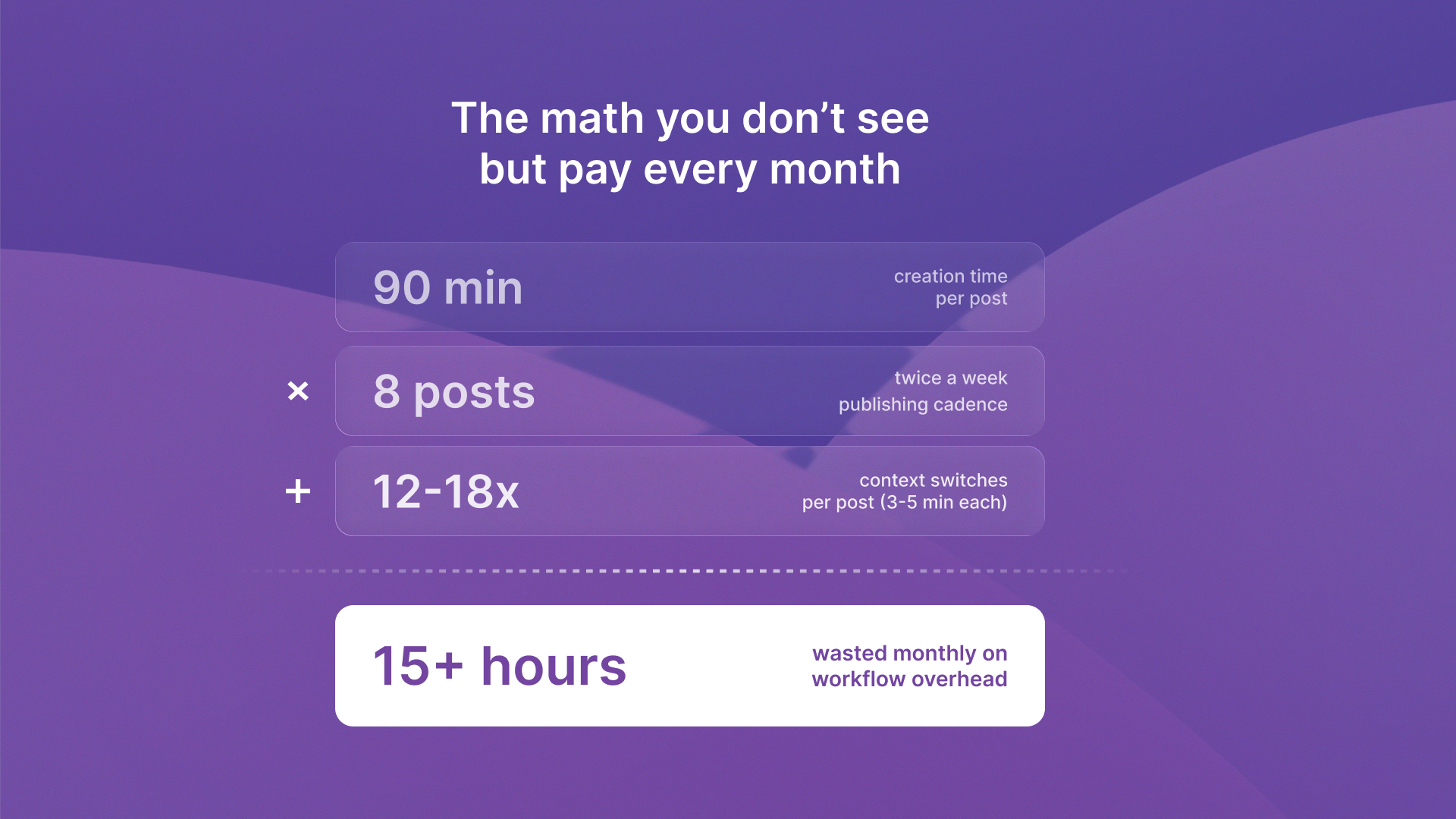
Most professionals struggle with LinkedIn consistency because their workflow has too many friction points. The usual process includes drafting in one tool. Then you edit in another tool. Next you reformat the content in a scheduler. Finally, you track post times manually.
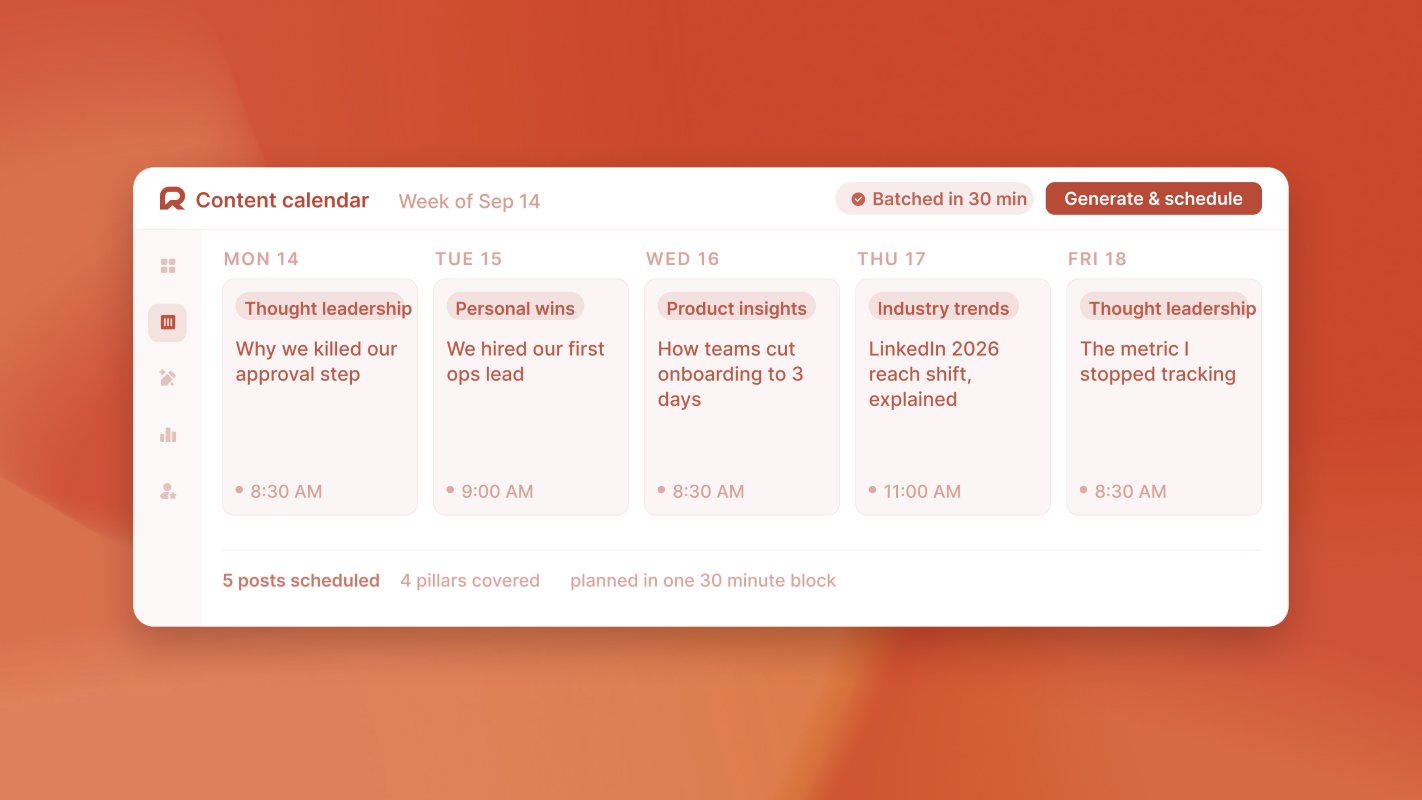
Every tool switch creates an exit ramp where execution fails. Planning content in batches using a 30-day calendar ends the weekly scramble. It works best when your publishing workflow is streamlined enough to follow through.
The operational reality is that consistency compounds. Sporadic posting trains the algorithm that you're unreliable, reducing your distribution even when you do show up. Systematic posting builds algorithmic trust over time.
What to do next
Audit your last 10 posts for velocity patterns
Identify which had high engagement in the first 90 minutes and reverse-engineer what you did differently in distribution. Look for patterns in who commented early, what time you posted, and whether you responded immediately. Track the correlation between first-hour engagement and total reach.
Build a pre-engagement protocol
Notify 5-8 genuine connections 10 minutes before posting and ask for thoughtful comments, not generic reactions. If you're managing this manually, set calendar reminders. If you're scaling past manual coordination, tools that automate pre-posting engagement workflow solve the operational overhead without triggering pod-detection penalties.
Test the link strategy immediately
Put external links in the first comment instead of the post body and measure impression differences over 3 posts. Track the exact percentage change. Document the pattern so you're making decisions based on your data, not assumptions.
Schedule posts for your audience's active hours and block 90 minutes post-publish
Check your analytics for when your connections are online. Posting at optimal times without staying around to engage wastes the timing advantage. The velocity window requires both: audience availability and author responsiveness.
Narrow your topical focus for the next 30 days
Pick one domain and post consistently within it. Track whether your engagement rate and reach increase as the algorithm builds your semantic profile. The shift from broad to deep expertise typically shows results within 4-6 weeks.
The LinkedIn algorithm 2026 isn't random. It rewards operational discipline most founders skip. Understanding how the system works gives you an edge over competitors. They treat consistency as a motivation problem, not a system problem. Ready to automate the velocity engineering without manual coordination? Start building systematic LinkedIn momentum that compounds over time.


.png)



%2520(14).png)
.png)
%2520(13).png)