
.svg)
.svg)
Your Linkedin posts are dying in Chatgpt

%2520(13).png)
You have great ideas for LinkedIn posts. You even draft them in ChatGPT sometimes. But somehow, they never make it to LinkedIn. Sound familiar?
Most advice treats LinkedIn consistency as a motivation problem. Just commit harder. Batch your content. Set reminders. Block time on your calendar. But if you've tried all that and still aren't posting regularly, the issue isn't discipline. It's workflow friction.
When you draft in ChatGPT, then copy to Google Docs, and edit, each step can slow you down. Then you export, upload to Buffer, schedule, and add it to LinkedIn by hand. Each step is a chance to abandon the process. This isn't a personal failing. It's an operational problem with an operational solution: workflow consolidation.
%20(13).png)
The 1% rule: consistency delivers disproportionate reach
Only 1% of monthly LinkedIn users post content weekly, but this small group generates 9 billion impressions. That's the entire game: consistency compounds. Consistent weekly posts yield 5.6 times follower growth and 2 times engagement compared to sporadic posting.
But here's what no one tells you: the barrier to joining that 1% isn't lack of ideas. It's not lack of time. It's the friction embedded in your LinkedIn content workflow. Every tool switch is a decision point where you can walk away. Every copy-paste is a moment where you can get distracted. Every manual reformatting task is an excuse to do it later.
The tool-switching tax kills posting habits
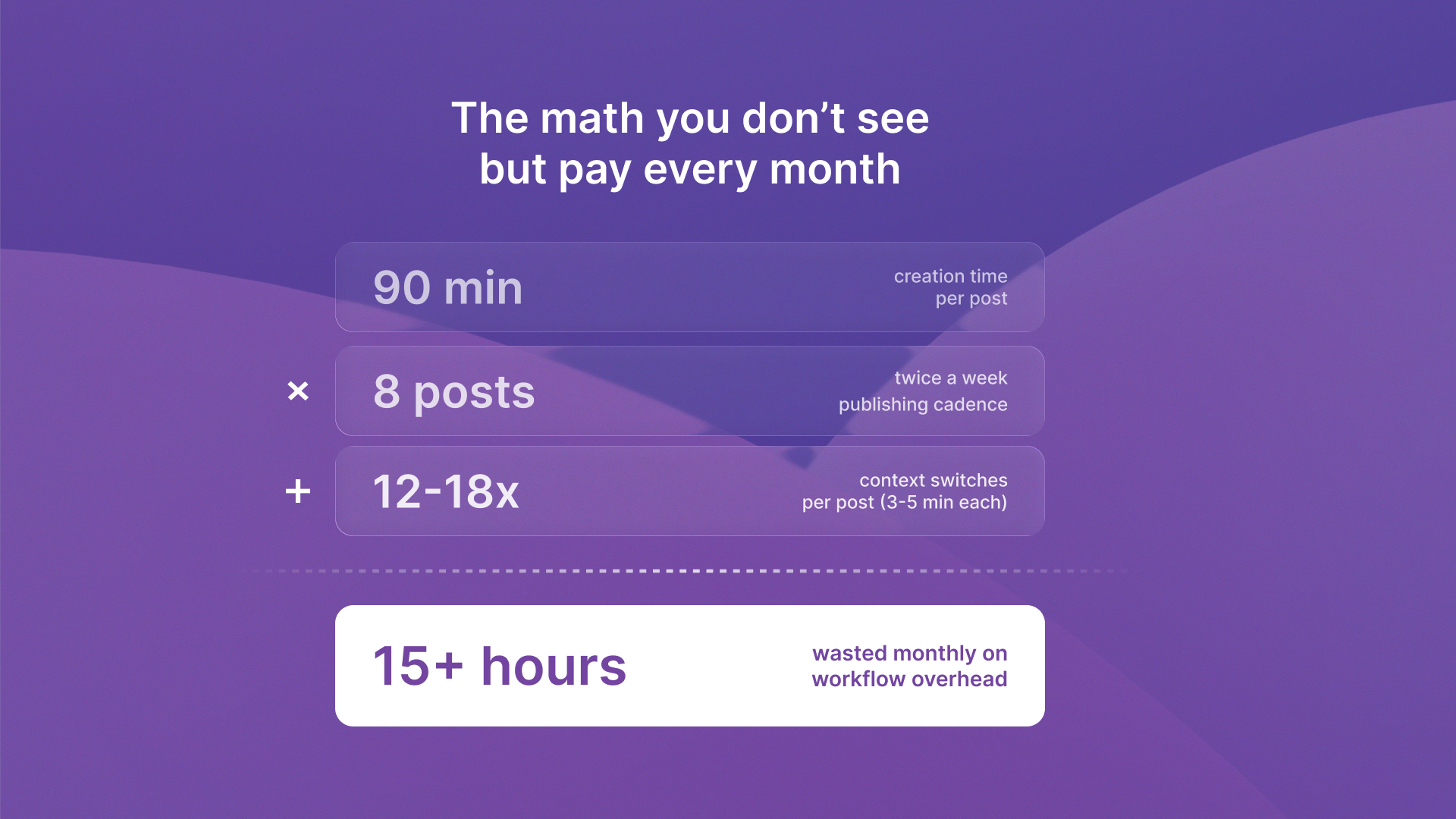
The average professional uses 3-5 disconnected tools for content creation. Draft in ChatGPT. Edit in Google Docs. Schedule in Buffer. Add images manually. Each transition costs focus and willpower.
Research shows each context switch costs 23 minutes of refocusing time. But the real cost isn't time, it's abandonment. The more transitions your workflow requires, the more exit ramps you create. And every exit ramp is a chance to never hit publish.
This is why 60% of organizations achieve ROI within 12 months of implementing workflow automation. Consolidation removes friction. Fewer tools means fewer reasons to quit mid-process. For teams managing broader content strategy, this principle scales: integrated workflows across channels eliminate the coordination overhead that kills consistency.
Workflow friction manifests as micro-abandonments
You've experienced this. You draft a post in ChatGPT. It's good. You're motivated. Then you realize you need to:
- Copy it to your scheduler
- Reformat the line breaks
- Find and upload an image
- Write alt text
- Schedule the time
- Double-check it posted correctly
Each step drains a bit of your motivation. By step three, you're already thinking about the next meeting. By step five, you've convinced yourself you'll finish it later. You never do.
These aren't dramatic failures. They're micro-abandonments at transition points. The post was 80% done, but that final 20% required navigating three more tools. The friction won.
The cognitive overhead of disconnected tools
Every tool switch introduces decision fatigue. Which tool opens links better? Where did I save that image? Did I already schedule this or just draft it? Should I post now or queue it? These aren't big decisions, but they accumulate. By the time you're juggling your third tool, posting feels like project management instead of sharing an idea.
Integrated workflows eliminate these micro-decisions. When drafting, editing, image selection, and scheduling happen in one interface, there's no decision fatigue. There's just content creation. This same principle applies across GTM strategy execution: when coordination costs drop, velocity increases.
Integrated workflows turn creation into a single continuous process
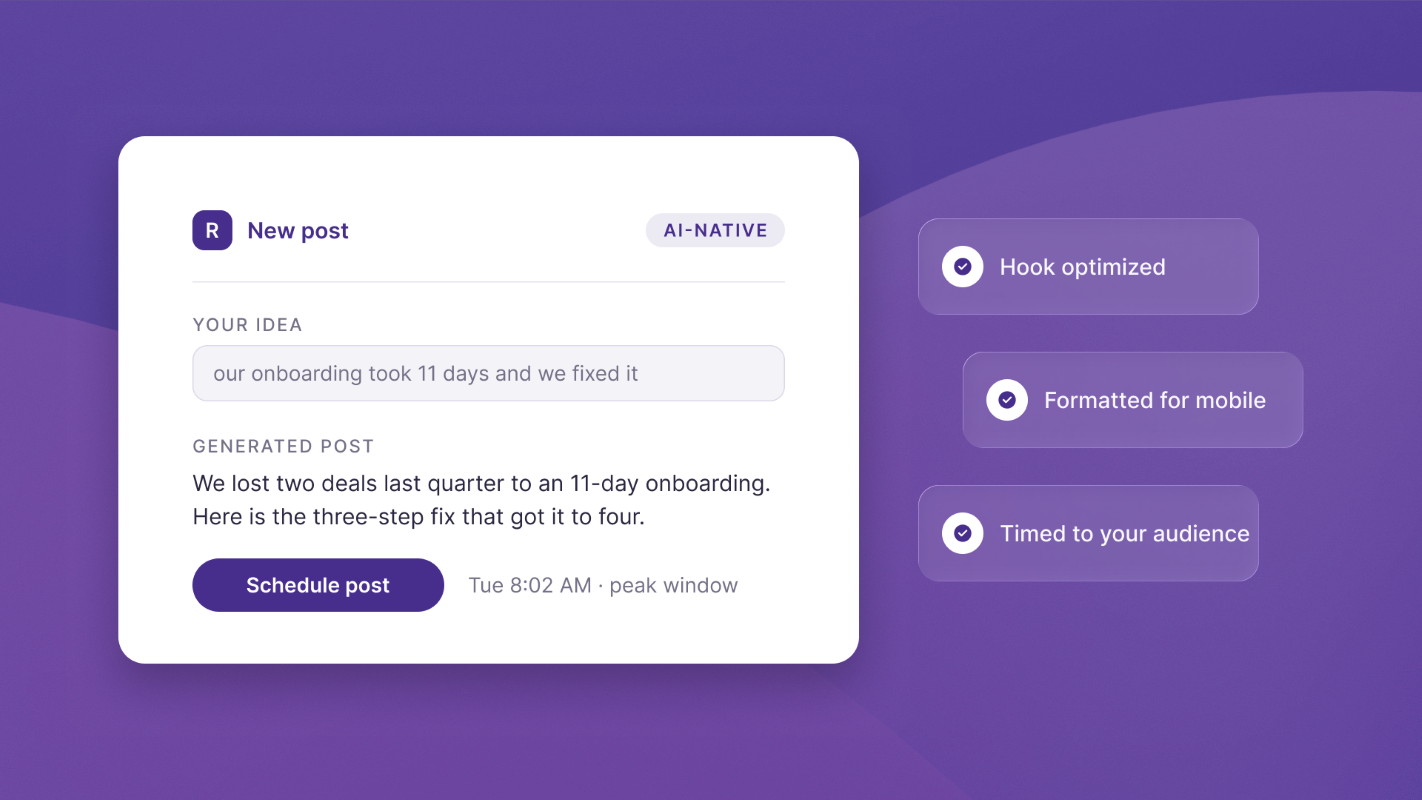
The solution isn't better discipline. It's better architecture. Tools that combine drafting, editing, and scheduling in one interface remove the transition points where abandonment happens.
This is the operational reality behind LinkedIn posting consistency: the companies posting 3-5 times per week aren't more motivated. They've eliminated workflow friction. Their content workflow automation is one continuous process, not separate tasks that need willpower at each step.
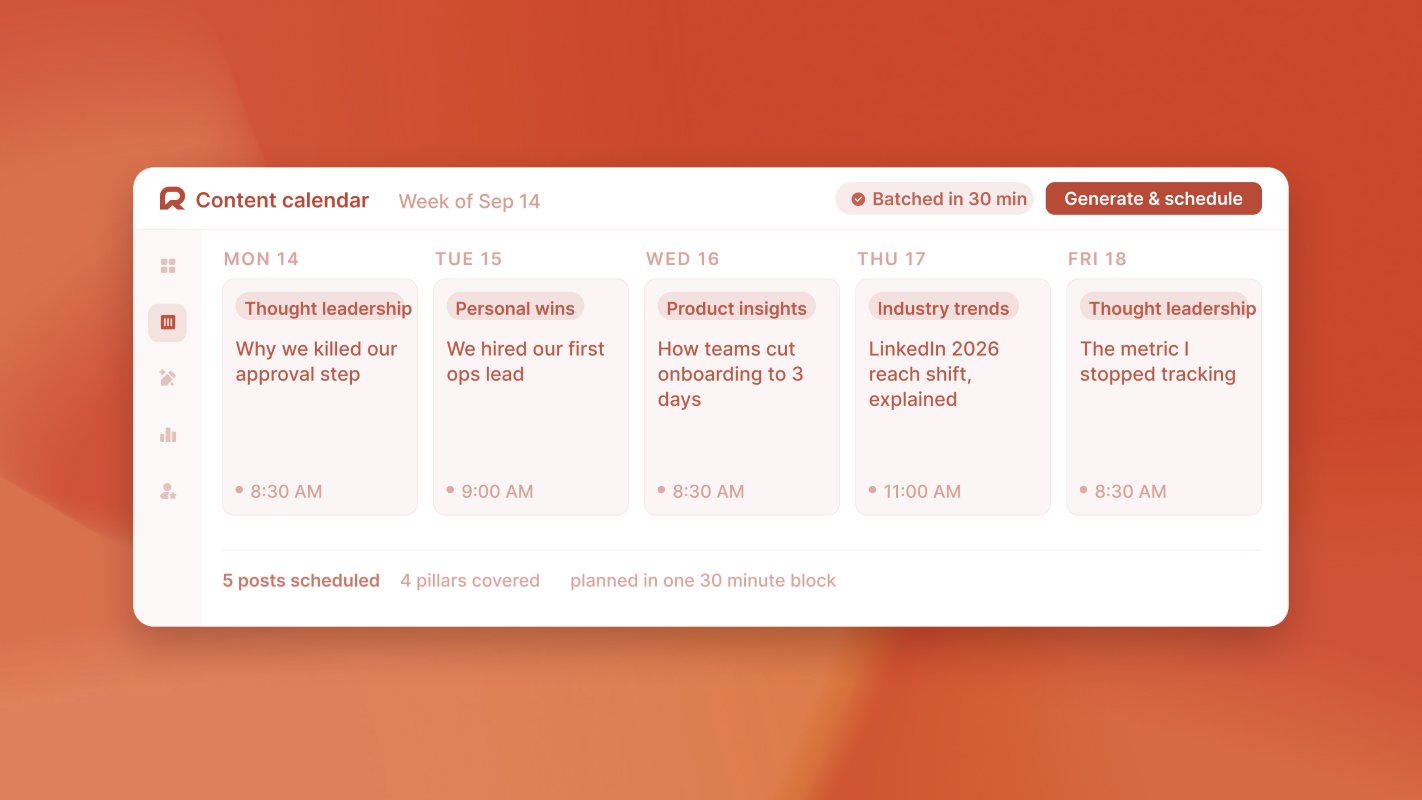
Platforms like ReachSocial show this principle. When tracking engagement, organizing campaigns, and posting happen in one place, consistency becomes automatic. You're not managing a workflow. You're just creating content. For venture-backed companies with limited bandwidth, this consolidation is the difference between theoretical content strategy and actual execution.
Why timing matters: the window of motivation is shorter than you think
The gap between drafting and publishing is where most content dies. You finish a draft with momentum, but by the time you've switched tools twice, that energy has dissipated. The idea that felt urgent 15 minutes ago now feels optional.
Integrated systems collapse this gap. Draft to publish happens in minutes, not hours. The momentum that sparked the idea carries through to publication. This isn't about speed for speed's sake. It's about capturing commitment before friction erodes it.
Real-time workflow tracking tools like Timecapsule reveal exactly where time bleeds out during content processes. When agencies audit their posting workflows, most discover 40-60% of elapsed time is spent switching contexts, not creating.
How to audit your content workflow for friction points
Start by mapping your current process end-to-end:
- Track every tool transition from idea to published post
- Time each stage to identify where momentum stalls
- Note every manual copy-paste or reformat required
- Count decision points where you can abandon the process
- Identify which steps could consolidate into a single interface
The goal isn't to eliminate all tools. It's to eliminate unnecessary transitions. If you're using five tools and three of them only handle scheduling and reformatting, that's your consolidation opportunity.
For technical teams building workflow automation, AI-powered workflow prediction can proactively identify abandonment patterns before they happen. The same systems that optimize code deployment pipelines can optimize content pipelines.
What consolidation actually looks like
Workflow consolidation doesn't mean using one tool for everything. It means reducing handoffs between systems. The ideal state:
- Draft and edit in the same interface
- Preview and schedule without exporting
- Track performance without switching platforms
- Iterate on content based on engagement data in the same tool
This creates a closed feedback loop. You see what works, adjust, and republish without navigating three dashboards. Companies that treat social media workflow friction as an engineering problem publish content 3 to 4 times more often. They do not see it as a discipline problem.
For teams operating with fractional resources, speed matters even more. Fractional CTOs shipping production systems faster understand this: consolidated tooling multiplies constrained capacity.
Fix the workflow, fix the consistency
The reason your LinkedIn consistency fails isn't that you lack ideas or discipline. It's that your LinkedIn content creation process has too many exit ramps. Every tool switch is a moment where you can walk away. Every copy-paste is a chance to get distracted. Every manual reformatting task is an excuse to do it later.
Fix the workflow, and consistency becomes automatic. That's not motivational advice. It's operational reality. The 1% who post consistently aren't superhuman. They've just removed the social media workflow friction that stops everyone else.
Start by auditing your current process. Count the tools. Count the transitions. Then ask: which of these steps could collapse into one interface? The answer is your path to consistency.


.png)



%2520(14).png)
.png)