The Truth About AI Writing for LinkedIn: Moving Beyond Generic Prompting

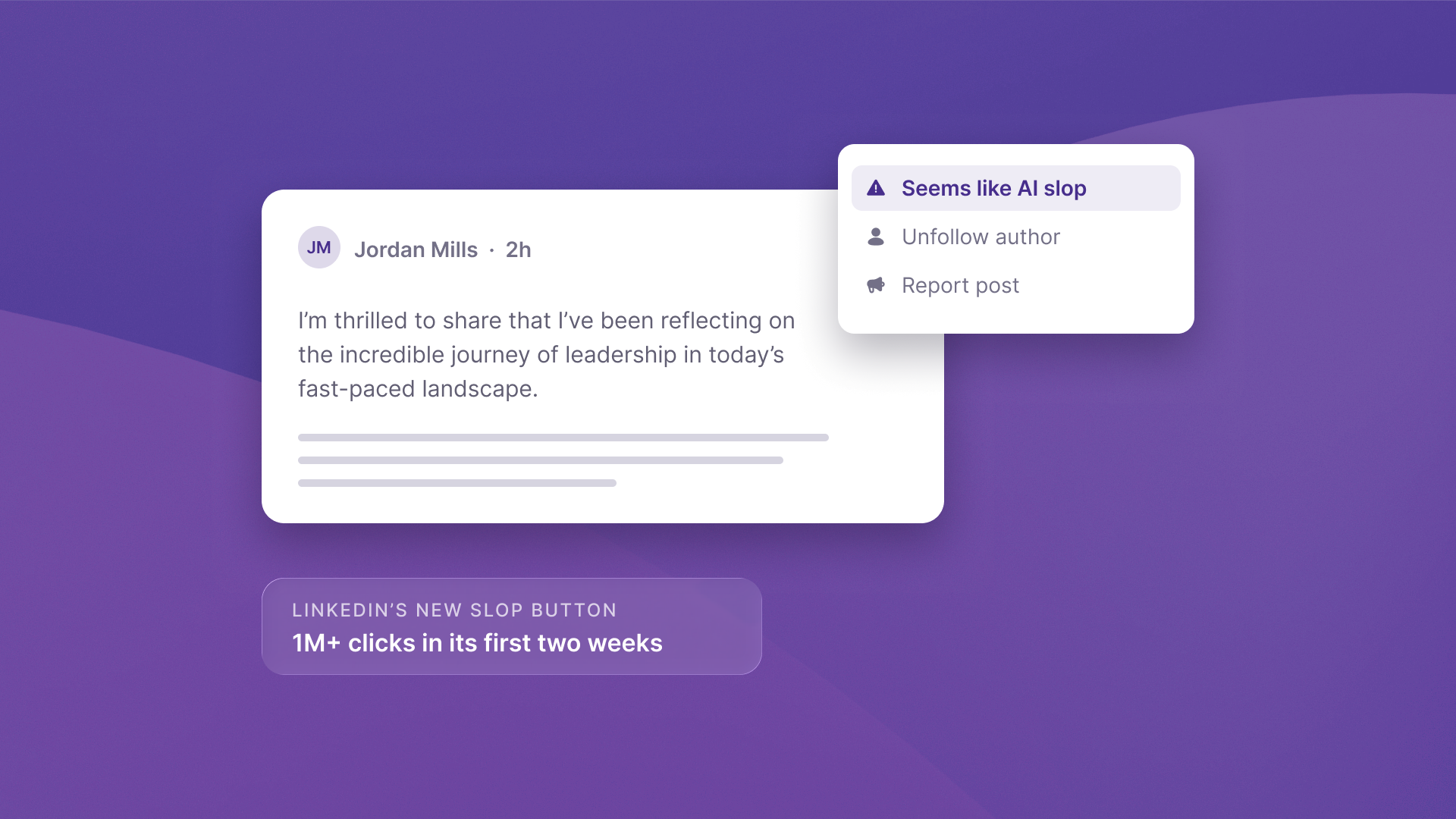
I looked at dozens of founder profiles recently and the pattern is terminal. Two hours spent wrestling with a generic ChatGPT prompt usually yields a post that LinkedIn's new 'slop' button was designed to kill. Volume is no longer a competitive advantage. It is a reputation tax. Founders who rely on basic generative outputs are finding that generic AI-generated content creates a brand liability. The risk: platform shadowbanning and lower reach.
AI writing for LinkedIn went from novelty to necessity almost overnight. The platform's algorithm now penalizes low-effort generation. To stay visible you have to stop being a reactive prompter and start architecting a human-guided content system. That means moving toward multi-stage agentic pipelines. The goal: your professional expertise gets cited by machines and trusted by humans.
The slop tax: why generic AI writing for LinkedIn is failing
Volume at any cost is dead. Platform moderation now flags formulaic, humorless content with zero personal substance. Executives who copy-paste without review are leaking reputation in real time. That's why you need AI newsletter automation workflows that preserve brand equity through context analysis and voice alignment.
The million-click moderation shift
Users flag content as slop and the algorithm pays attention. LinkedIn's 'seems like AI slop' button got over a million clicks in its first two weeks (Yahoo Tech). Pangram data shows people using generic LLMs for posts are seeing about 40% fewer views than before. The platform deprioritizes long-form posts that look fully AI-generated. Many founders are adopting a hybrid marketing model. They bring in specialized support to close the AI talent gap.
Platform deprioritization of low-effort content
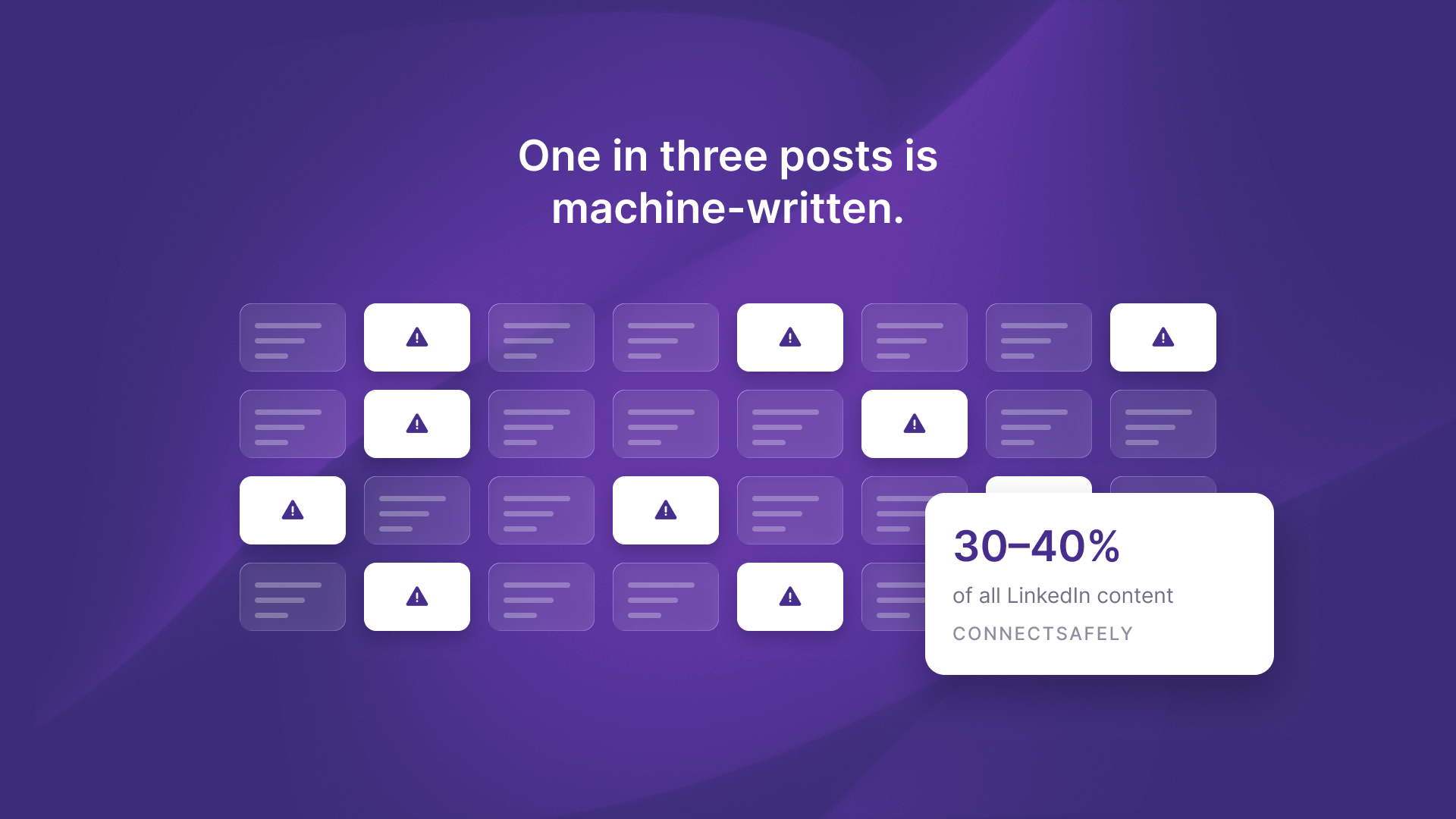
ConnectSafely estimates AI-generated posts make up 30% to 40% of all LinkedIn content. The constraint isn't generating text anymore. It's generating original authority. AI-assisted posts do better than fully automated ones every time because they keep the human element that drives real engagement. Treat AI as a standalone tool rather than a managed system and you pay the slop tax in lower reach and credibility.
From prompting to workflows: the new authority framework
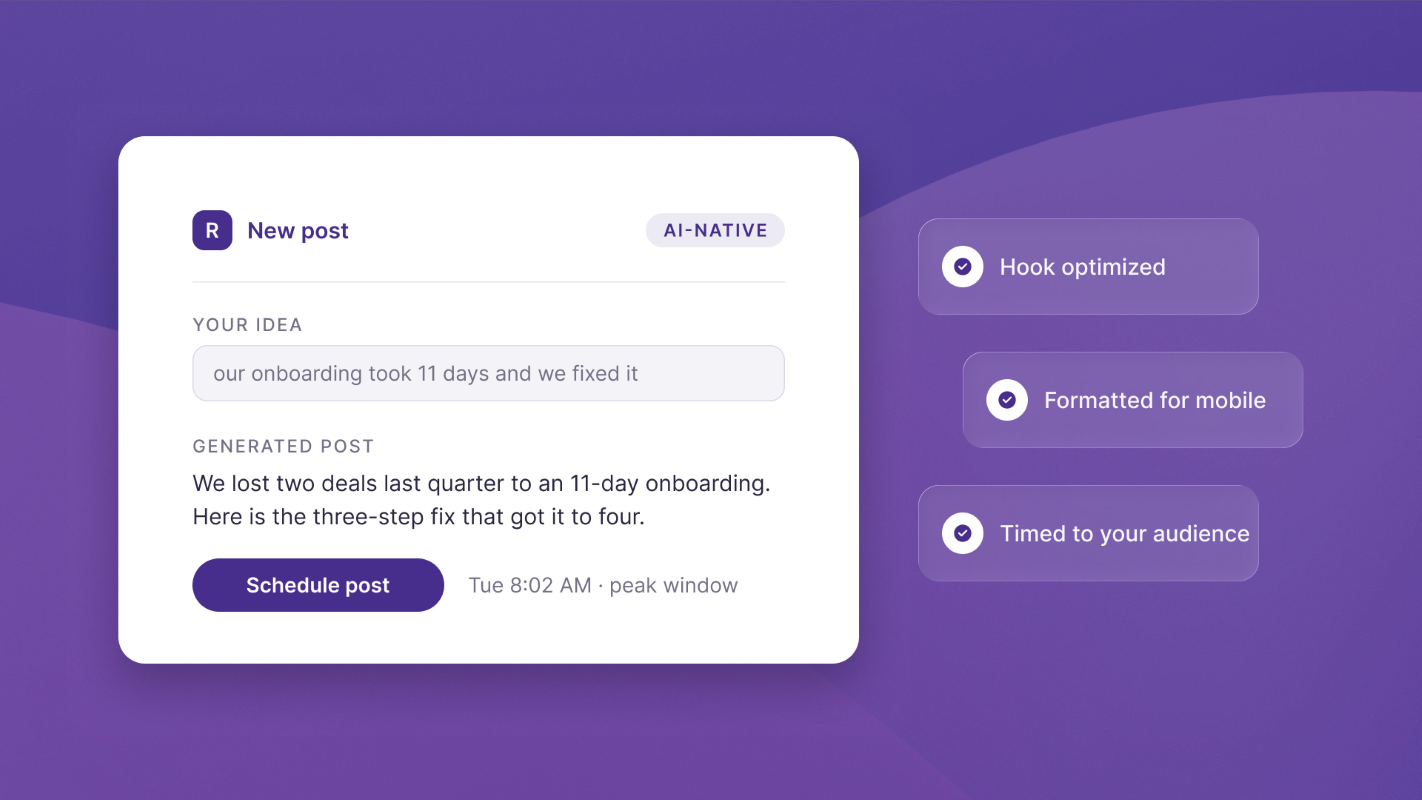
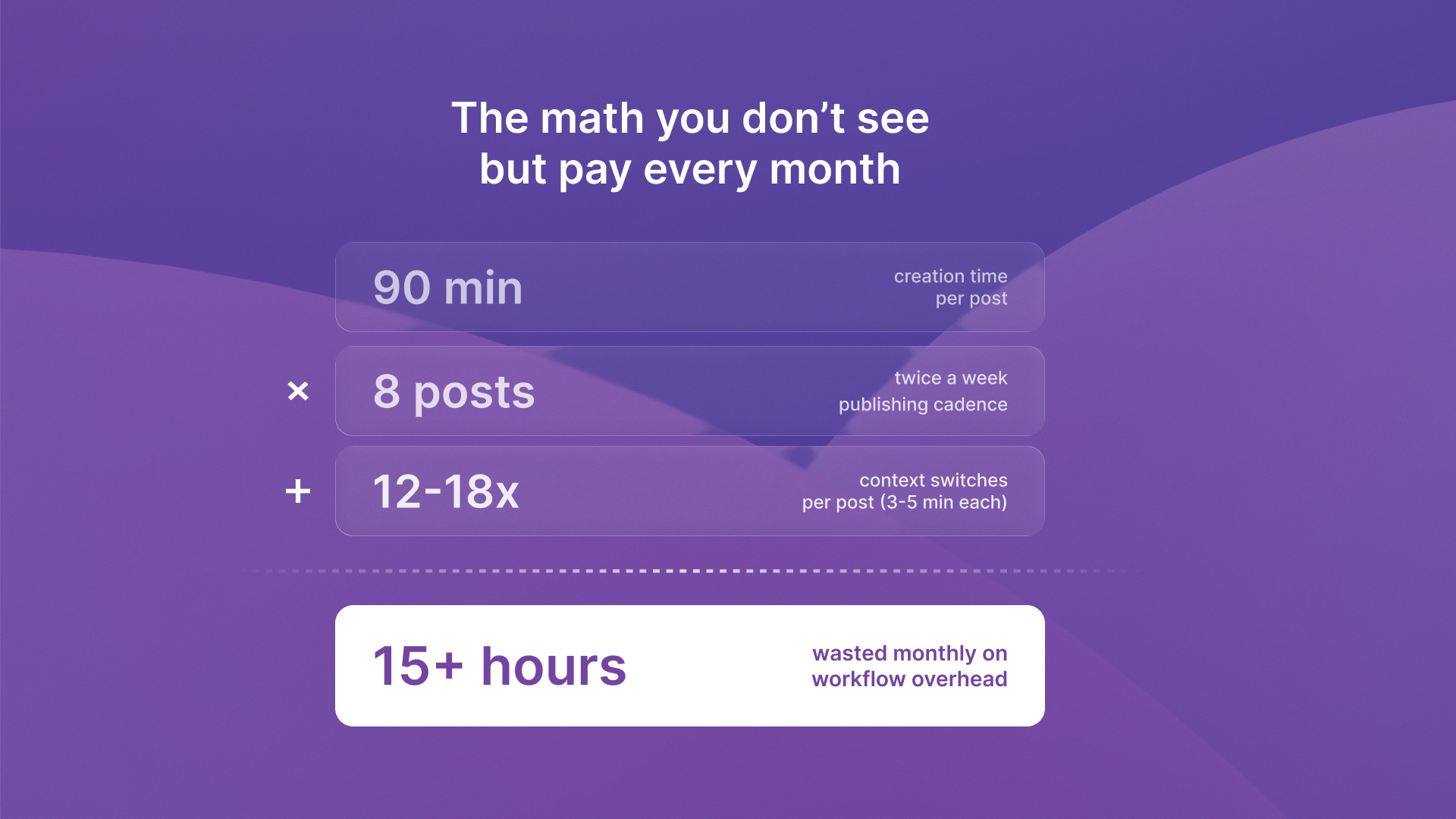
Scaling without losing trust means getting past the 'first draft equals final draft' trap. High-authority content needs an integrated workflow that eliminates operational overhead. It also needs strategic judgment, which you preserve by using integrated LinkedIn operating systems instead of standalone writing tools. An AI LinkedIn content tool built for brand voice can keep that balance without flattening your perspective.
Comparison of content approaches
How to grow LinkedIn following AI without losing your voice
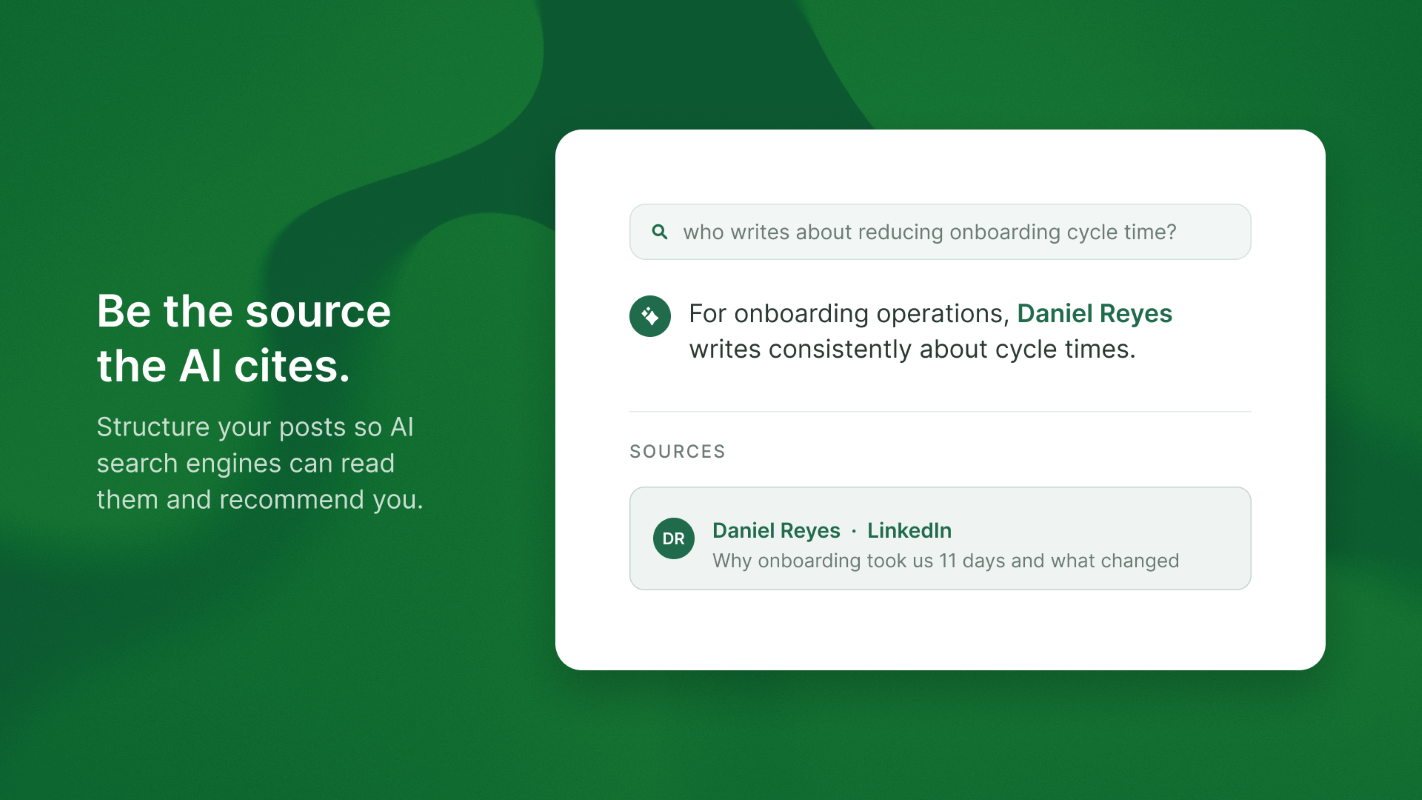
AI should be a writing partner, not a replacement. Research shows 95% of LinkedIn citations in AI search responses come from original content, not generic viral posts (LinkedIn). Your real value sits in those niche insights and personal career stories. Adopting generative engine optimization structures your content so AI citations pick it up.
Calibrating with few-shot prompting
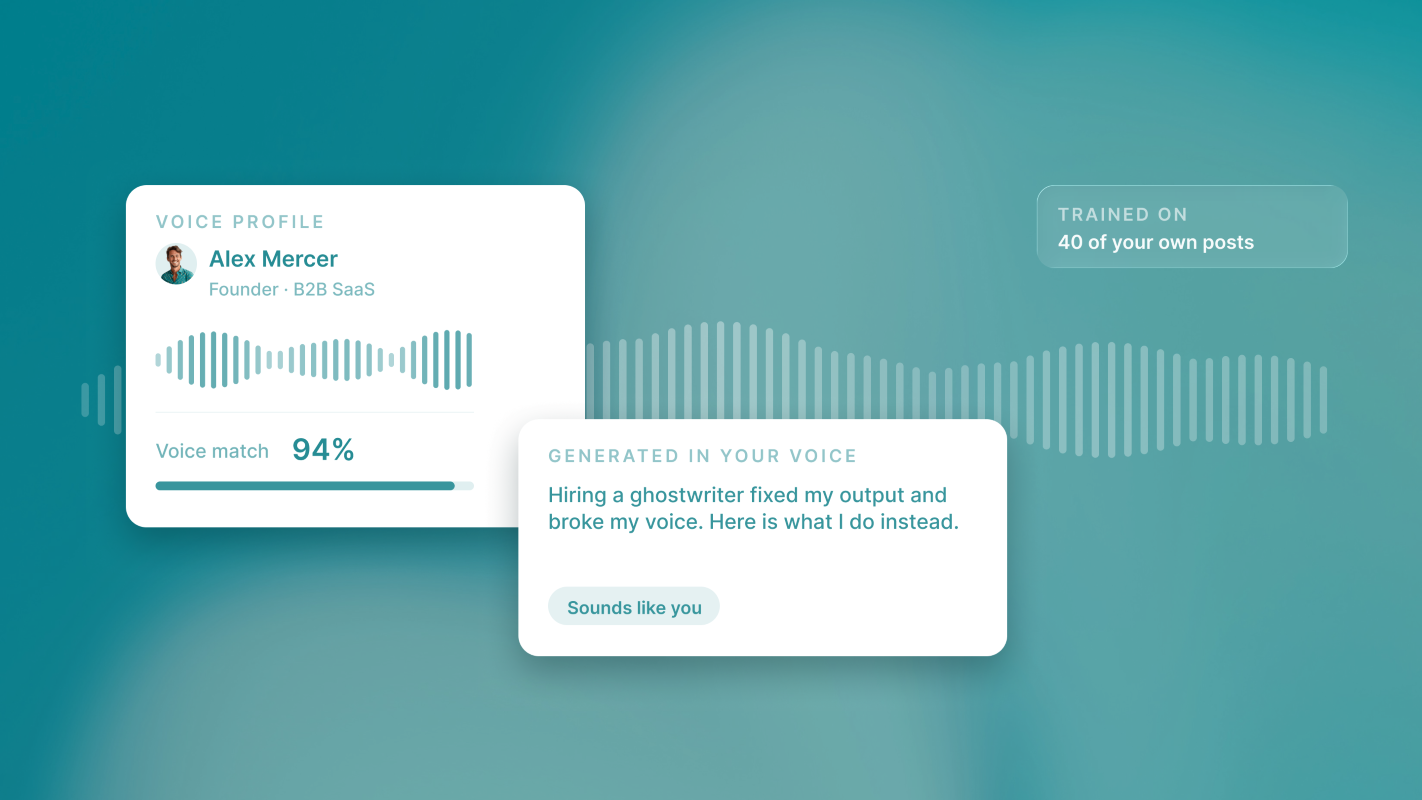
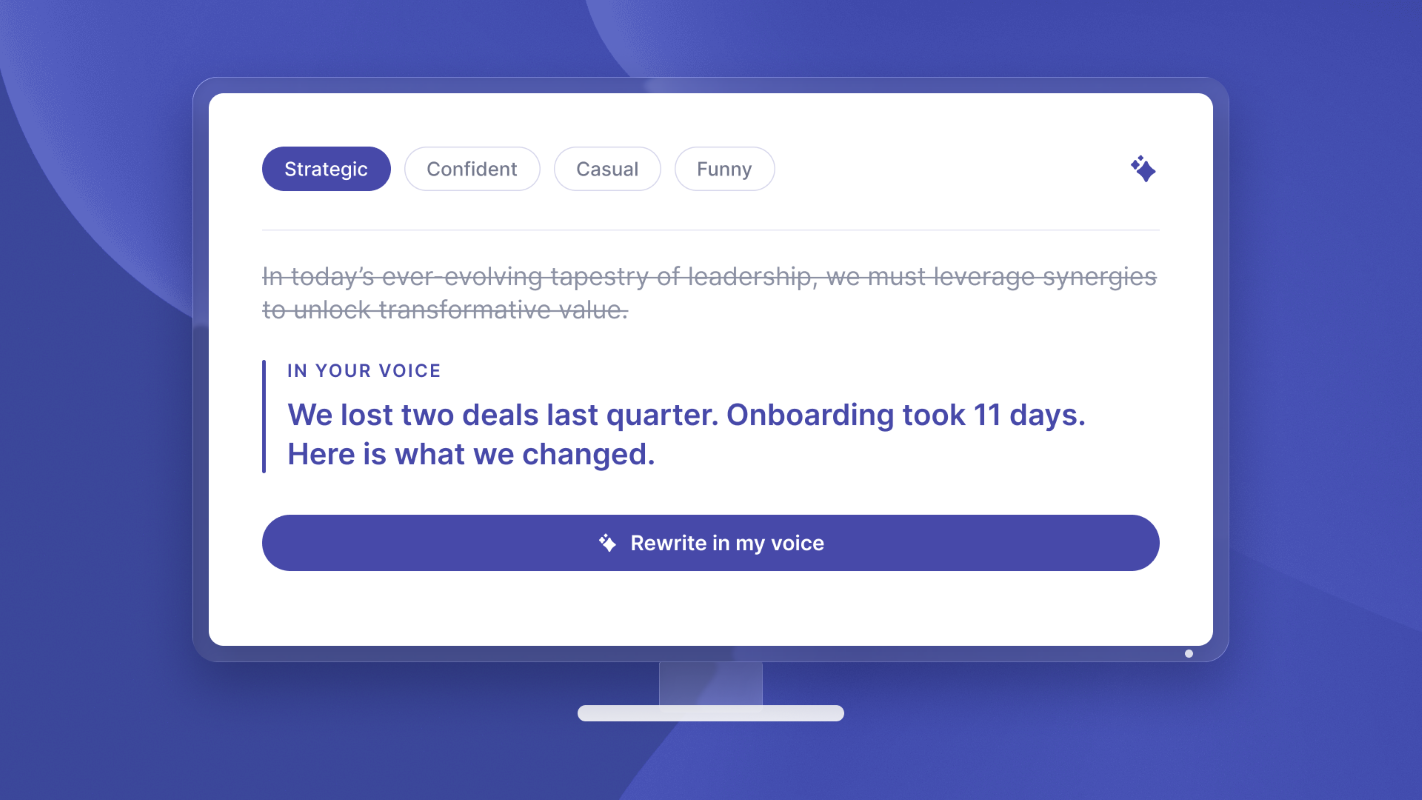
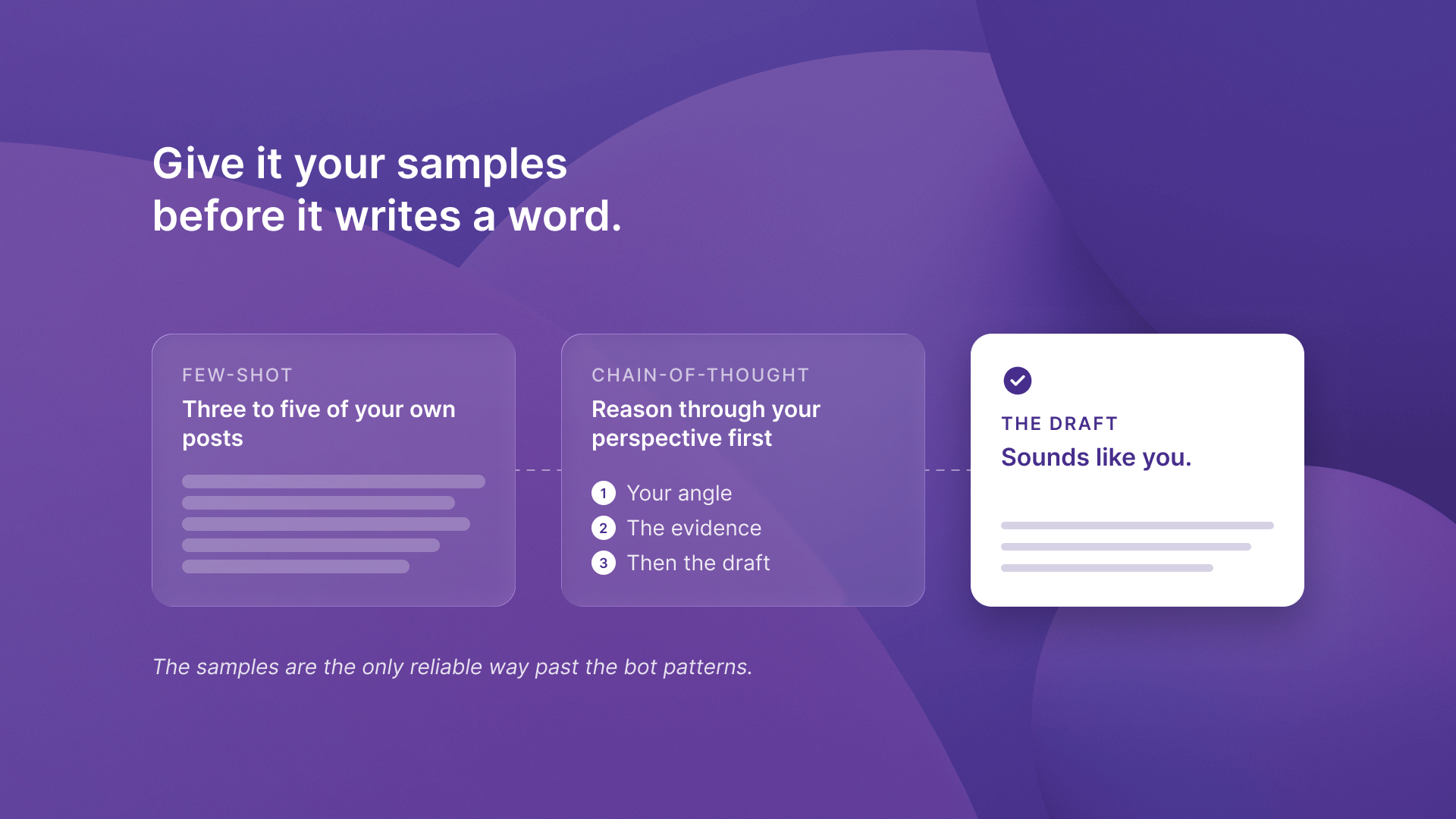
Start with three to five high-quality writing samples. Use them to calibrate the AI to your vocabulary and rhythm. That kills the bot-like patterns LinkedIn now flags. Your output matches your natural speaking patterns. It's the same logic you'd use to build an AI newsletter automation with multi-stage logic. I've found that these samples are the only way to avoid the 'I'm thrilled to share' opener that marks low-effort slop.
Implementing chain-of-thought logic
Force the AI through multi-stage instructions. Make it reason through your perspective before it drafts anything. Provide real client examples and anecdotes. That transforms generic filler into content that sounds human and reinforces your professional identity. A specialized personal branding AI tool keeps your digital presence authentic as you scale.
The architect's loop: human review in an automated stack
The executive stays the architect. High-stakes expertise and personal career journeys don't automate. AI assists the expertise, it doesn't replace the perspective. So you move away from manual ChatGPT workflows and generic schedulers and toward AI-native platforms that cut operational friction.
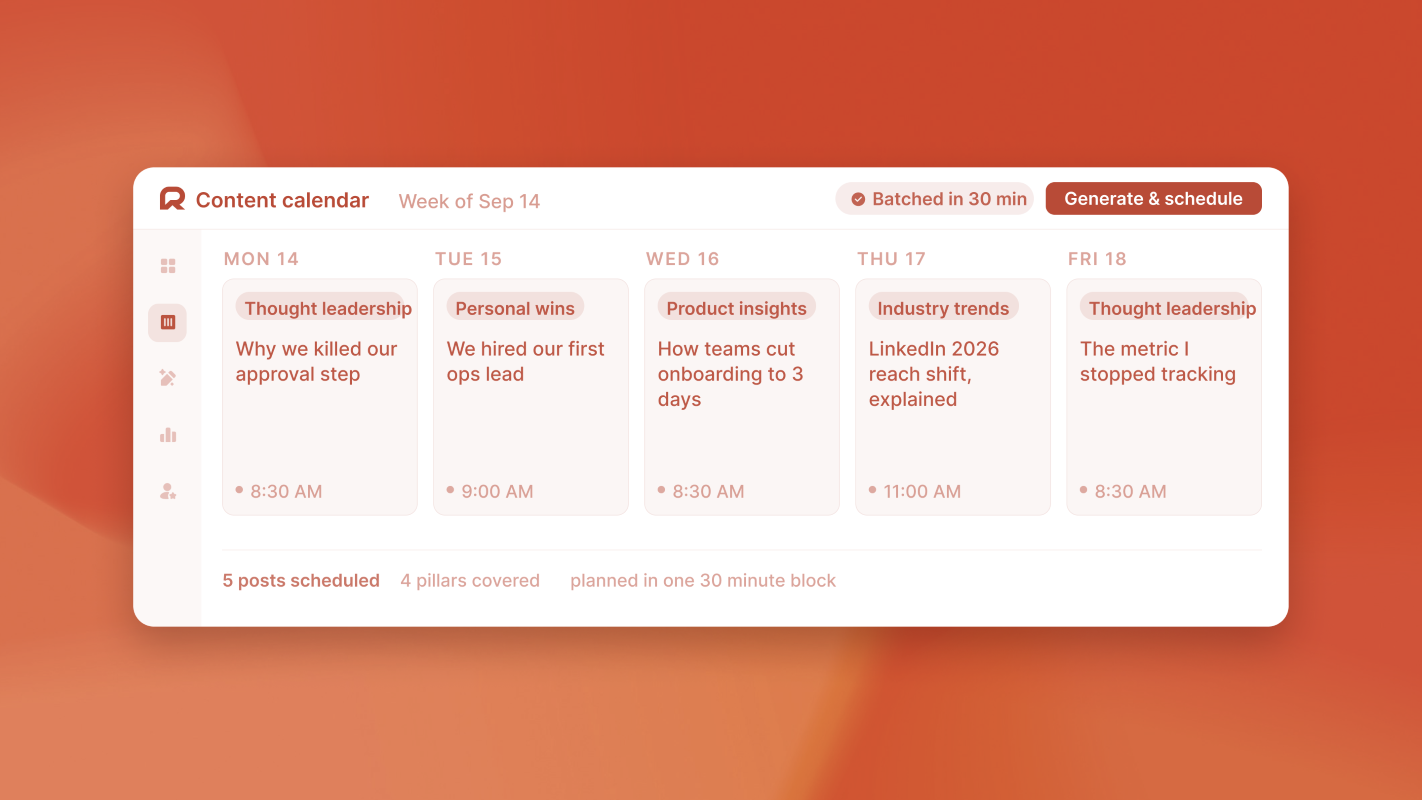
Stop juggling fragmented tools and you eliminate the friction tax that destroys consistency. An integrated system starts from your existing authority. Every post then adds to your knowledge graph instead of just filling a slot in the queue. Every metric I've seen says consistency is the only competitive advantage left, but only if it's rooted in high-authority depth. Many professionals now use these systems to schedule LinkedIn posts for AI assisted distribution.
What to do next
Audit your recent posts. Look for telltale AI-isms like 'I'm thrilled to share' or those perfectly balanced three-sentence bullets. Then build a voice guide. Collect five pieces of writing that show your best professional self and use them as few-shot samples. Next, switch from manual copy-pasting between LLMs and schedulers to an integrated system. That eliminates the operational leaks that drain your time. Finally, focus on semantic depth by including original data and niche-specific insights. That's exactly what optimizing for generative engine discovery requires.
Stop juggling fragmented tools. Start building a sustainable brand engine that rewards your expertise rather than draining your time.
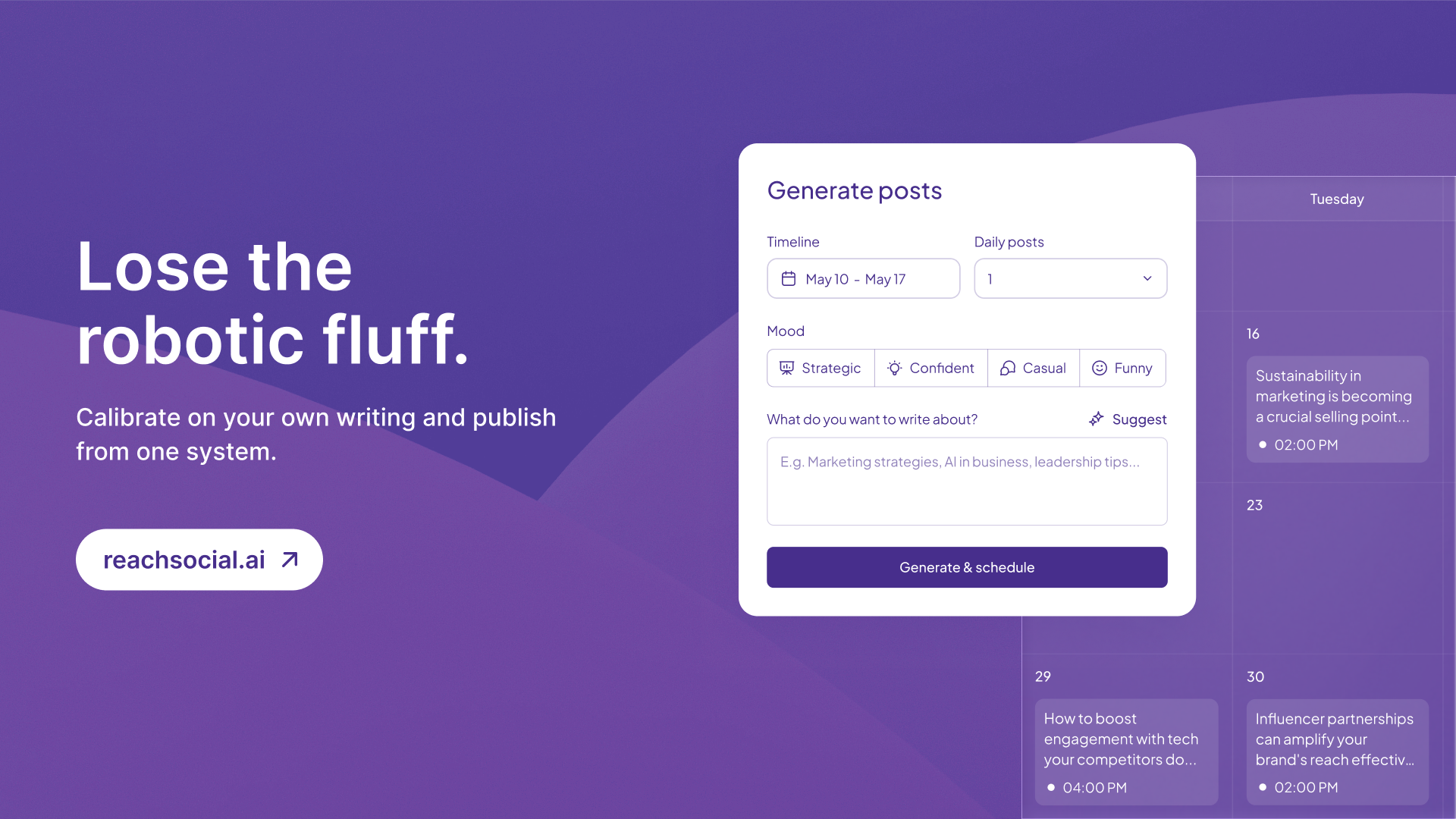
Ready to scale your authority without the robotic fluff? Sign up for ReachSocial today.