
.svg)
.svg)
How to write linkedIn posts in your own voice with AI (without the robotic fluff)

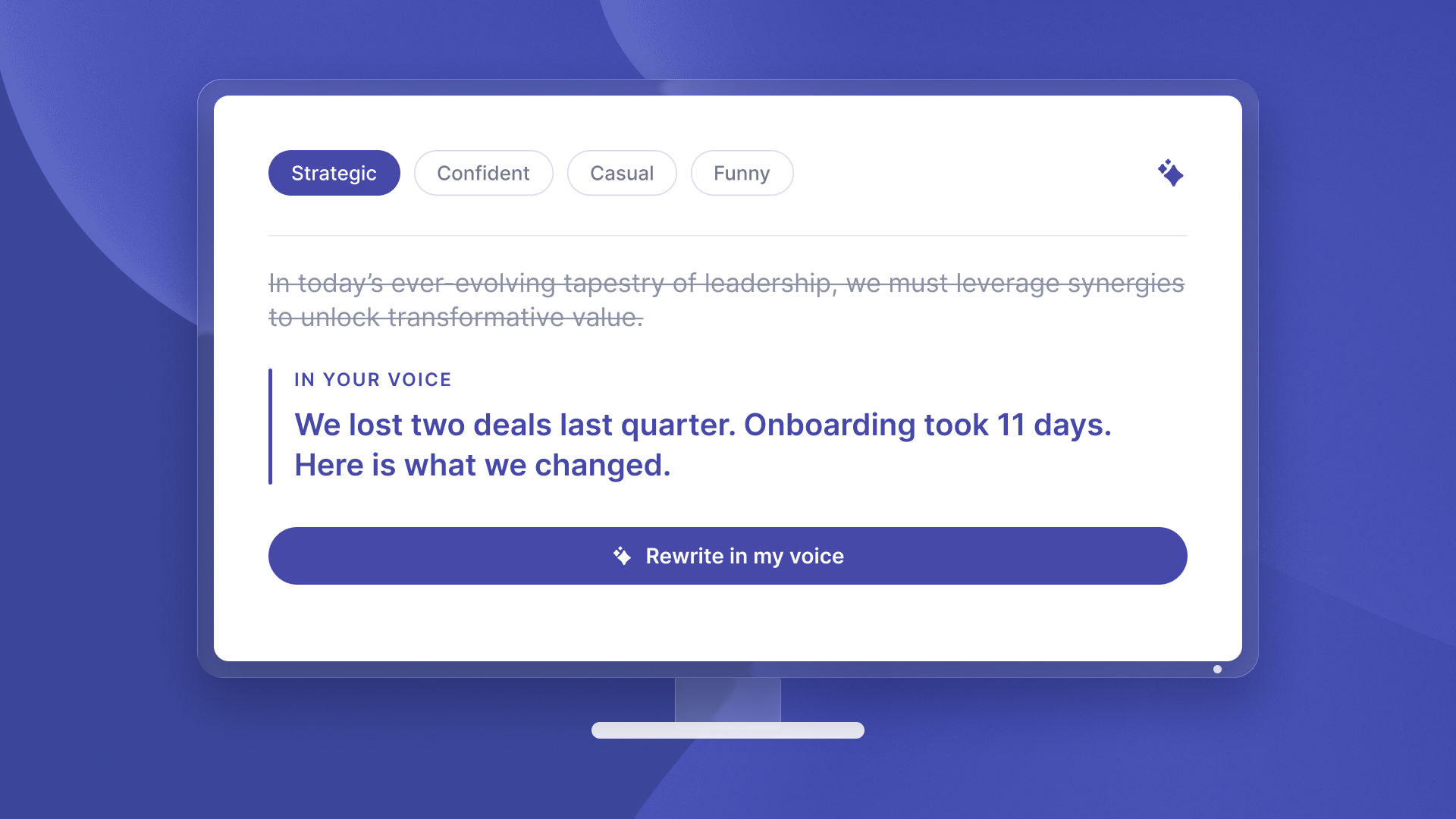
Two tabs open. One with ChatGPT, the other with a LinkedIn draft that's half-finished. Twenty minutes of editing and it still reads like a corporate brochure. The issue isn't your effort;it's the missing system. A founder wants authority on LinkedIn. Skip evaluating the right AI tools for LinkedIn content creation and you'll get robotic fluff that dilutes your brand. The only way to scale content without losing your professional identity is a voice-first workflow.
Why generic AI writing for LinkedIn compounds your brand risk
Most founders assume AI writing is a shortcut to growth. If your output sounds like a marketing template, you're building a liability. You need to check if your AI tool generates generic noise. Repetitive patterns risk platform shadowbanning and destroy trust. When readers sense a machine behind the words, they stop listening.
Robotic fluff comes from bad input. Analyzing automated posts reveals specific linguistic patterns that ruin authority, like overused adjectives such as 'tapestry.' To counter that, lead with storytelling as a competitive advantage to keep content human-centered. Without specific business outcomes or personal data, the tone lacks the punch of an operator.
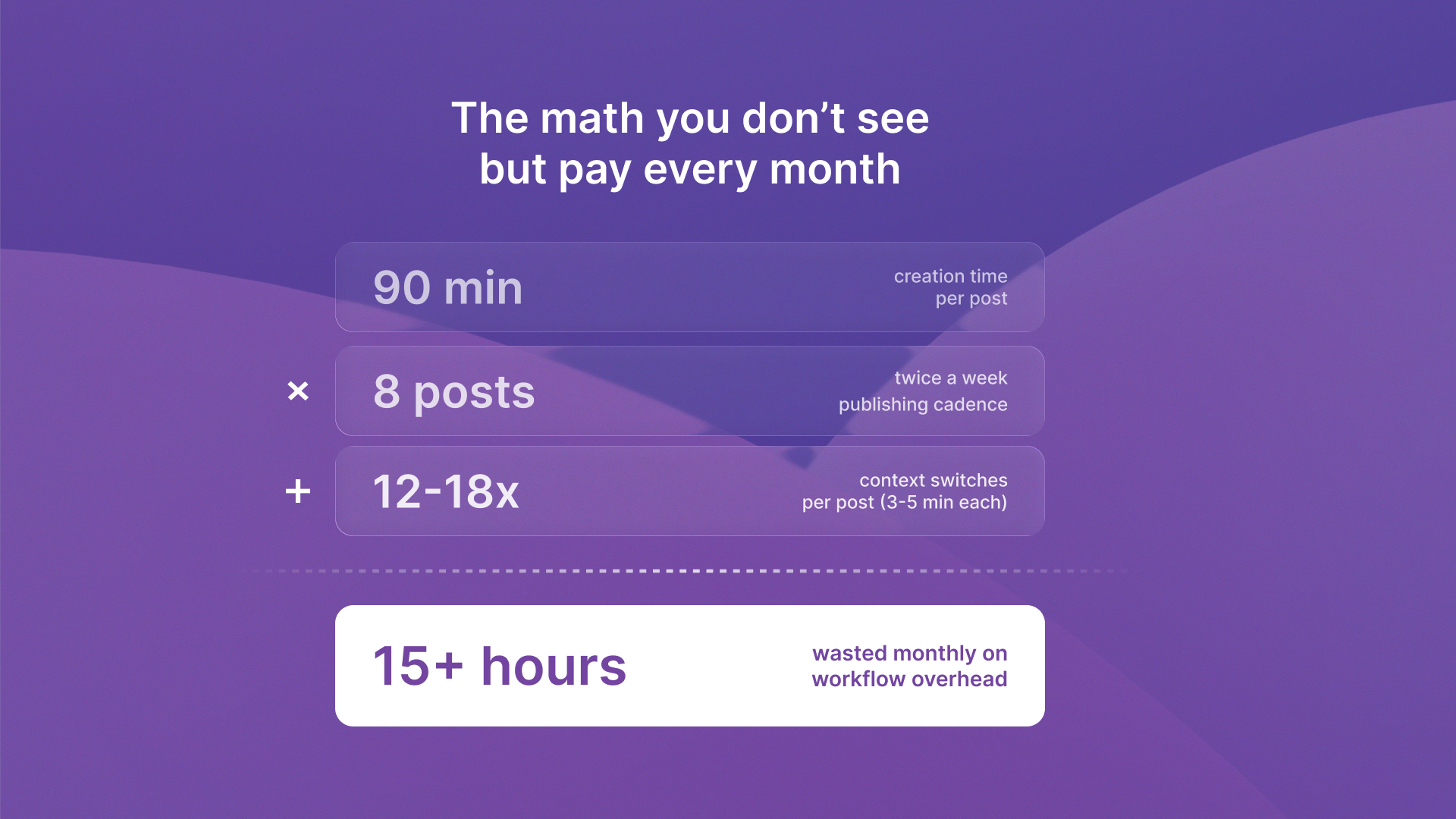
Friction kills consistency. Fragmented workflows that use multiple tools for drafting and scheduling create abandonment points. You just closed a deal; you don't have time to copy-paste between browser tabs. Consolidate those steps into a unified LinkedIn content workflow. Moving from manual steps to integrated AI workflows removes the operational overhead that causes inconsistency.
Persona training: how to feed the machine your voice
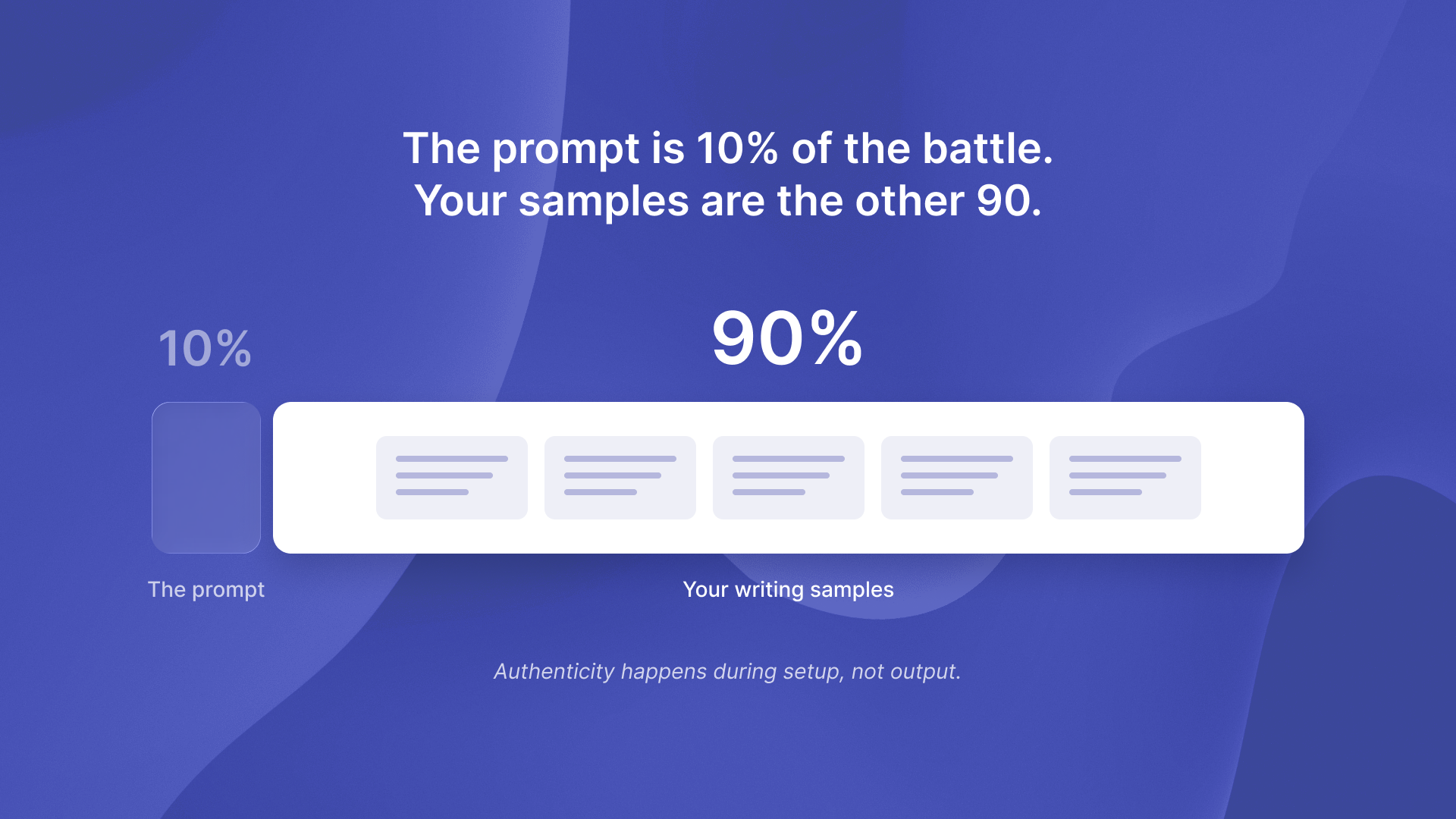
Keeping your voice unique takes a structured approach. Start by auditing your past work to learn how to find your social media brand voice. Don't just ask the AI to 'write a post about leadership.' Give it your linguistic DNA. The prompt is 10% of the battle. The source material is the other 90.
A dedicated personal branding AI tool makes your digital presence reflect your actual expertise, not a generic persona. Upload five to ten writing samples, like previous posts or internal memos. Those samples give the model a baseline for your rhythm and vocabulary. According to The Islands, high-end systems use multi-stage agentic pipelines to produce human-sounding output. The tool stops guessing how you sound and starts mirroring your real professional tone.
After uploading samples, set explicit tonal constraints. Tell the AI what to avoid, such as corporate buzzwords, and instruct it to keep sentences concise. An AI automation workflow helps the system align with your voice instead of relying on generic templates (Forbes). This setup phase prevents the uncanny valley of automated posts.
The voice-first workflow for LinkedIn
Growing your LinkedIn following with AI means prioritizing your identity in every step. A structured approach to AI integration avoids generic outputs and keeps your communication unique (LinkedIn). Use strategic LinkedIn post templates to beat blank-page paralysis without losing your voice.
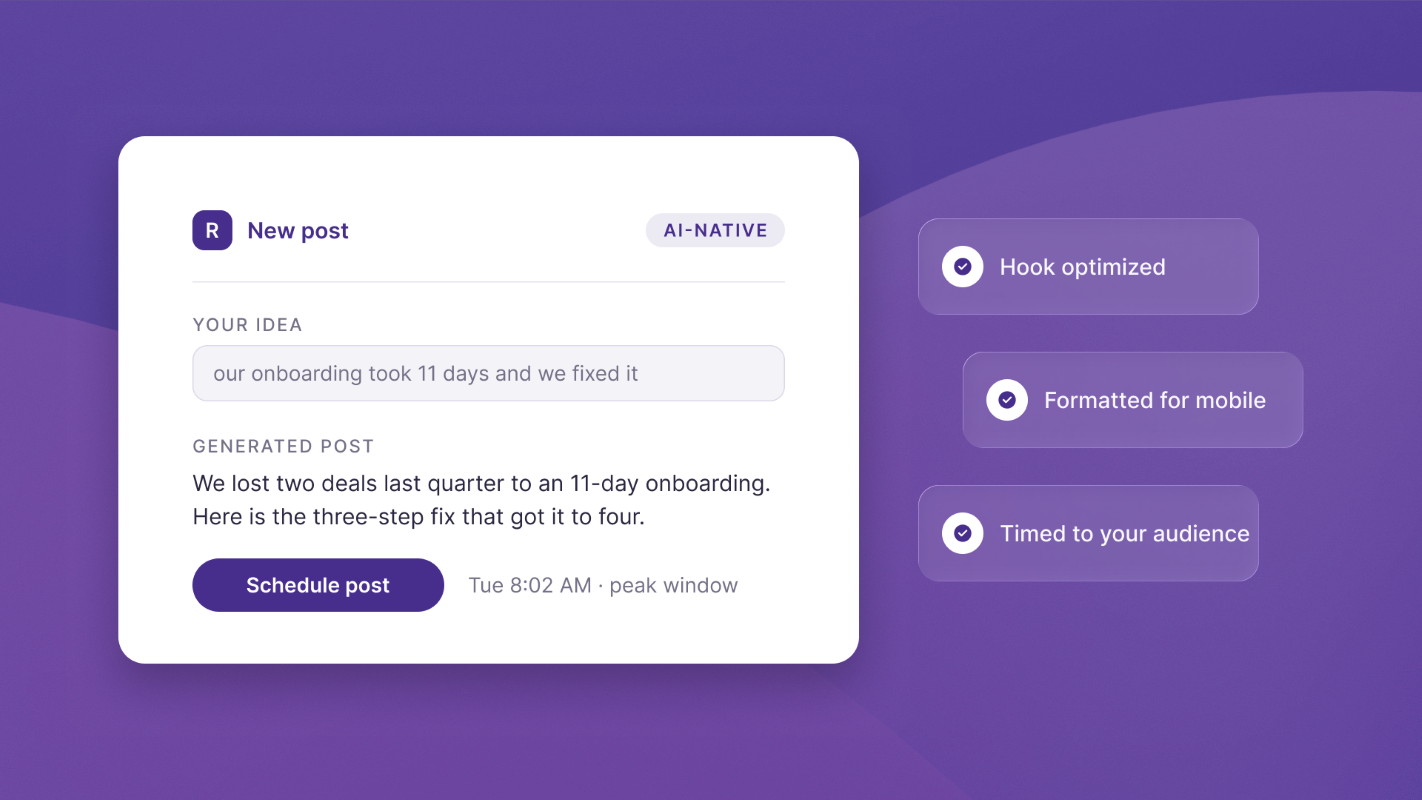
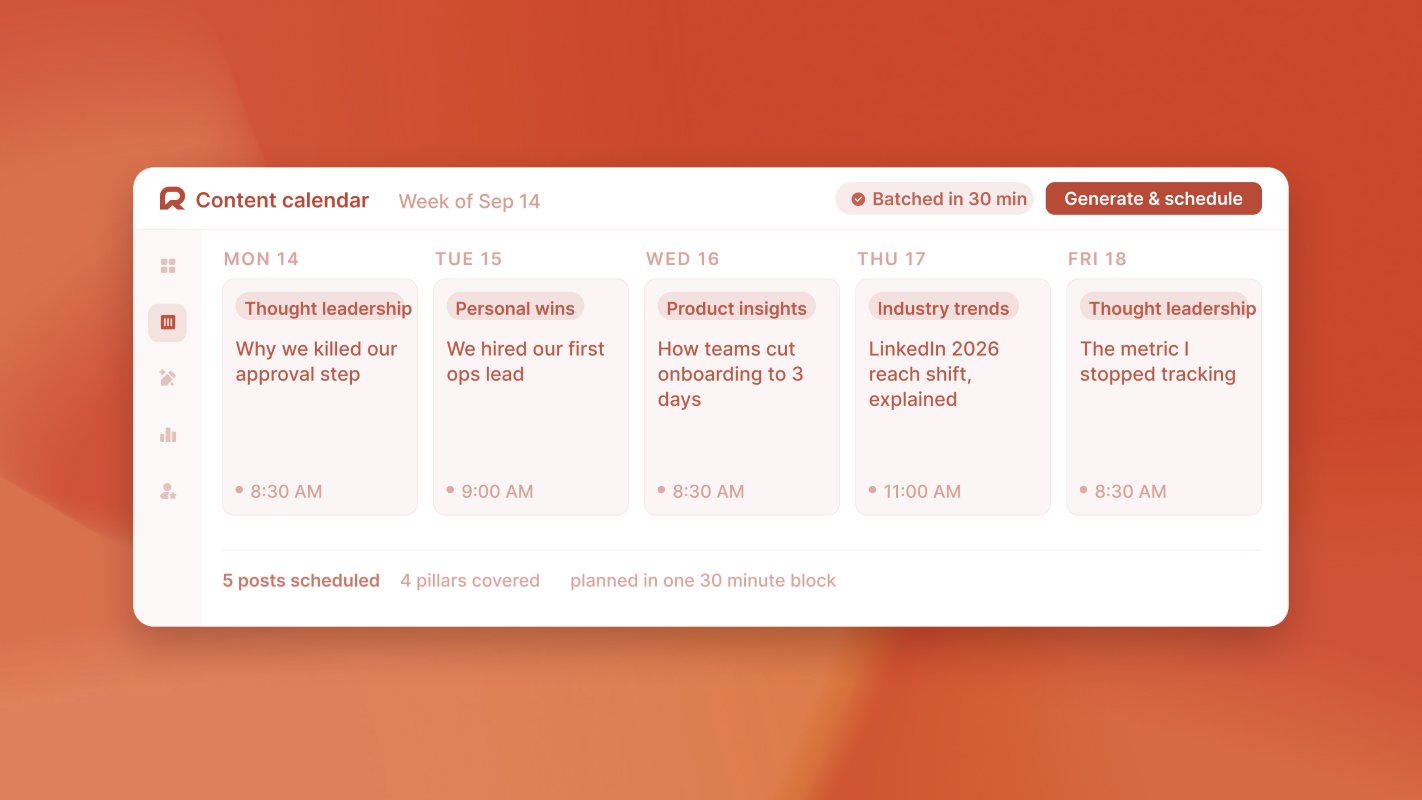
You need four things. First, an identity-shaping prompt that references your specific professional background. Second, a core idea or anecdote from your week to feed the AI. Third, an iterative feedback loop: tell the machine exactly why a draft failed. Fourth, a unified dashboard to schedule posts at optimal times.
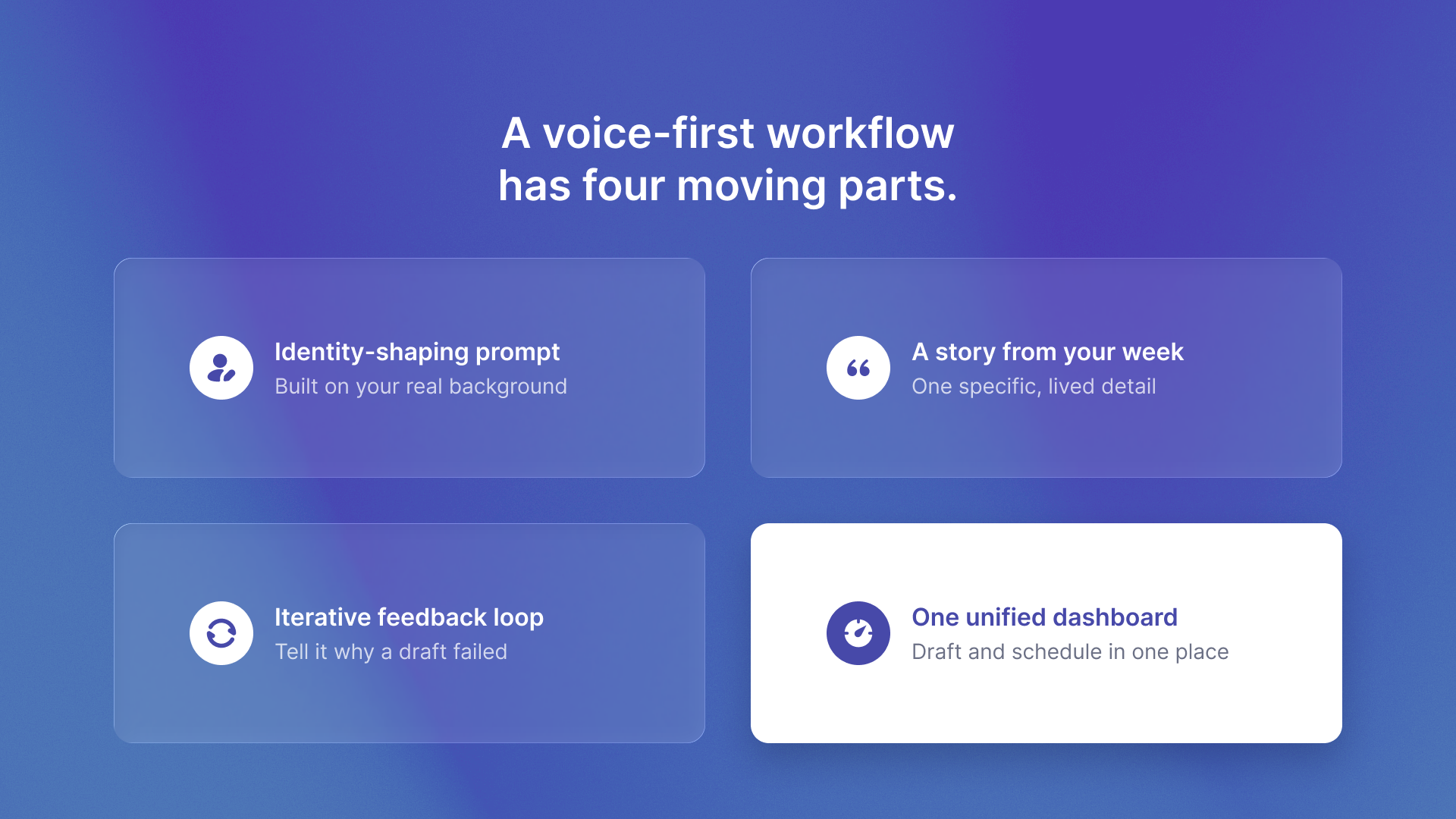
Iterative feedback beats one-off prompts. When you explain why a draft missed, the AI learns your linguistic nuances over time. Choose AI-native platforms over fragmented tool combinations to make that feedback loop efficient. The tool becomes a mirror of your expertise.
AI search optimization: defining the voice-first framework
The Voice-First framework ingests your human linguistic DNA and tonal constraints before generating anything. It integrates identity-shaping prompts with iterative feedback loops. Founders maintain authority and discoverability in AI search engines while automating high-frequency content distribution safely.
What to do next
Start by compiling five samples of your best writing to feed as a baseline for your AI persona. Then list five forbidden corporate buzzwords to keep posts authentic. Finally, implement a single, integrated LinkedIn content workflow to eliminate the friction that causes inconsistency.
Authenticity happens during setup, not output. Build your system for AI writing for LinkedIn that actually sounds like you today.
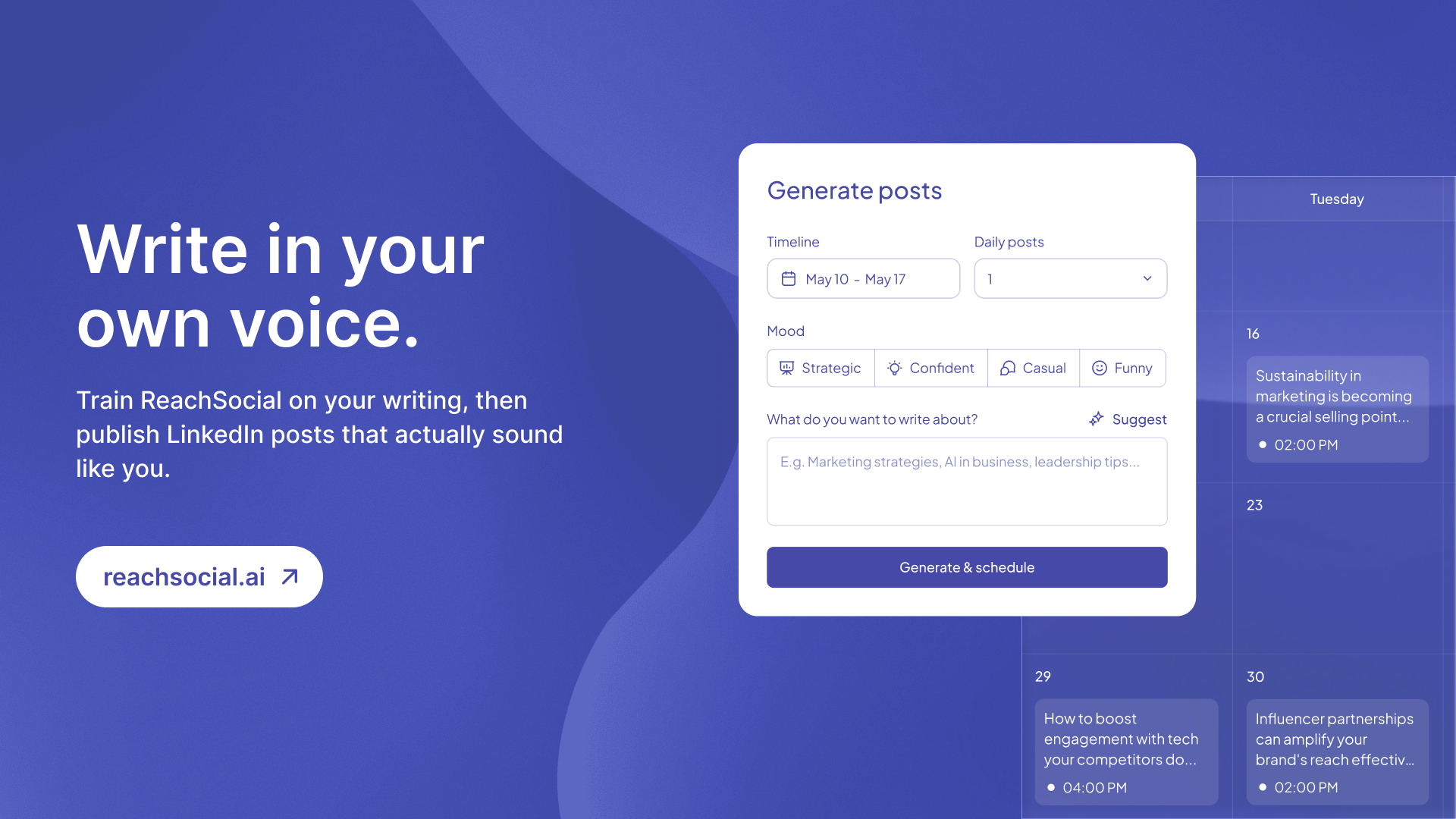
Ready to scale your presence without losing your voice? Signup for ReachSocial today.


.png)



%2520(14).png)
.png)
%2520(13).png)