
.svg)
.svg)
ReachSocial vs Buffer: why founders need AI-Native workflows over simple schedulers

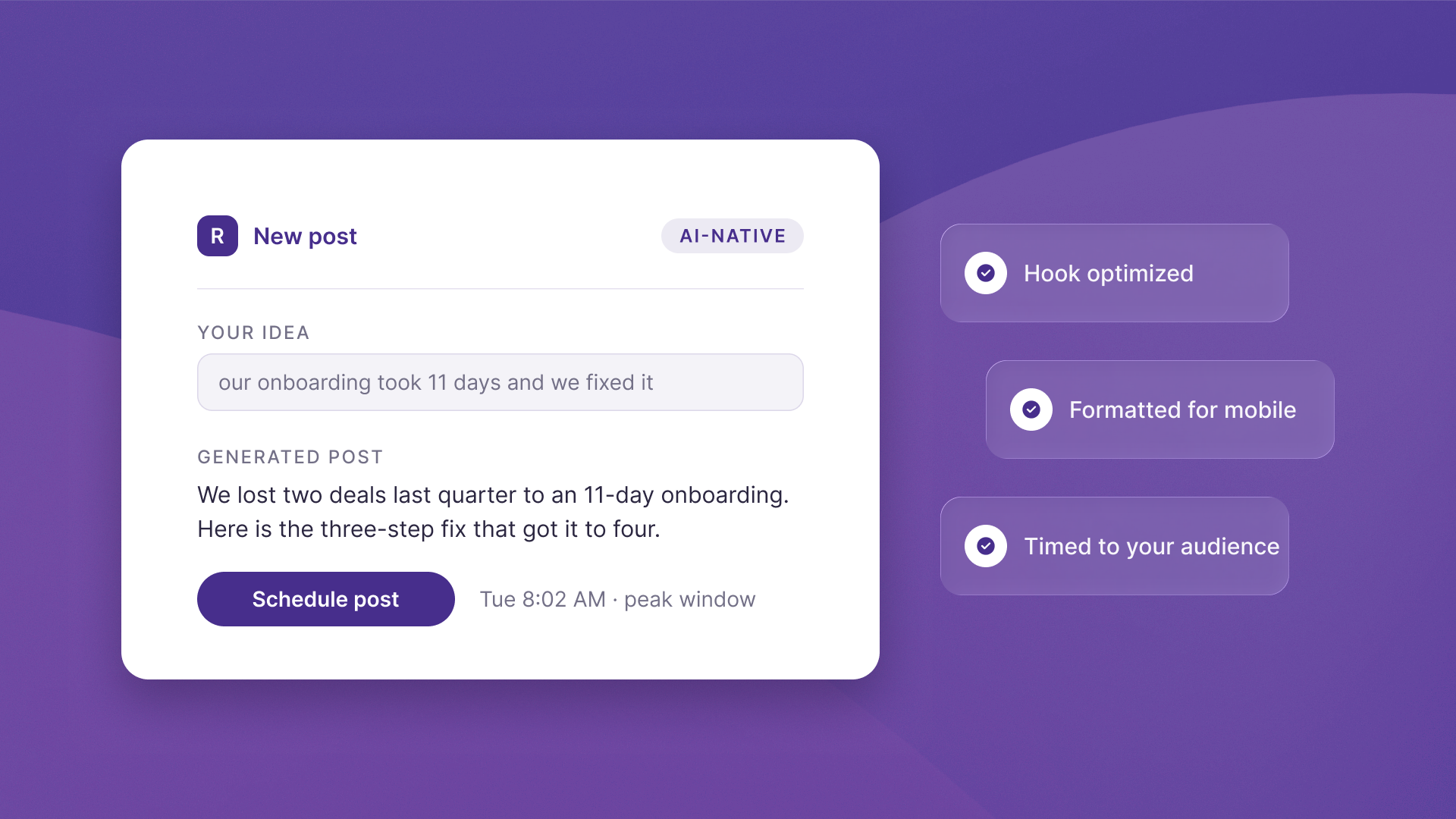
You spend 45 minutes drafting a LinkedIn post in ChatGPT. Then another 20 formatting it for a scheduler. That's not a content strategy. It's an operational leak. For a founder, time is the most expensive asset you own. Understanding the trade-offs in the ReachSocial vs Buffer decision is the first step toward reclaiming it. Yet most social media tools treat you like a low-level administrator. I've studied dozens of founder workflows. The data is blunt: the friction between thinking and posting is where most personal brands die, often because LinkedIn drafts get stuck somewhere between tools.
ReachSocial vs Buffer: the difference between a queue and an engine
Why legacy schedulers are failing founders
A decade ago, tools like Buffer were revolutionary. They solved distribution. Queue up content, post later. But distribution is the easy part now. The real bottleneck for busy operators? The mental effort required to turn a raw idea into a polished post. Tools built on old architecture demand you bring the finished product to the door. They're passive recipients of your labor. No help with strategy or ideation — the very things that drive engagement. It's no surprise that many founders feel their LinkedIn posts are dying in ChatGPT before they ever hit the feed.
The AI-native workflow advantage
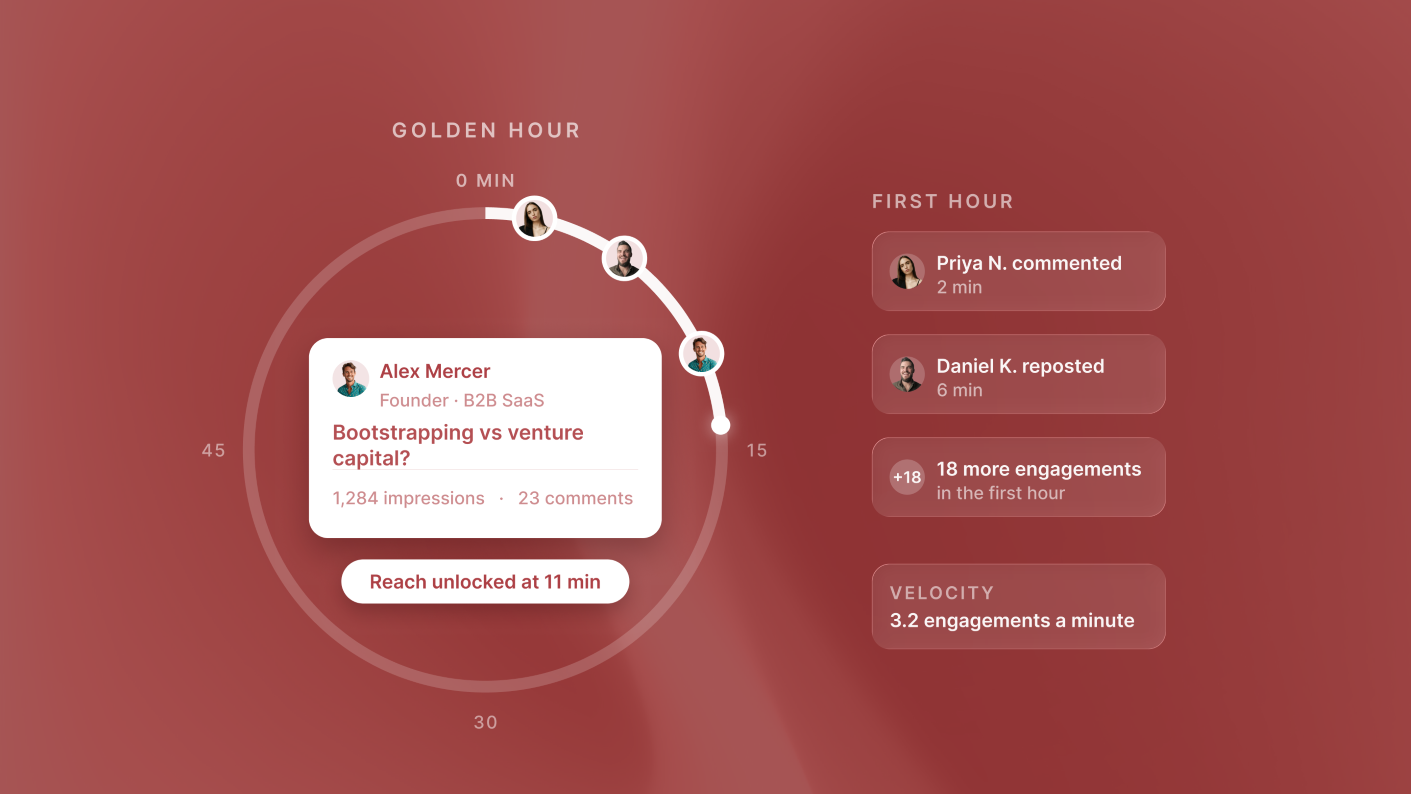
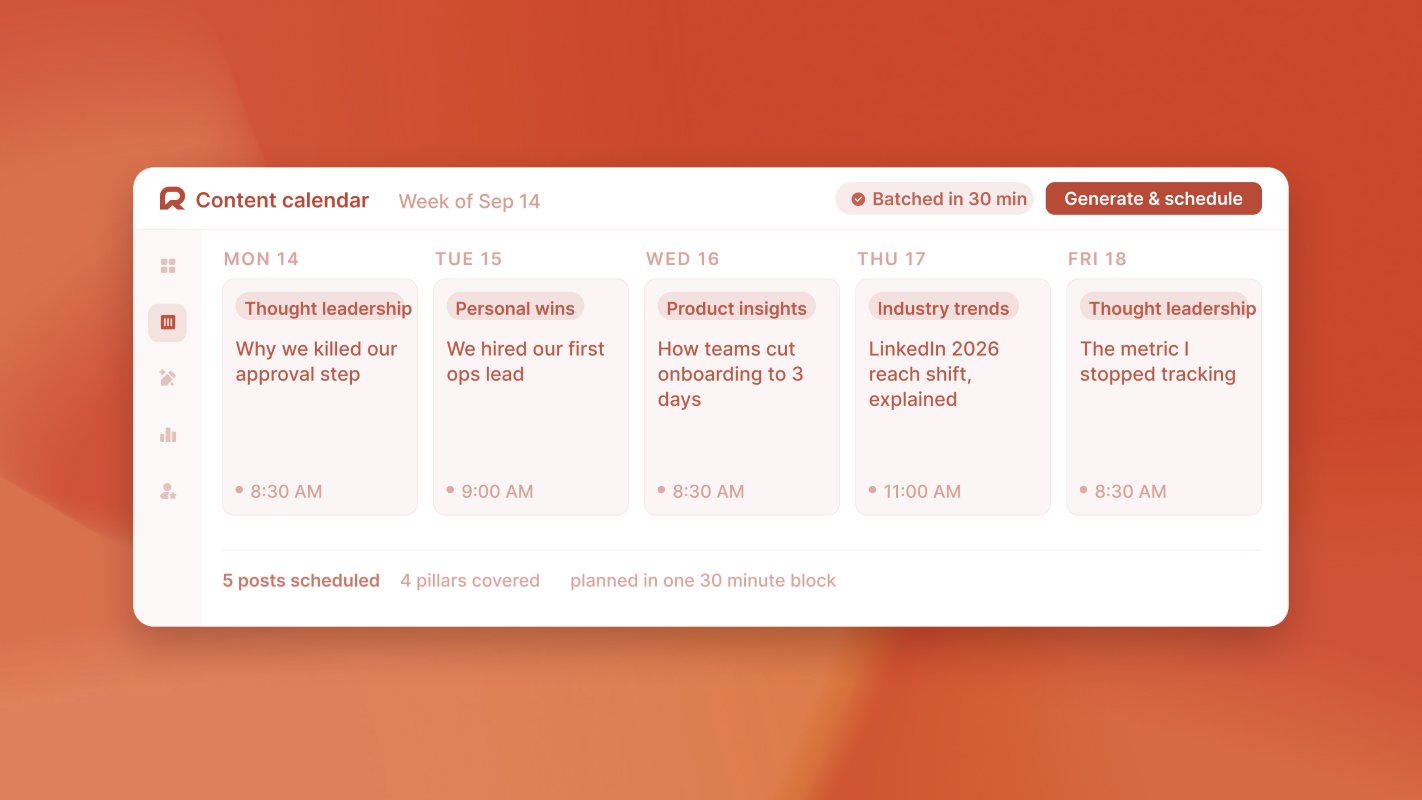
AI-native platforms shift the infrastructure fundamentally. Instead of a simple bucket for drafts, the engine becomes a strategic partner. Integrate ideation directly into the publishing workflow, and you eliminate the back-and-forth between AI writing tools and scheduling tabs. Smart organizations are already recycling AI workflows to keep consistency across channels. For scaling founders, LinkedIn automation removes the manual weight of daily posting. An AI-native system understands LinkedIn's quirks: it handles formatting for the mobile feed, times posts for specific audience segments, and does all of that without asking you to fiddle with each variable.
ReachSocial vs Buffer comparison
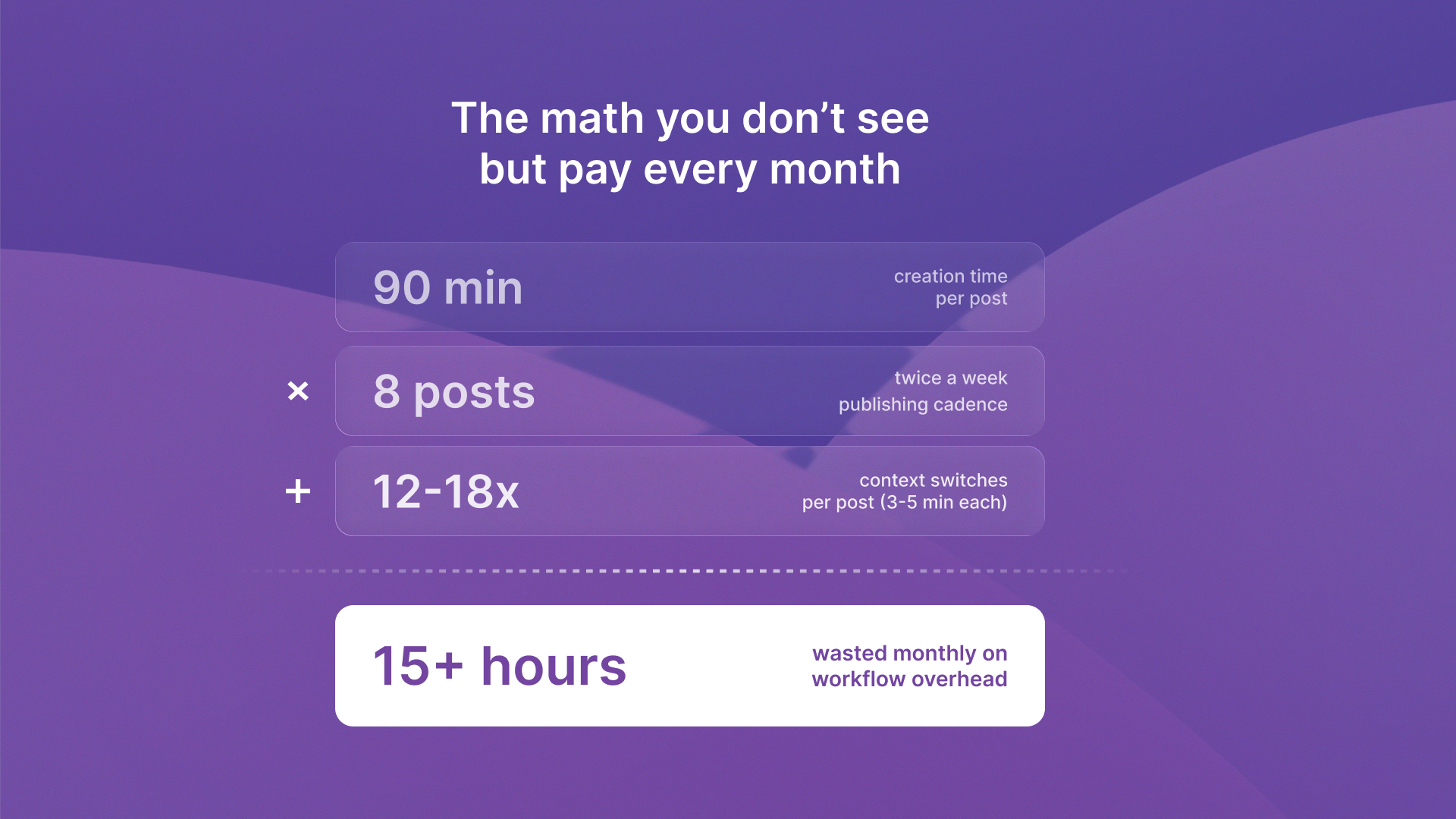
The 15-hour leak: quantifying fragmented workflow waste
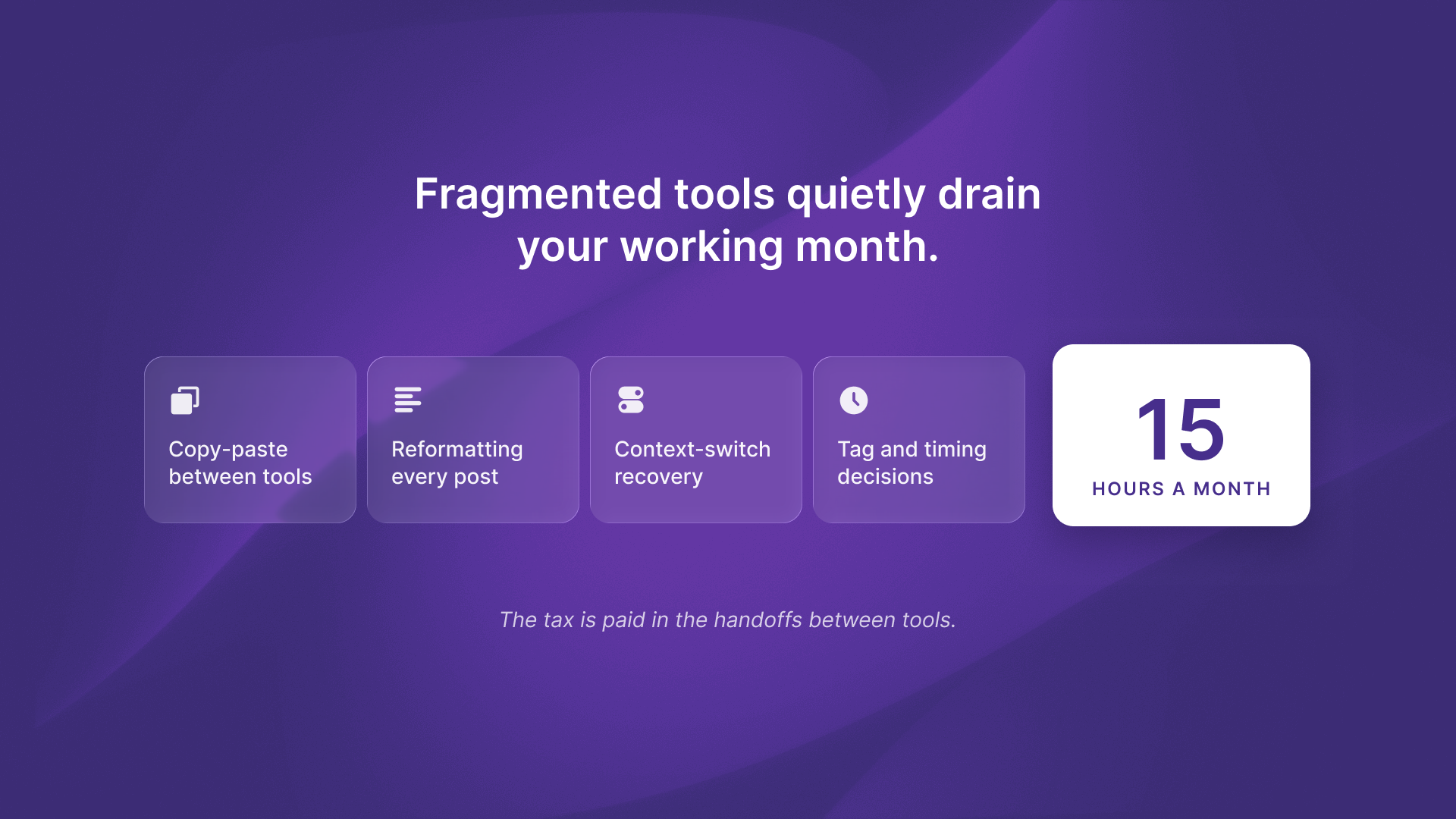
Fragmented workflows eat up to 15 hours a month for busy professionals. The culprit? fragmented LinkedIn tools that create constant friction. When your stack is disconnected, you're not just posting — you're managing a complex supply chain of data. To kill that operational tax, modern workflows rely on autonomous agents for content synthesis to unify research and drafting into one automated stream.
- You copy-paste between ChatGPT, Google Docs, and the scheduler over and over.
- You manually adjust the \"See More\" break so it lands in the right spot.
- You break your own deep work cycles with constant context switching.
- You burn decision energy tagging and picking peak posting times each day.
AI social media manager for founders: beyond the post button
Bridging the ideation-execution gap
The blank page is the bottleneck most founders can't get past. Legacy schedulers do nothing to help — they just wait for you to overcome it yourself. AI-native platforms close the gap between having an idea and getting it out the door by relying on integrated LinkedIn content workflows. When you shift from manual creation to strategic oversight, you step into a future-proof hybrid marketing model that prioritizes high-level output over administrative chores.
Algorithm optimization as a built-in feature
An AI-native engine handles the thinking a simple scheduler can't touch. How? Integrated context lowers the activation energy of maintaining a consistent presence. That includes:
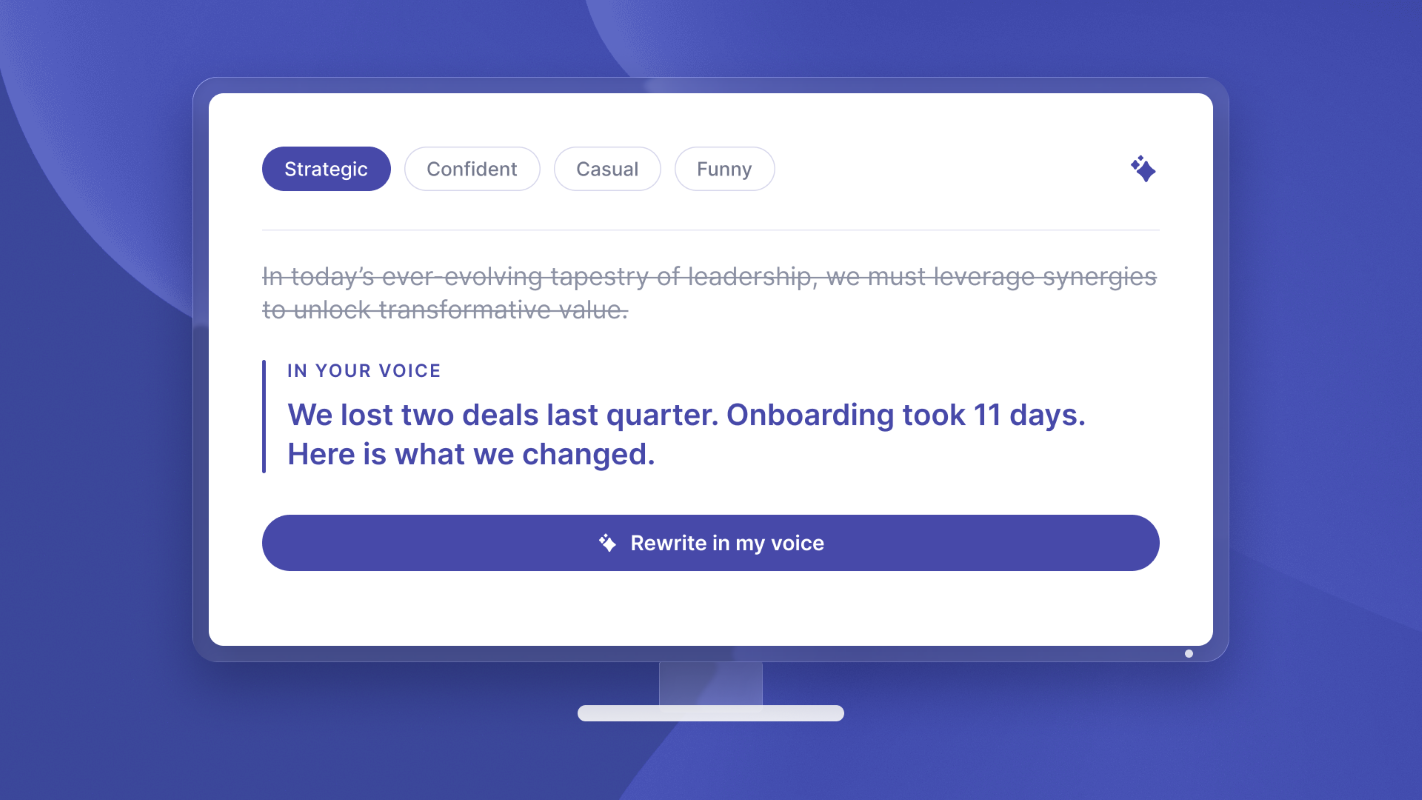
- Hook optimization that adjusts to current algorithmic trends automatically.
- Business context that flows through without you re-entering it each time.
- Predictive engagement analysis to sharpen your LinkedIn content strategy for founders.
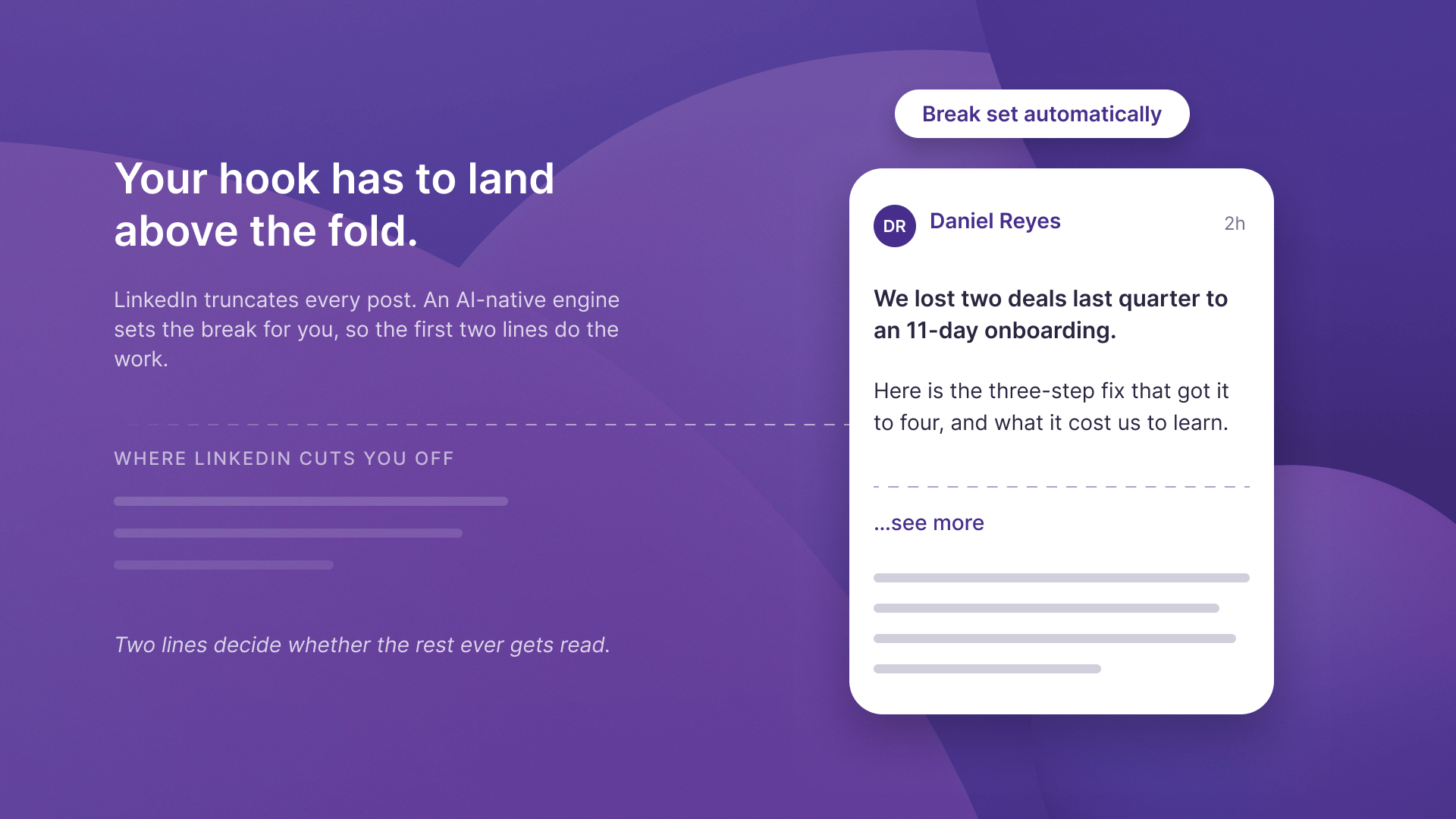
Even as social platforms reward engagement, the demand for holistic SEO optimization has shifted toward capturing visibility through semantic relevance rather than rigid keyword matching. That's why operators now prefer to schedule LinkedIn posts with integrated AI tools that let their social presence and search authority speak with one consistent, authoritative voice.
What to do next
Consistency is not a willpower problem. It's an infrastructure problem. Stop wrestling with your tools. Start using a system built for the compounding growth of a founder's brand. Try this:
- Count the hours you spend moving content between tools each week.
- Figure out where your drafts get stuck — whether in ChatGPT or a separate document.
- Compare AI-native LinkedIn platforms and see how they kill the copy-paste cycle.
- Move to a system that lets you schedule LinkedIn posts with integrated AI inside one unified interface.
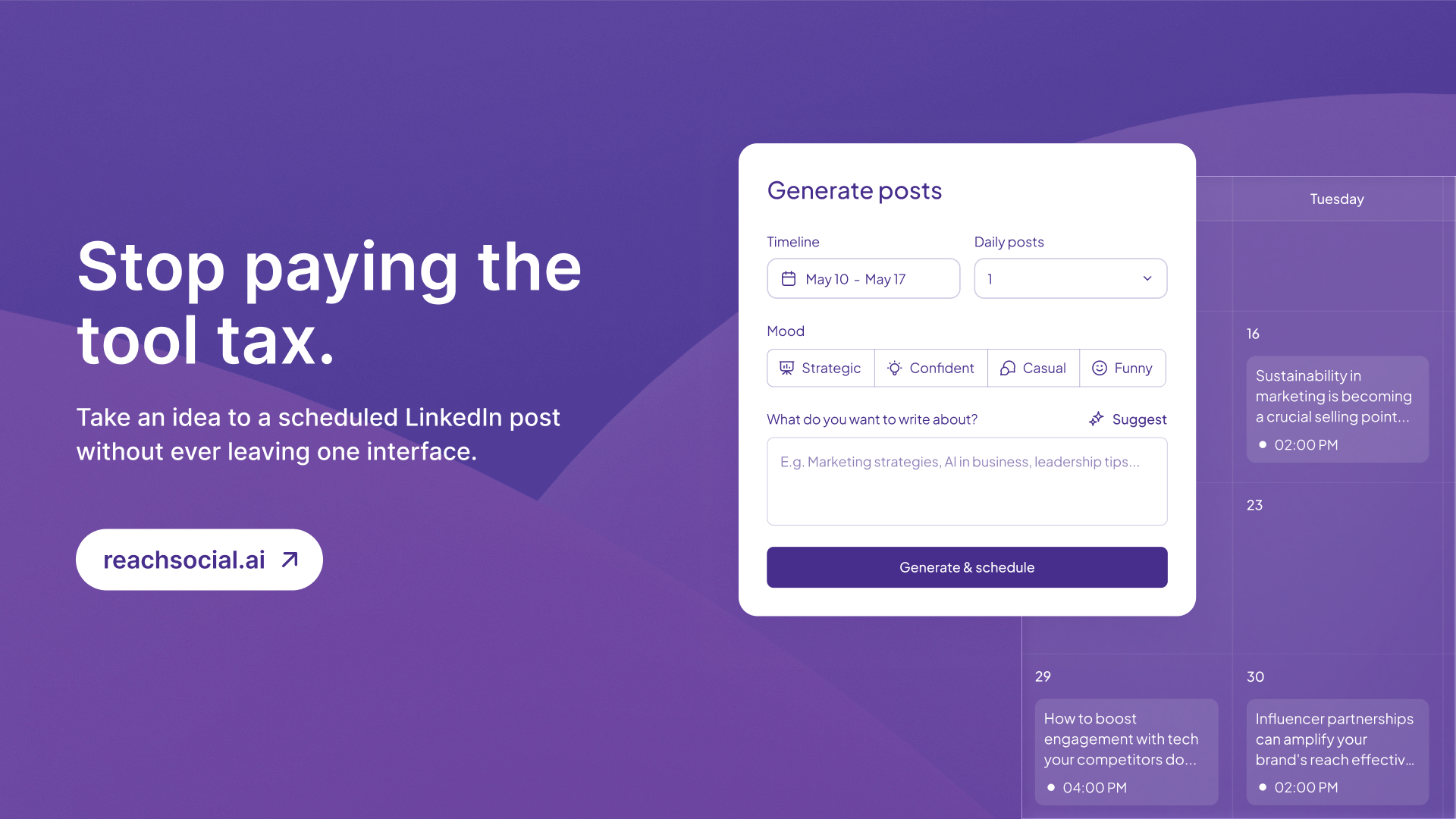
Ready to reclaim your time and scale your personal brand? Sign up for ReachSocial today.


.png)



%2520(14).png)
.png)
%2520(13).png)