
.svg)
.svg)
ReachSocial vs. The Open Source AI Boom: Evaluating Value in a Fragmented Market

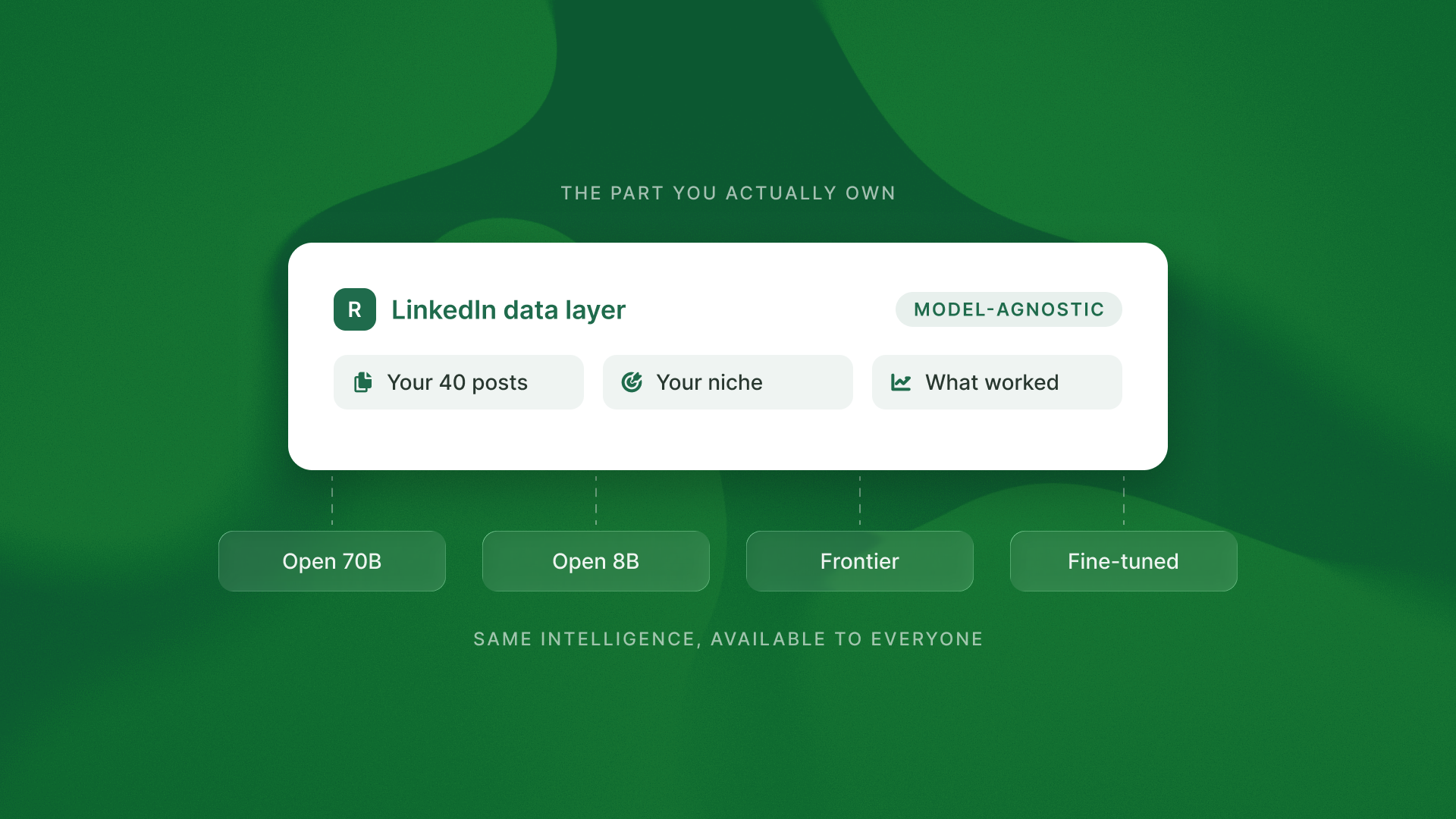
The AI model wars have a winner: the models. But for the average agency owner, owning the world's most powerful LLM hasn't made LinkedIn growth any easier. The cost of intelligence is dropping, but the cost of execution is climbing for anyone stuck with a fragmented stack. Leaders are now hunting for how to grow a LinkedIn following with AI — and they need more than a clever prompt.
Traditional search tactics are losing their edge. The demand for optimization is higher than ever, though it demands a fundamental strategic shift. Treat AI as a standalone tool rather than a system, and you fight the physics of the platform — missing the wave of visibility it offers.
The open-source paradox: why better tech isn't solving your content problem
A pattern keeps showing up: agency leaders obsess over which model is smarter, and their LinkedIn presence stays flat. The performance gap between open-source and proprietary AI is vanishing. DeepInfra reports that the cost-to-performance ratio for open-source AI is rapidly closing the gap with proprietary systems. That makes raw AI access a commodity, not a competitive advantage.
Most agencies fail to scale visibility because they prioritize surface-level prompts over production-grade infrastructure. The intelligence is baseline now. It's not a differentiator.
The vanishing gap between open and closed models
For most content tasks, the difference between a high-end closed model and a fine-tuned open-source equivalent is negligible. Enterprise adoption is surging as a result. But intelligence alone doesn't solve the brand liability of generic content — the kind that risks platform shadowbanning when outputs lack a distinct, human-validated perspective.
Why raw model access is now a commodity
Everyone has access to the same intelligence. Model access alone is rarely a durable competitive advantage. The bottleneck isn't what the AI can write — it's the infrastructure needed to make that writing useful for lead generation.
Access to the best LinkedIn tools in 2024 means looking beyond the engine to the vehicle itself. You need a better nervous system for your content. To bridge the widening AI talent gap, many firms are shifting toward a hybrid marketing model that balances automated efficiency with strategic human oversight.
Workflow and infrastructure comparison
The friction tax: the hidden cost of fragmented workflows
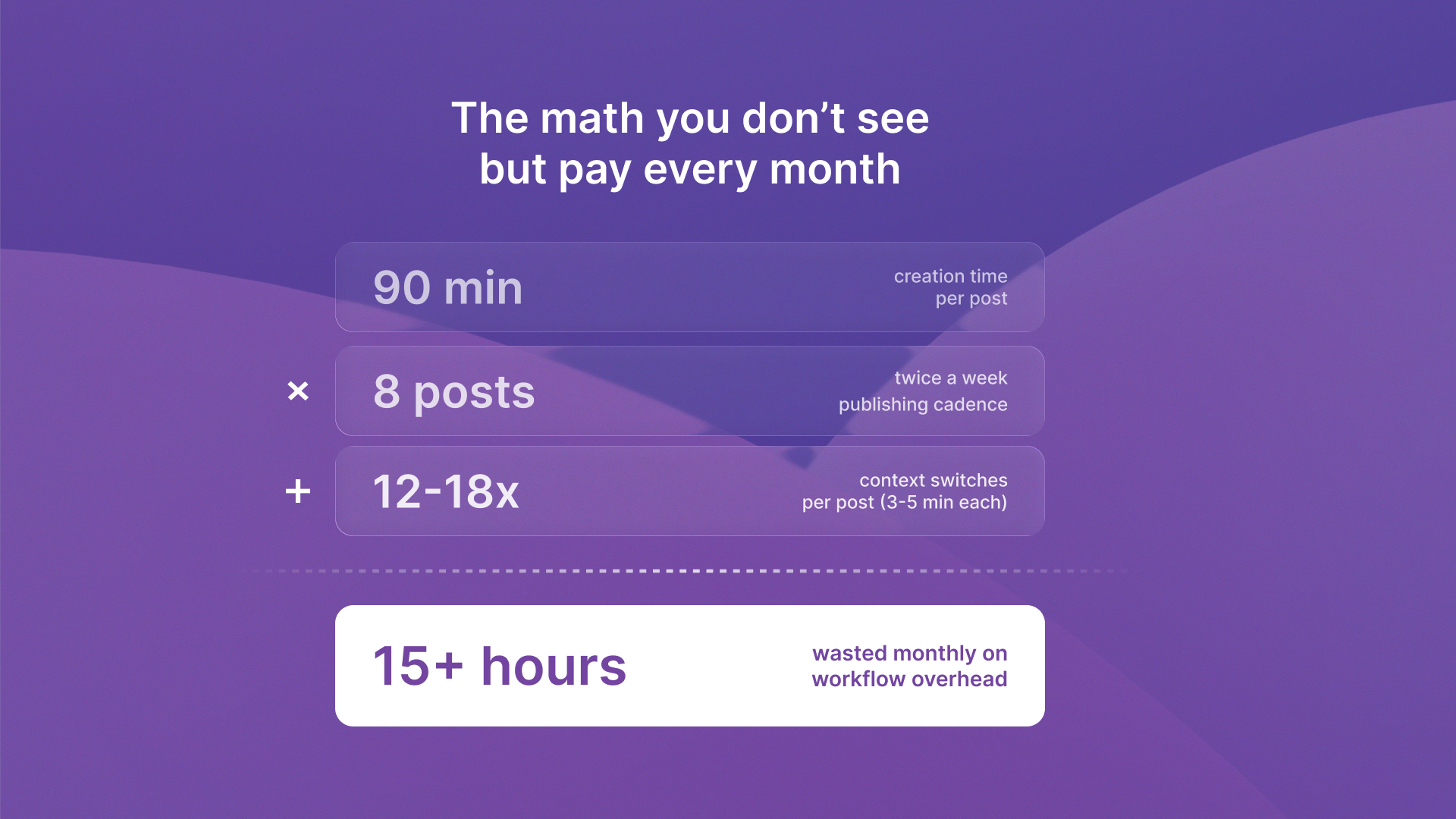
Without specialized tooling that bridges AI to business outcomes, businesses struggle to capture value (Linux Foundation). A fragmented stack means you pay a friction tax every time data moves between tools. That tax kills consistency, especially as the algorithm shifts toward semantic ranking rewards for topical expertise.
The copy-paste trap
Agency owners burn hours daily moving drafts from ChatGPT to Google Docs, then to a generic scheduler. That process makes it hard to start every single post. Common friction points: manual context switching between browser tabs, and manually reformatting AI output for LinkedIn's specific interface. There's often zero feedback between the ability to schedule LinkedIn posts with AI and actual engagement data.
ReachSocial eliminates this overhead by integrating the entire workflow into one turnkey interface — removing the high overhead of managing open-source wrappers.
Operational overhead vs. creative output
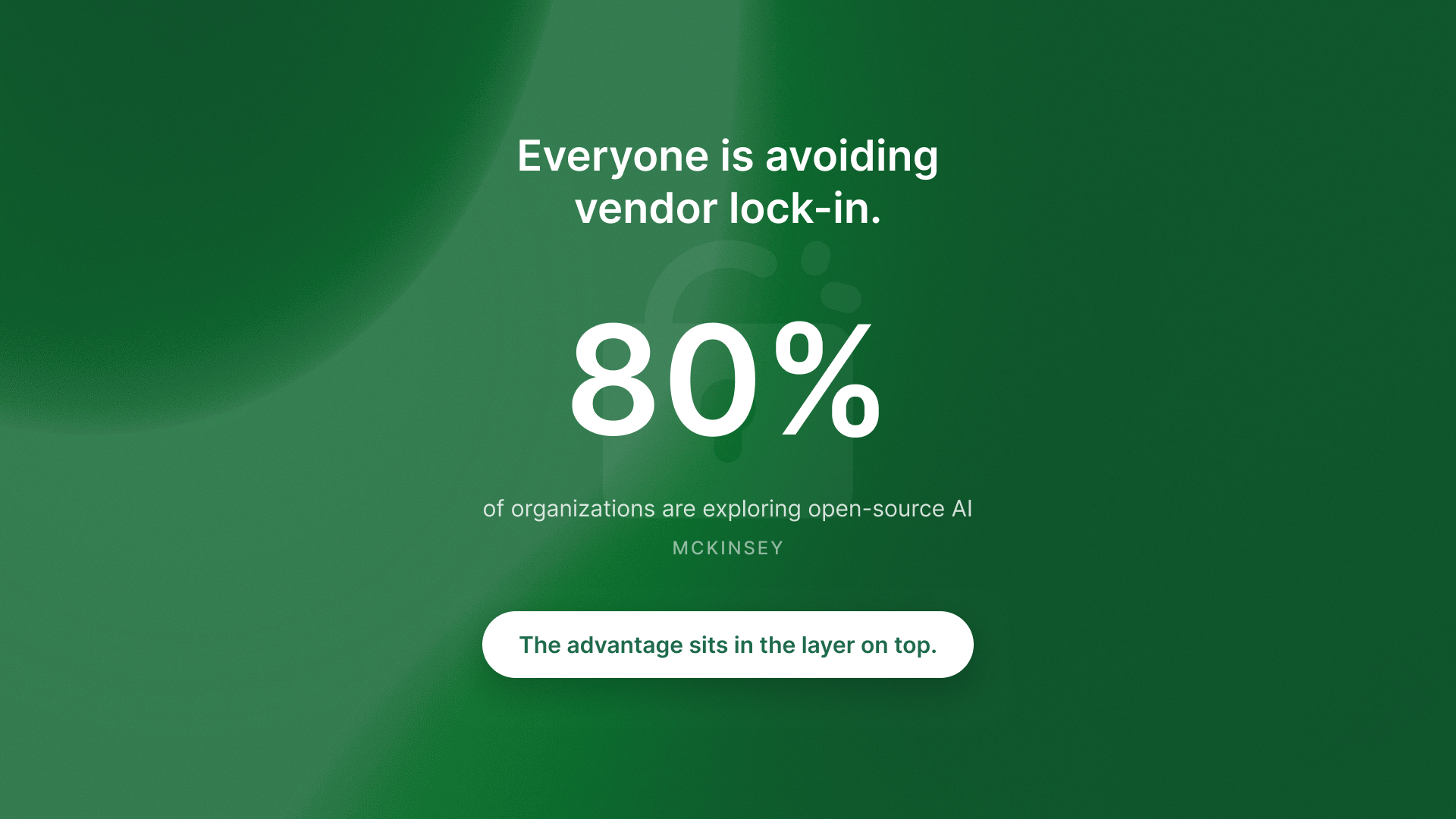
McKinsey reports that 80% of organizations are exploring open-source AI to avoid vendor lock-in. But for a lean agency team, a modular stack often means a broken stack. If you spend more time managing your LinkedIn content workflow than engaging with your audience, your system is failing.
Modern teams are moving toward autonomous agentic workflows that focus on ROI over manual production. Automating the connective tissue between ideation and publishing shifts the goal from simple task completion to achieving massive velocity and volume.
Why a specialized LinkedIn data layer beats generic prompts
Generic AI tools lack context. That's what causes the hallucinations plaguing DIY stacks. Specialized systems like ReachSocial solve this by using a purpose-built LinkedIn content roadmap that generic open-source models don't have. When the AI knows your specific industry and past performance, you edit less.
Eliminating hallucinations with context
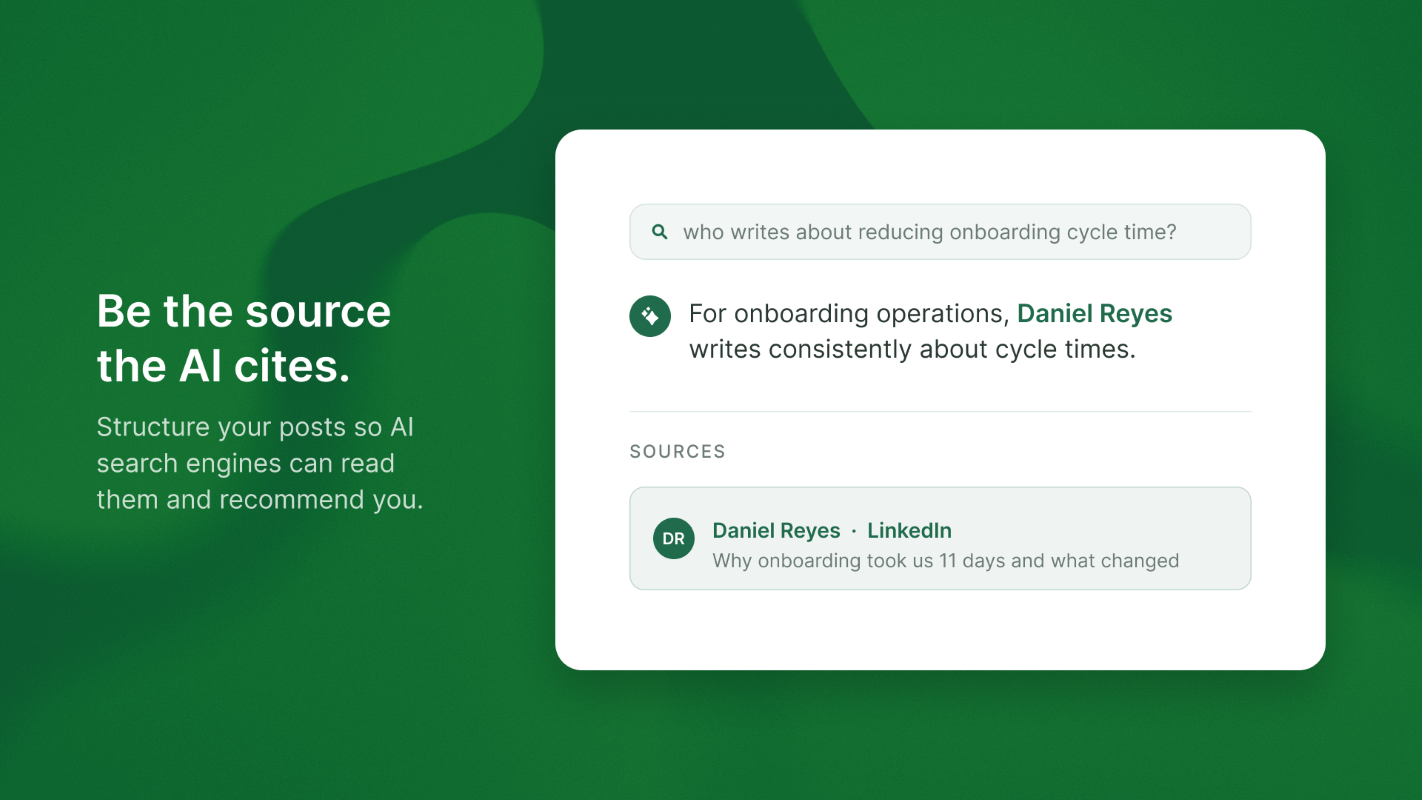
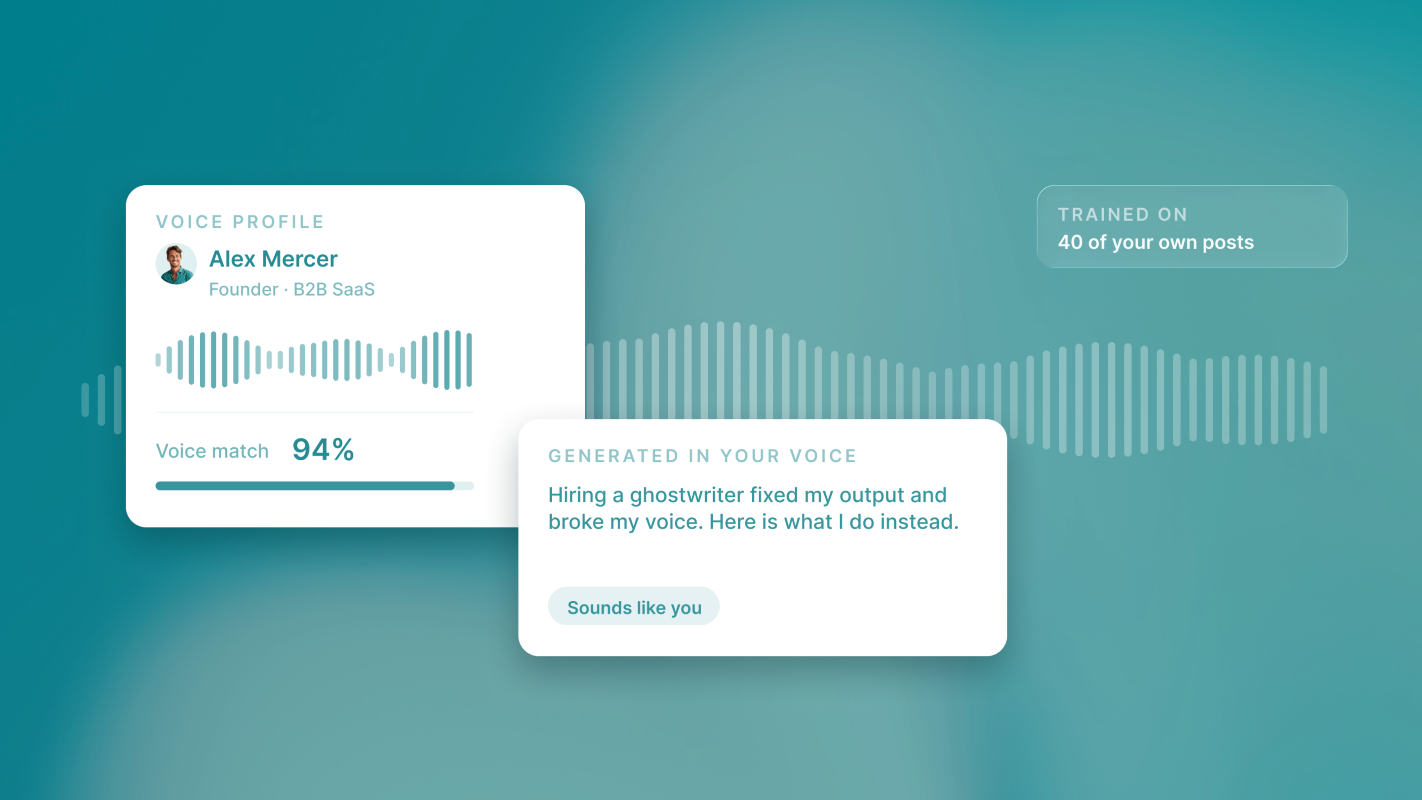
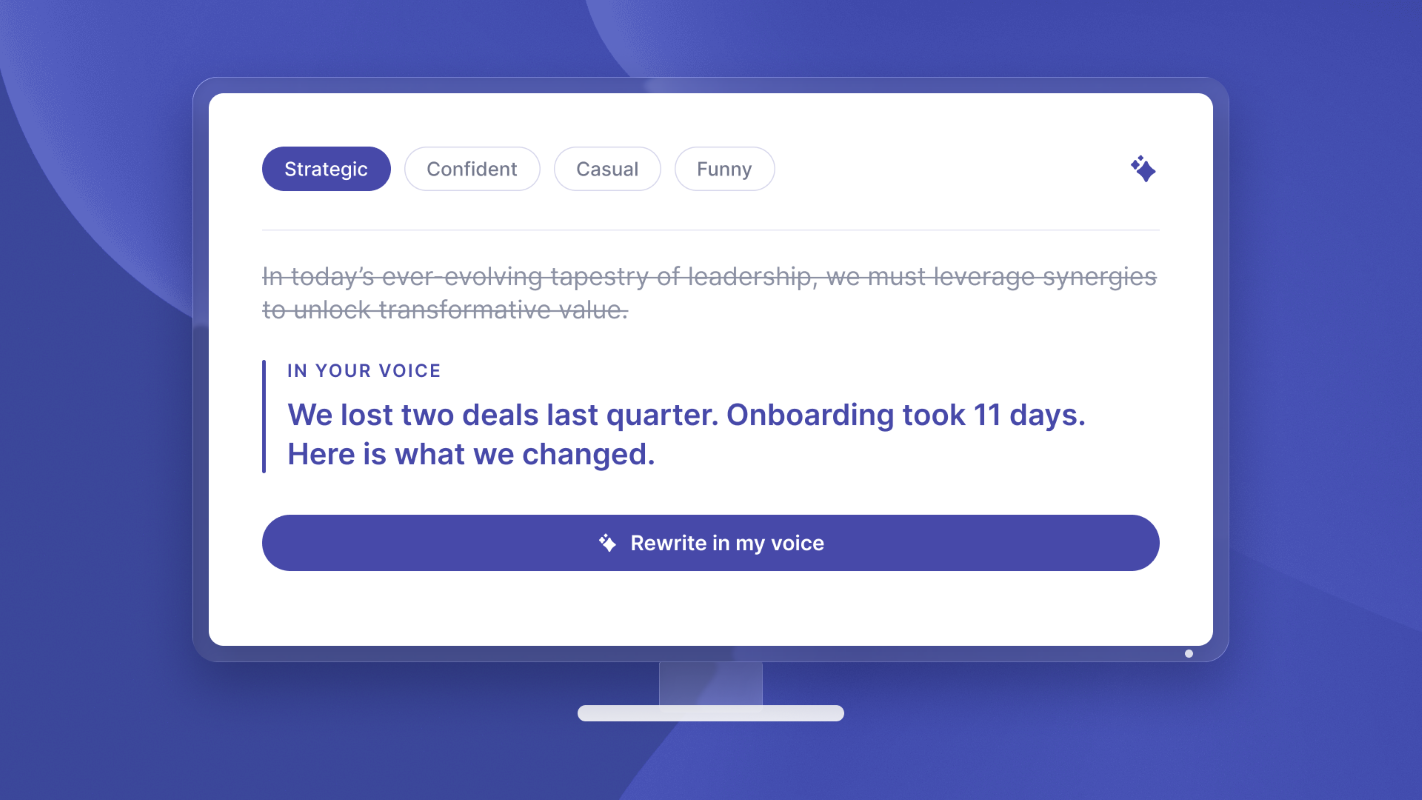
Instead of generic prompting, an integrated system uses your existing authority as a baseline. The output sounds like a human expert. When choosing between general-purpose bots and AI-native platforms for content, the latter lets you move from writing to curating while reinforcing your unique voice.
Integrated systems vs. the DIY stack
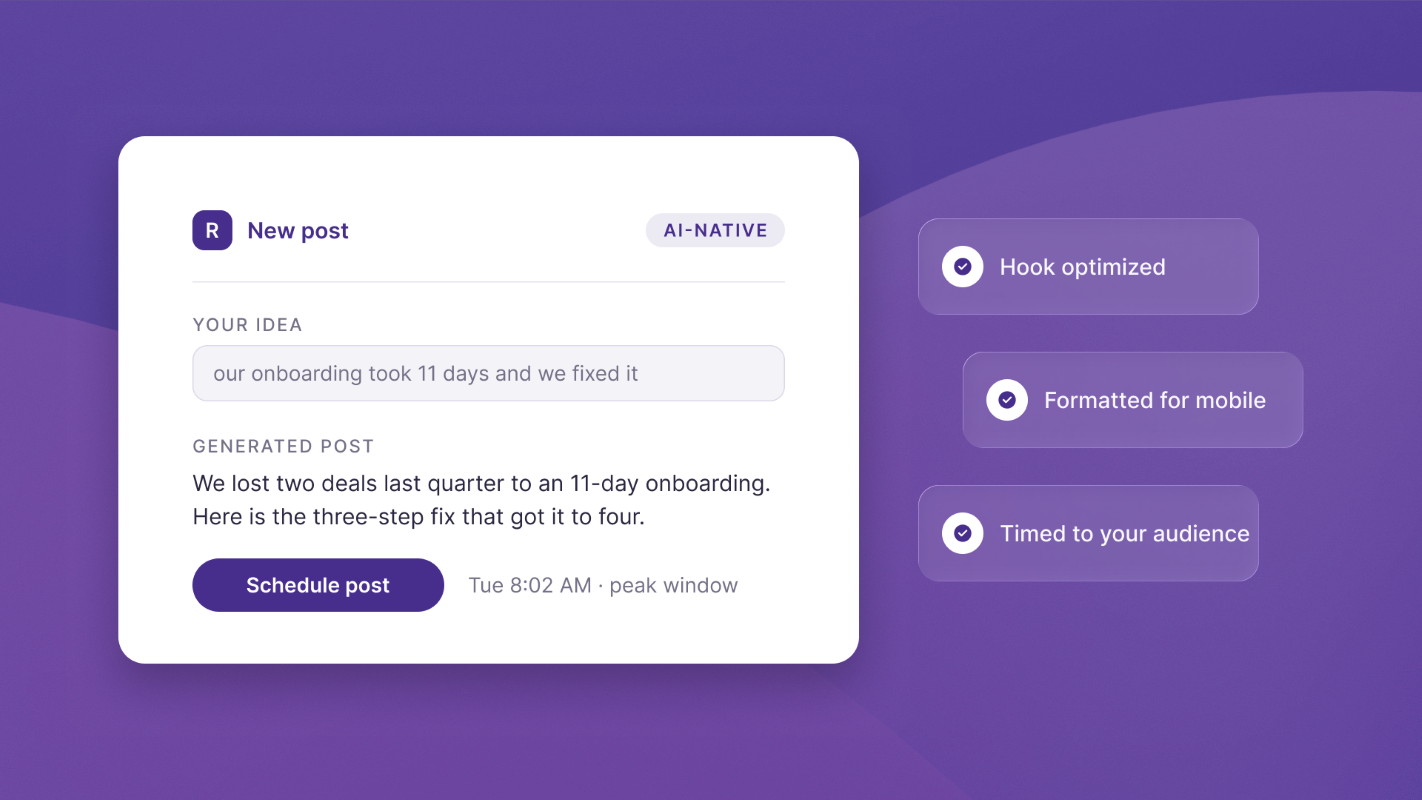
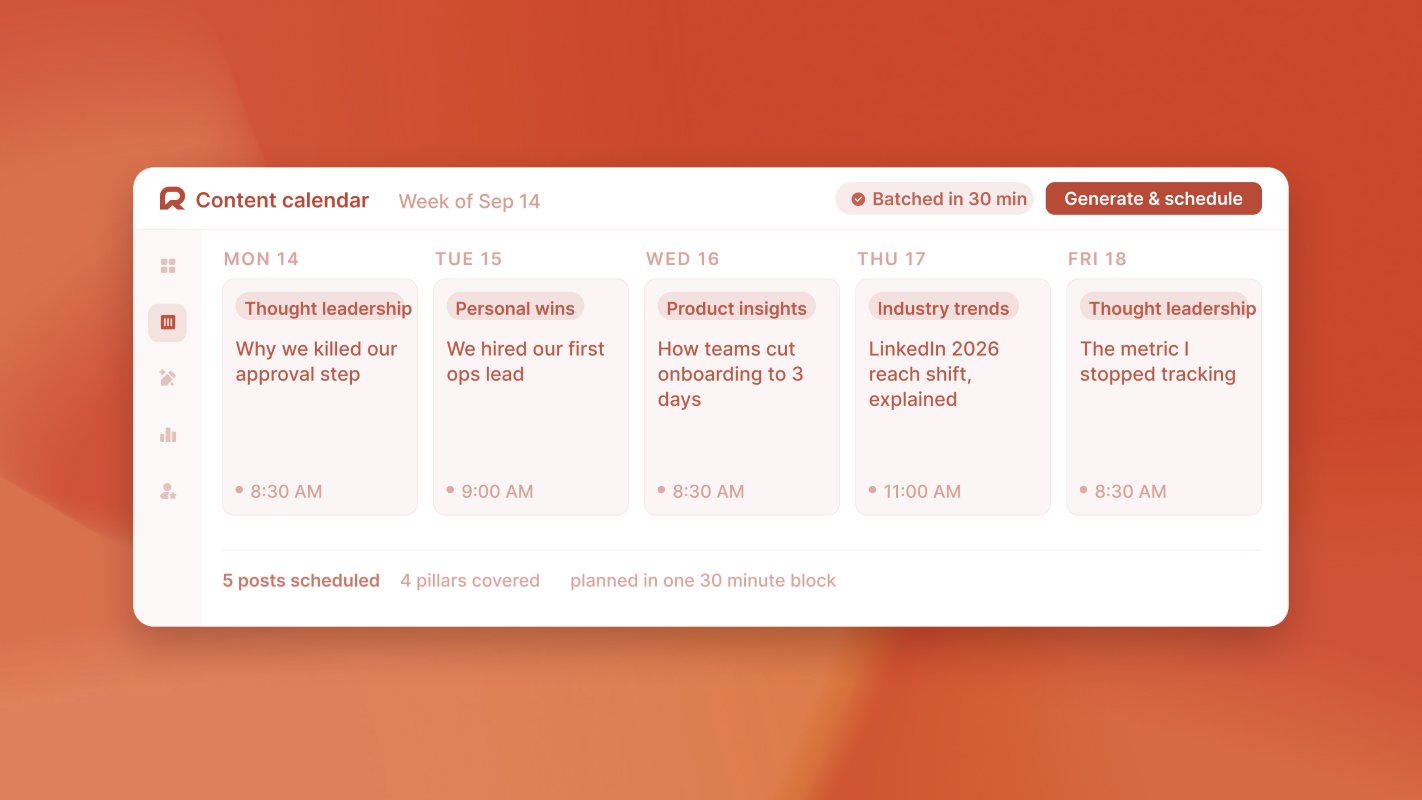
A DIY stack is a hidden growth killer. It forces teams to manage fragmented workflows. By using integrated tools that combine drafting, editing, and scheduling into one layer, you eliminate friction and excessive editing time — the common cost of raw AI outputs.
What to do next
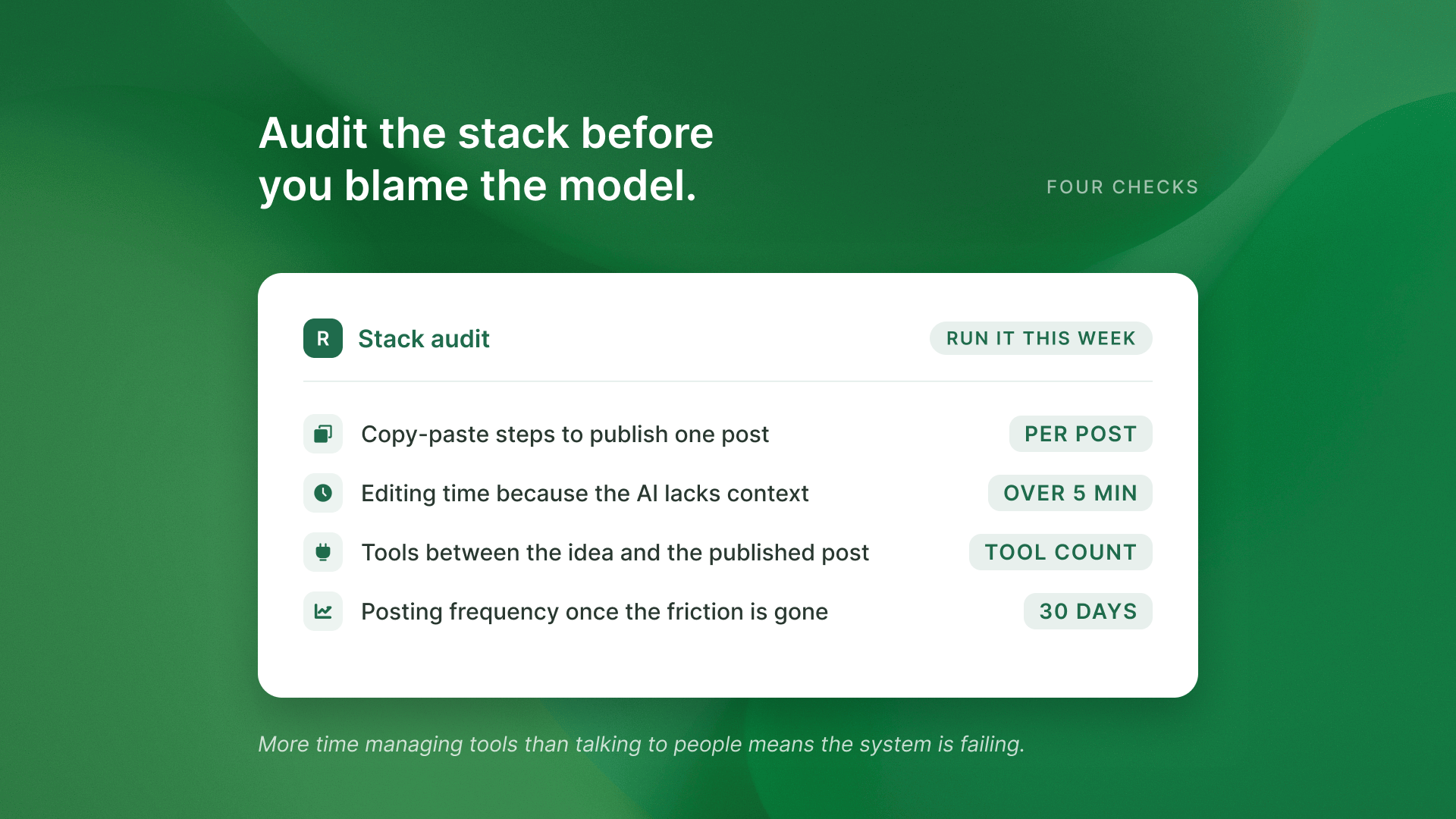
Audit your current stack. Count every manual copy-paste step required to publish one post. Identify if your AI output needs more than five minutes of editing because it lacks context. Then transition to an integrated LinkedIn workflow that eliminates tool-hopping. Finally, measure your posting frequency over 30 days to verify the reduction in friction.
Consistency is a compounding asset. To maintain it, you need a frictionless system that turns raw AI power into measurable authority.
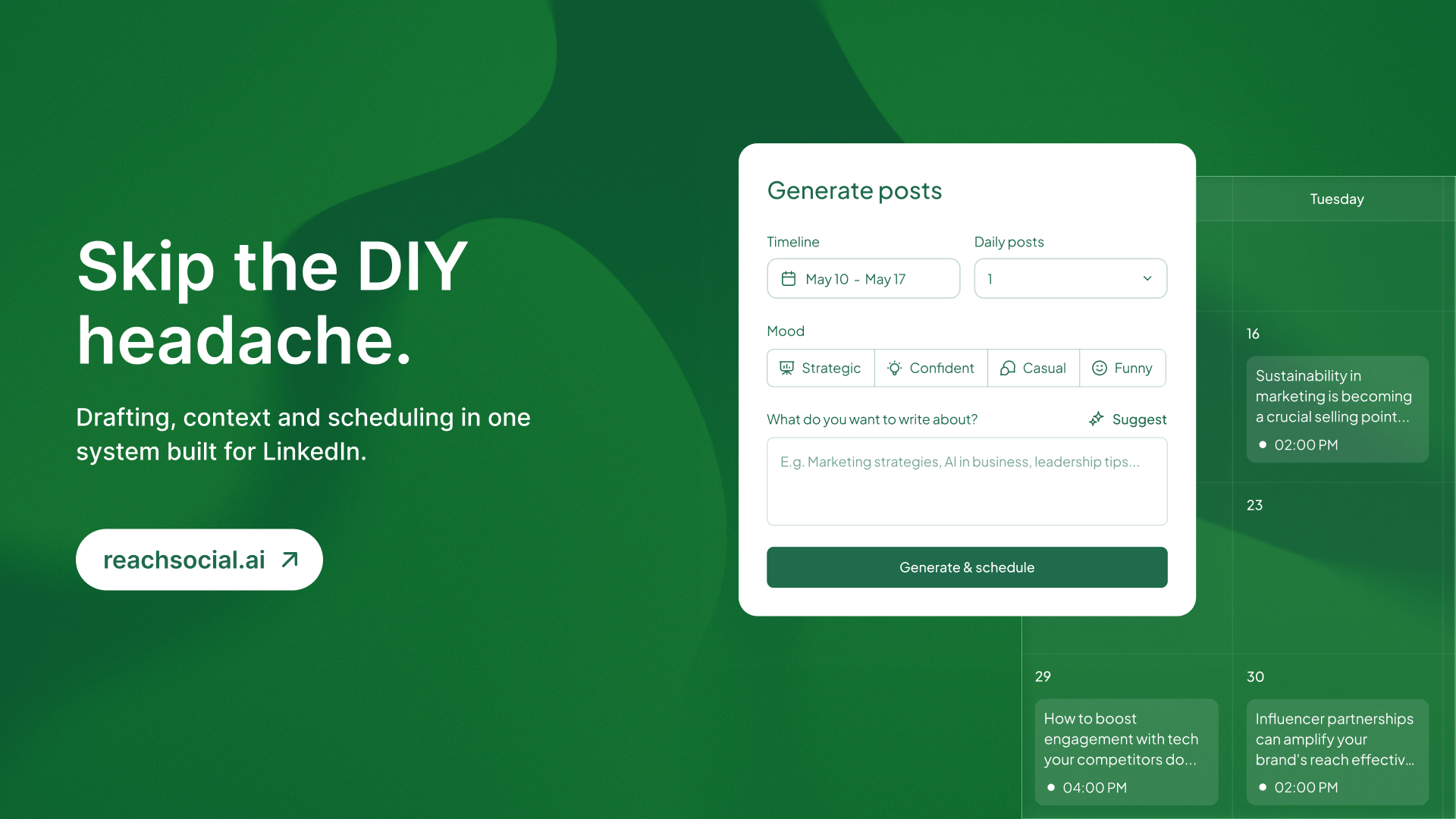
Ready to scale your authority without the DIY headache? Signup for ReachSocial today.


.png)



%2520(14).png)
.png)
%2520(13).png)