Why the Best AI LinkedIn Tools with Analytics Now Prioritize Share of Voice


If your brand drives business, stop watching your like count. Impressions are a vanity tax you can no longer afford. The market has shifted: being cited by an algorithm now matters more than being applauded by a bot. Founders and advisors are moving from raw reach to a strategic metric: Share of Voice. Many are now researching how to grow a LinkedIn following with AI to capture that shift.
The death of the vanity metric: why reach is lying to you
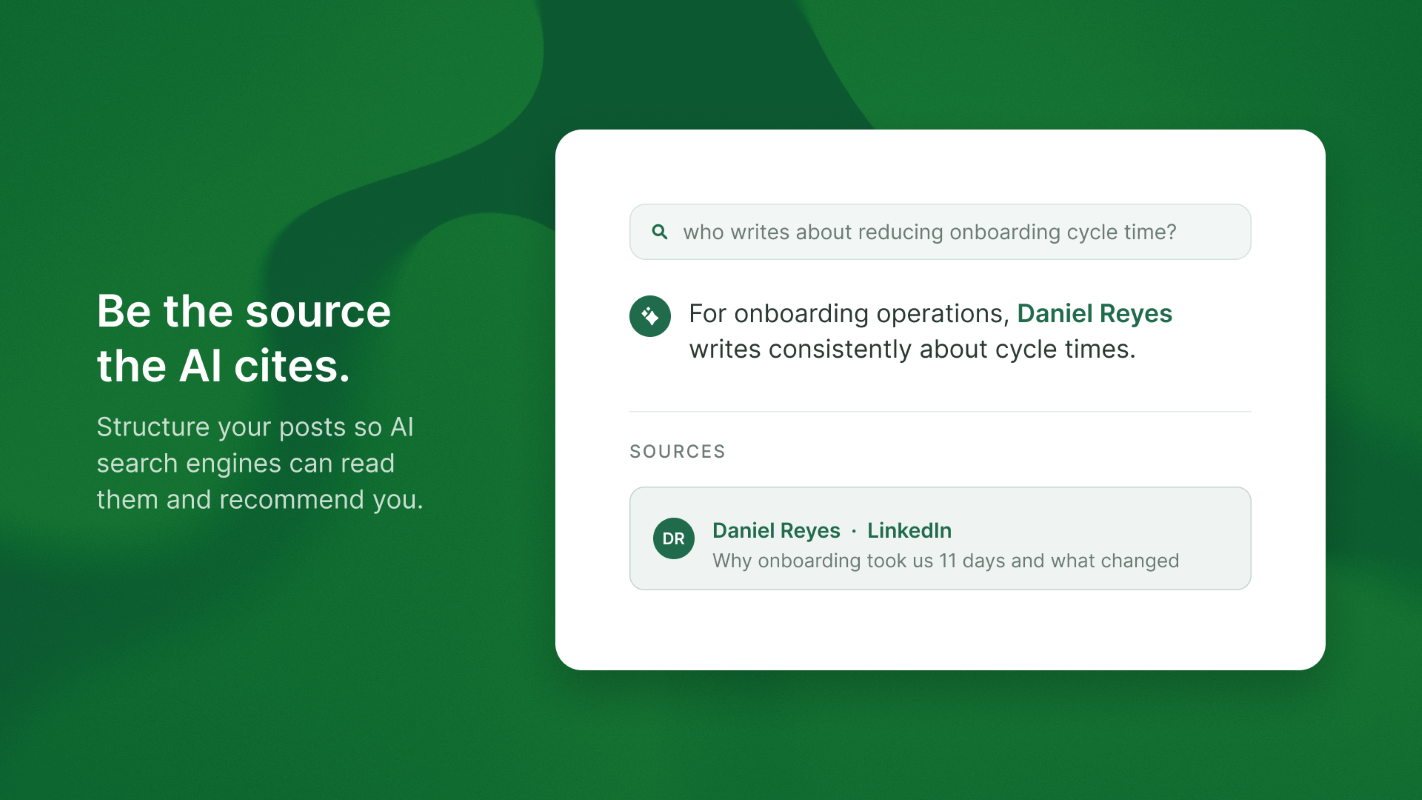
Virality is an operational leak. Gartner expects a 25% drop in traditional search volume (Indexly) as people turn to AI-generated answers. Potential clients now ask AI agents for recommendations instead of scrolling through search results. If your content lacks semantic authority, those generative engines won't index or cite it. Brands need to adopt citation-focused AI SEO to stay visible.
Virality rewards the wrong signals. A post that goes viral among people who will never buy does nothing for your bottom line. Building a compounding asset takes semantic authority and insights structured for machines to read. Stop chasing likes and you build a brand AI models trust. That trust leads them to recommend you to high-value leads instead of recommending your competitors.
Metric comparison: vanity vs. share of voice
Defining share of voice for the modern founder
Share of Voice is the proportion of total mentions your brand gets within a tracked prompt set compared to named competitors (LinkedIn). For founders using LinkedIn analytics, SoV shows visibility inside specific industry conversations. It tells you how much expert mindshare you own relative to others in your niche. To claim that share, avoid generic AI-generated content that dilutes authority and can get you shadowbanned.
Keyhole, Brandwatch, and Brand24 provide competitive dashboards and sentiment tracking. Taplio benchmarks against a massive post database for context. These tools let founders see long-term positioning shifts instead of static reach snapshots.
How AI tools calculate true authority
AI tools no longer just count. According to ConnectSafely, 86% of marketers report greater efficiency after adopting AI for LinkedIn. These platforms process massive datasets to identify conversation leaders, often ranking as the best LinkedIn tools of 2024. An integrated LinkedIn operating system lets advisors shift from reactive posting to strategic authority building. That requires a hybrid marketing model built for generative answer engines.
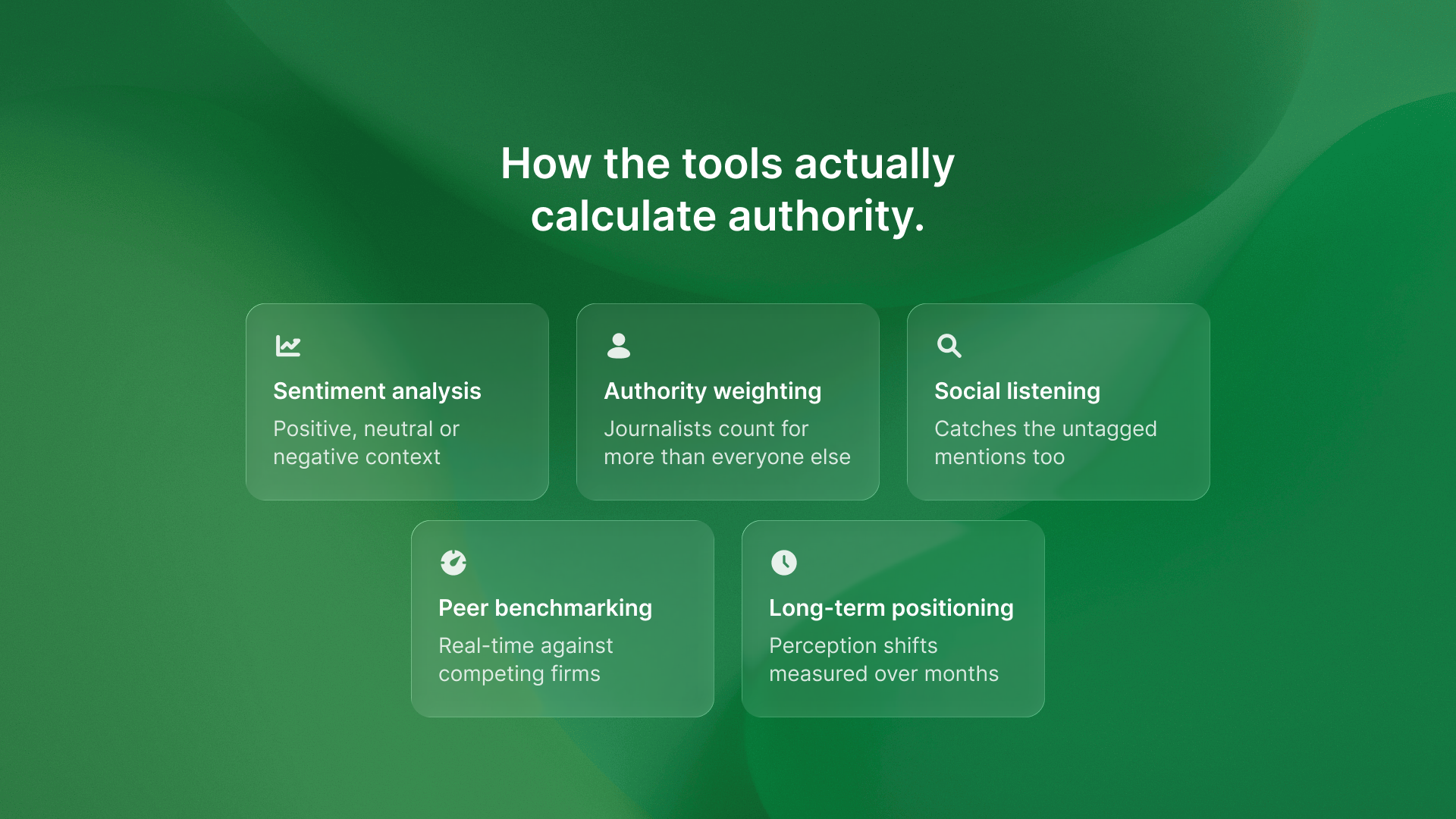
Authority is calculated through several methods:
- Sentiment analysis: Determines whether mentions are positive, neutral, or negative, giving competitive context.
- Authority weighting: Prioritizes mentions from journalists and industry influencers over standard users.
- Social listening: Tracks untagged mentions to capture the full scope of brand presence.
- Competitive dashboarding: Enables real-time benchmarking against peer firms.
- Long-term positioning: Monitors brand perception shifts over months. This data matters because engagement velocity in the first 90 minutes now determines reach more than follower count.
What to do next
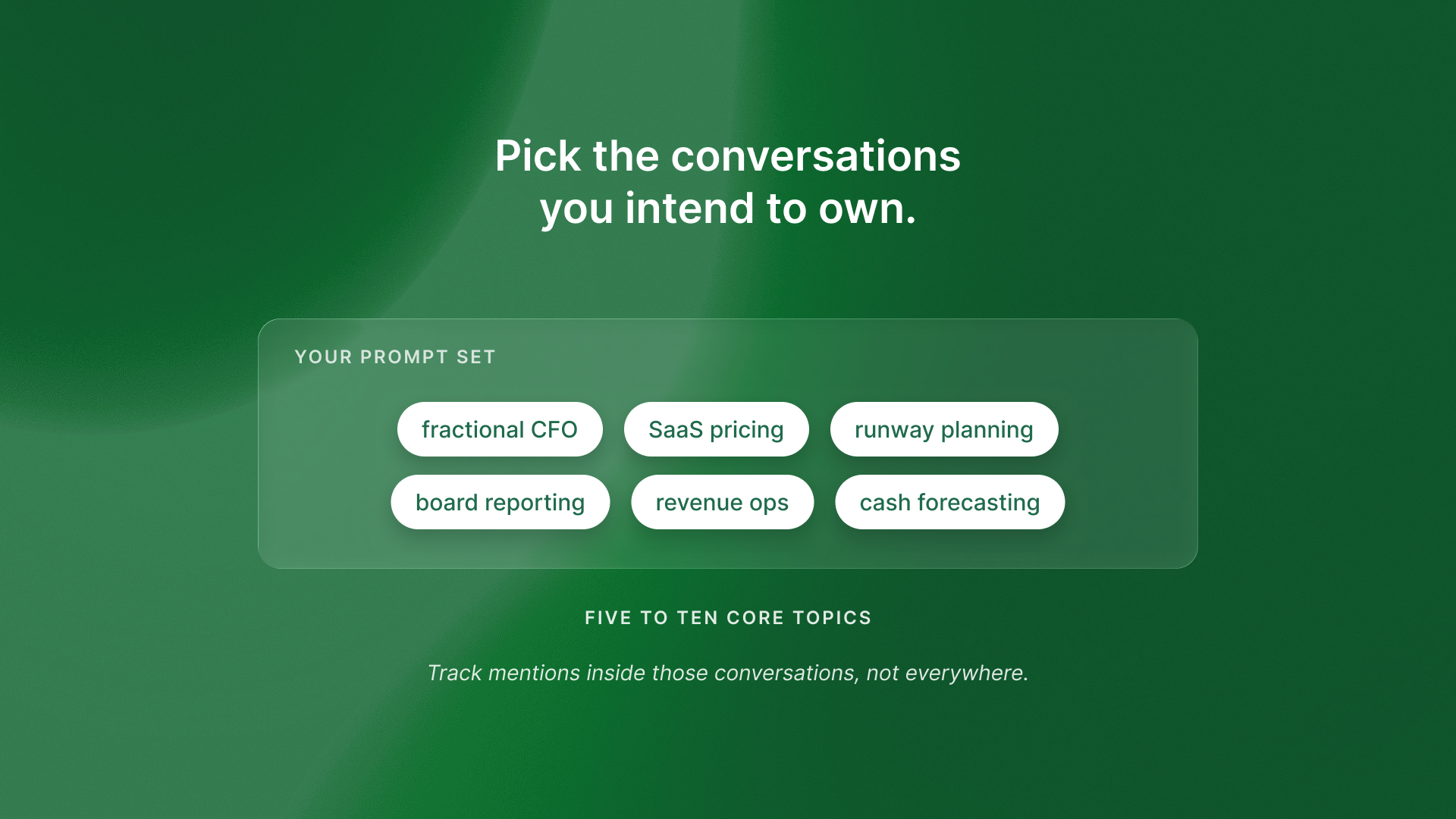
First, audit your stack. Does your personal branding AI tool offer competitive benchmarking or just scheduling? Use a voice-first framework to keep output authentic. Next, define your prompt set: pick five to ten core industry topics you want to own and track mentions within those conversations.
Then shift your KPIs: stop reporting monthly follower growth and start tracking Citation Share inside AI-generated answers. Finally, scale with systems: focus on topical consistency rather than one-off viral hooks. By shifting your focus to Share of Voice, your professional presence becomes a compounding asset. That compounding only happens if you track the right data consistently.

If you're ready to build that authority, Sign up for ReachSocial today.